C, C & Co inscriptions
Attributed to C, C & Co, North Shields Pottery
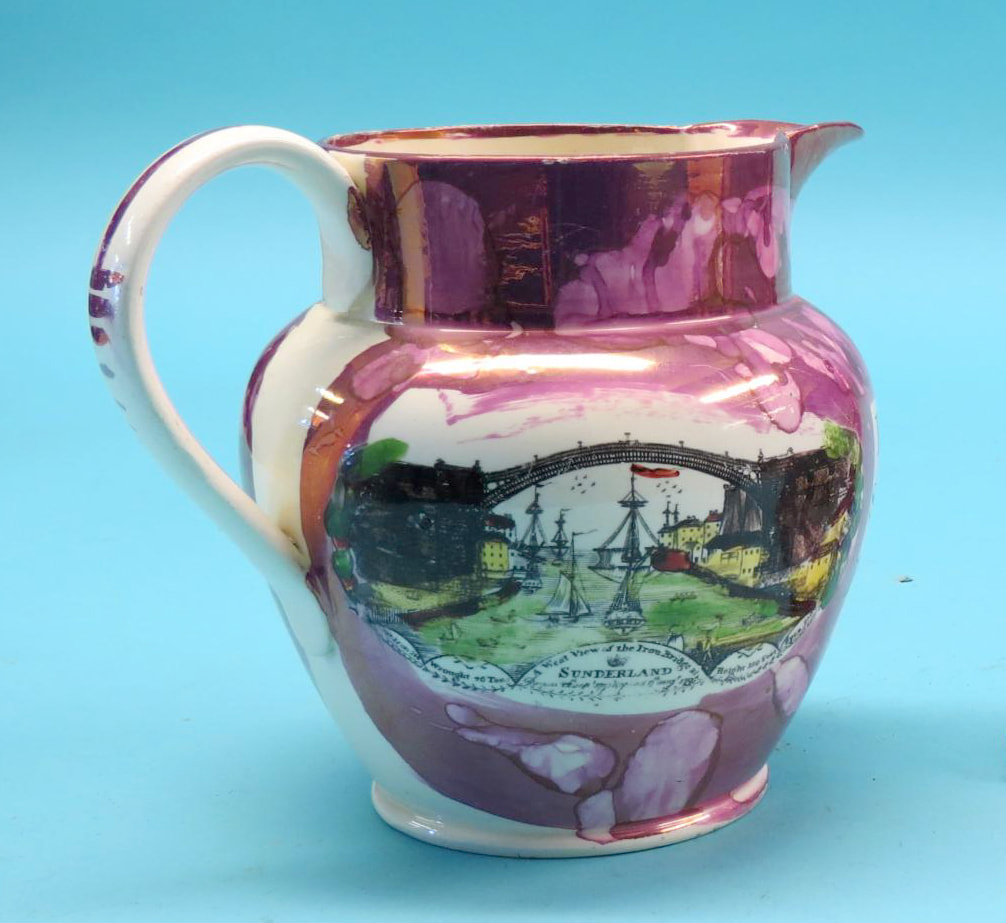
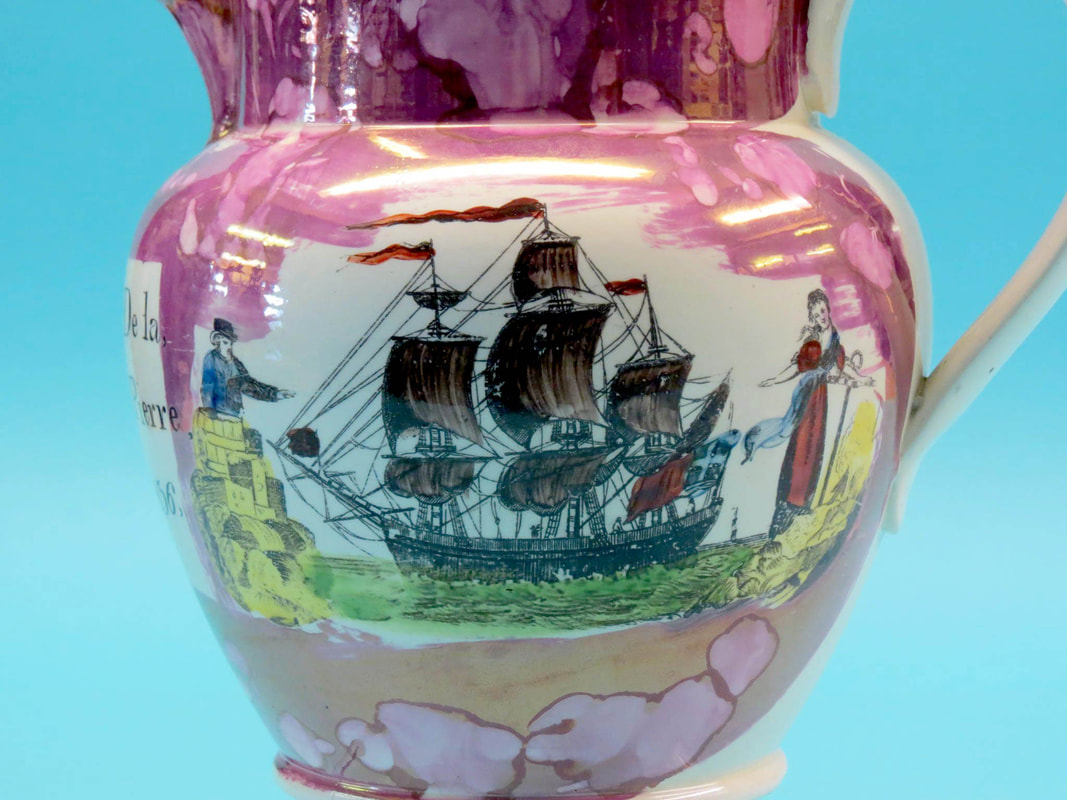
Perhaps the most striking thing about this page is the consistency of the inscriptions and decoration, which changes little over 10 years. All of the jugs on this page have the North Shields trademark of lustre decoration on the handle terminating in horizontal strokes. They were made during the same period as the Robert Maling-attributed items, and bear no resemblance to them in terms of decoration and calligraphy, and the transfers, as you would expect, come from an entirely different set of copper plates.
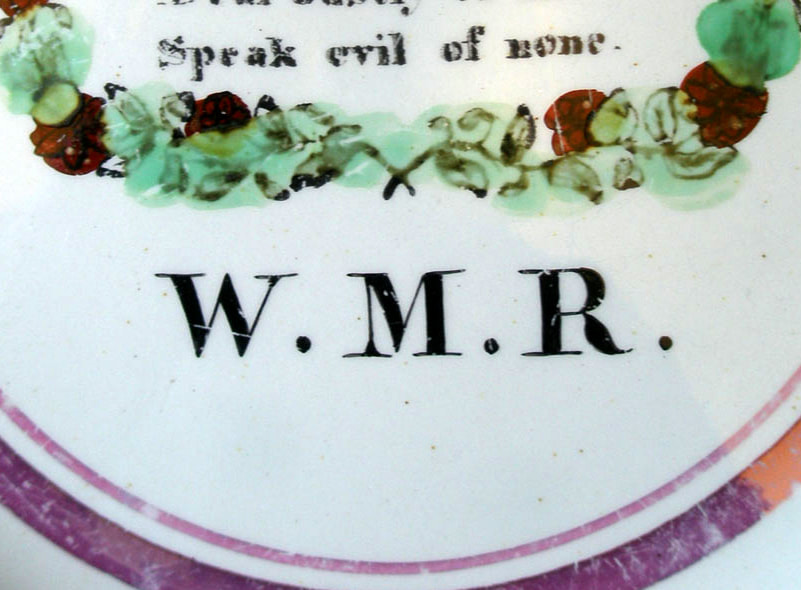
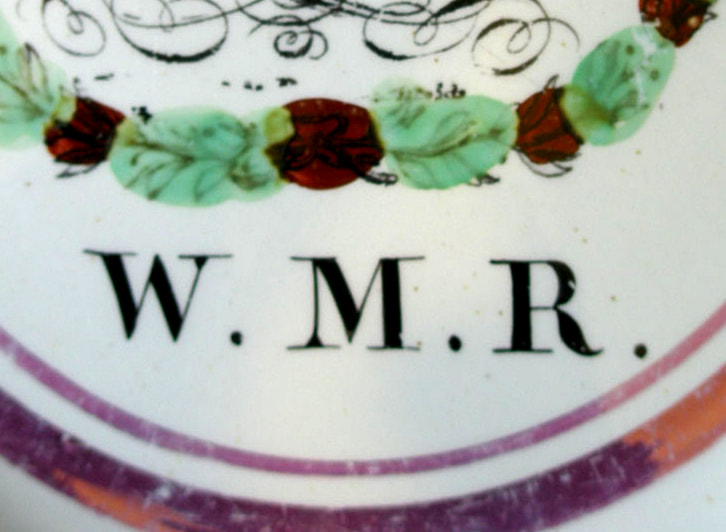
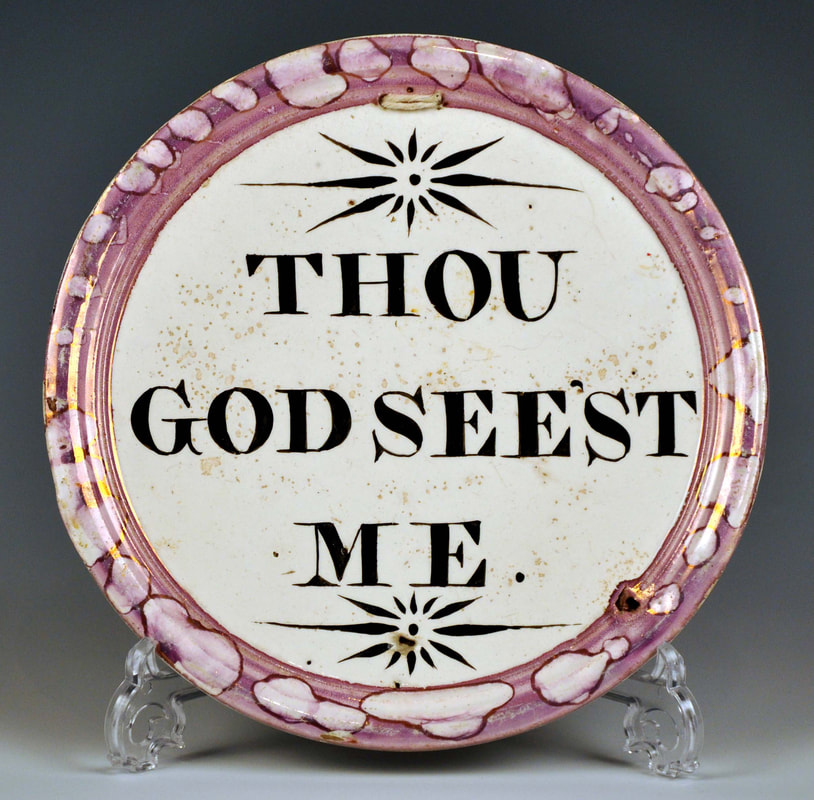
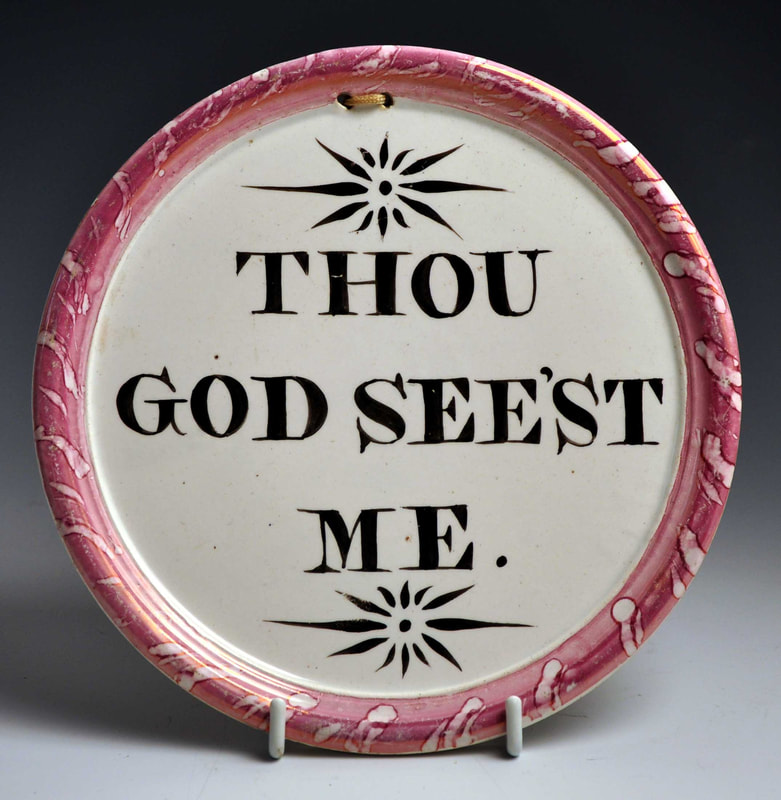
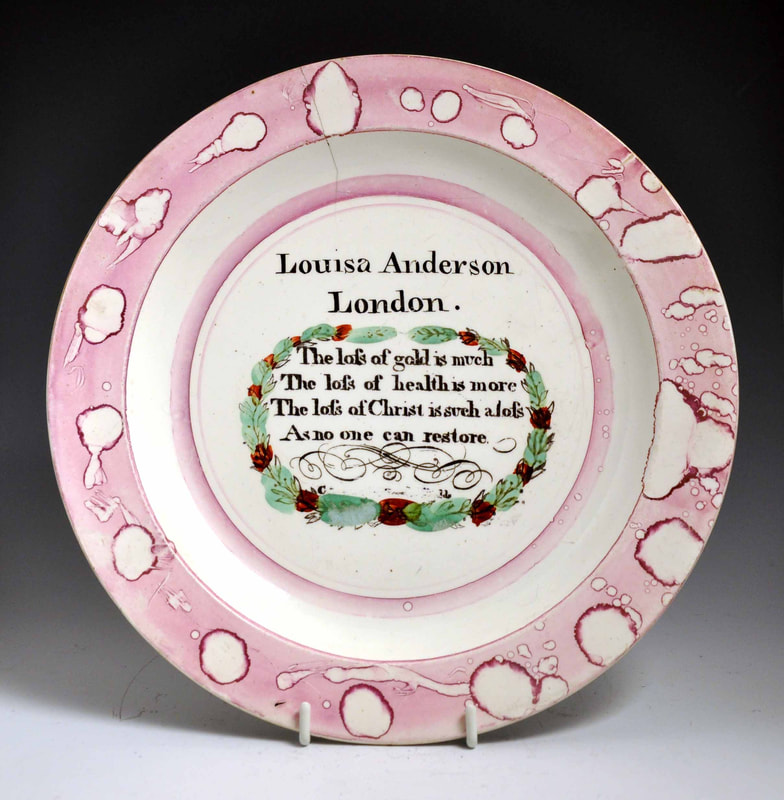
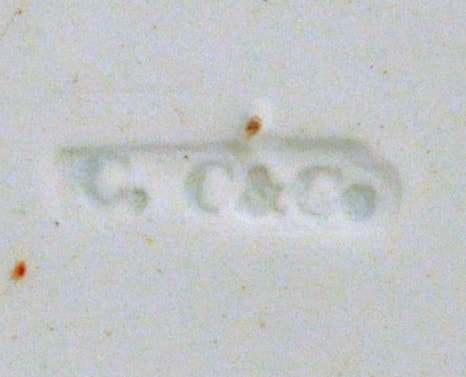
The plates below have an impressed mark, C, C & Co, for either Cornfoot, Colville & Co, 1828–1832, or Cornfoot, Carr & Co, 1832–1838, at the North Shields Pottery. These plates are very finely potted, so my guess would be the earlier partnership. The right plate has an obliterated printed mark, beneath the transfer, for the even earlier partnership of Collingwood & Beall, North Shields. Such transfers, with this obliterated mark, are found on North Shields items throughout the 1830s.
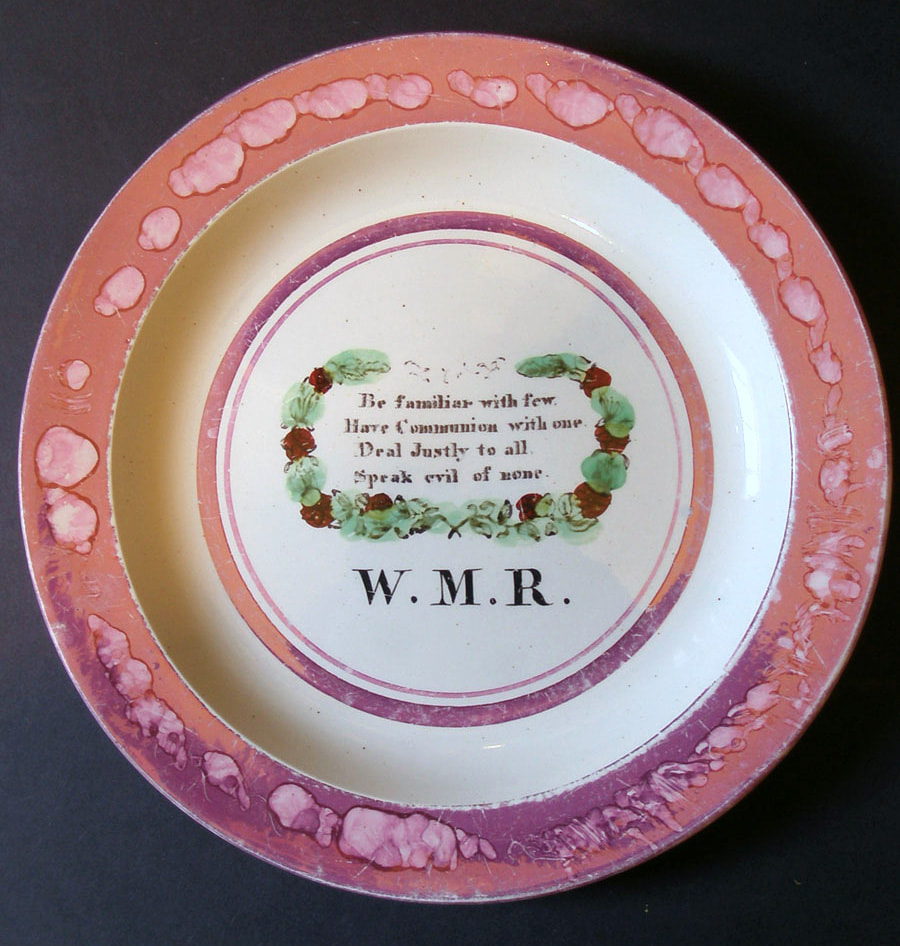

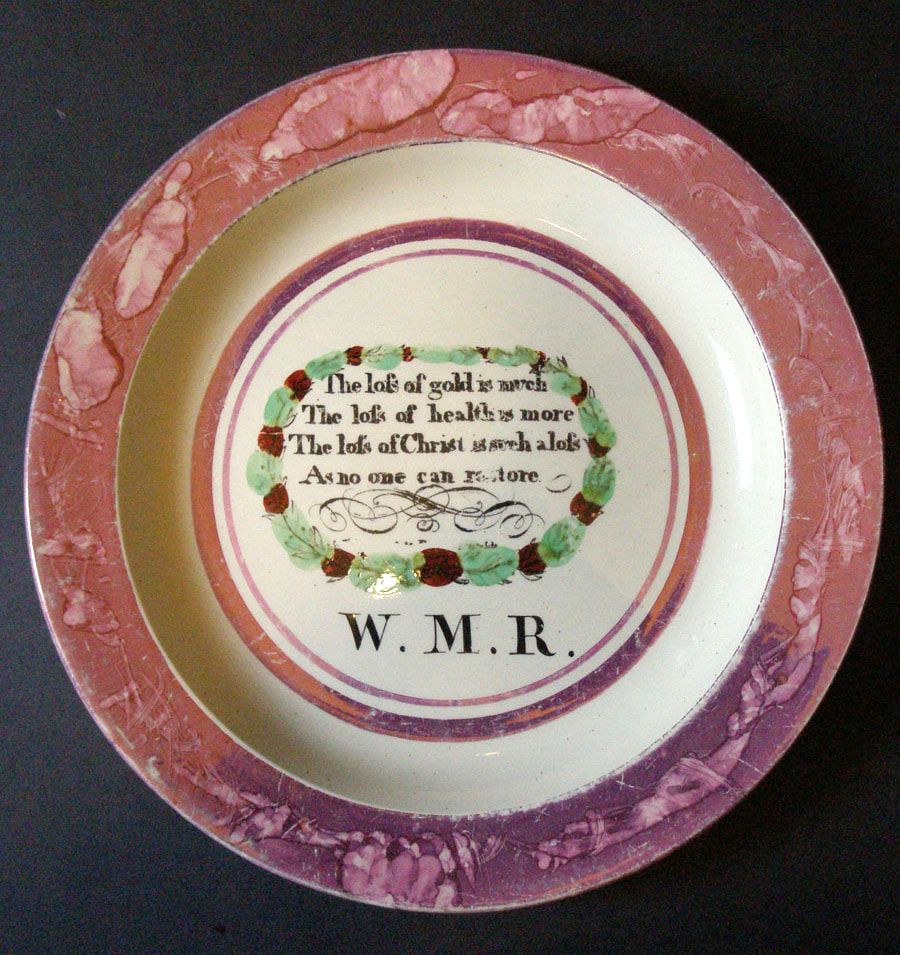
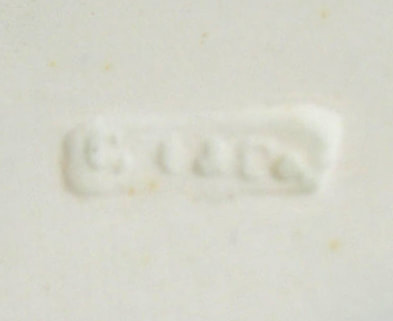
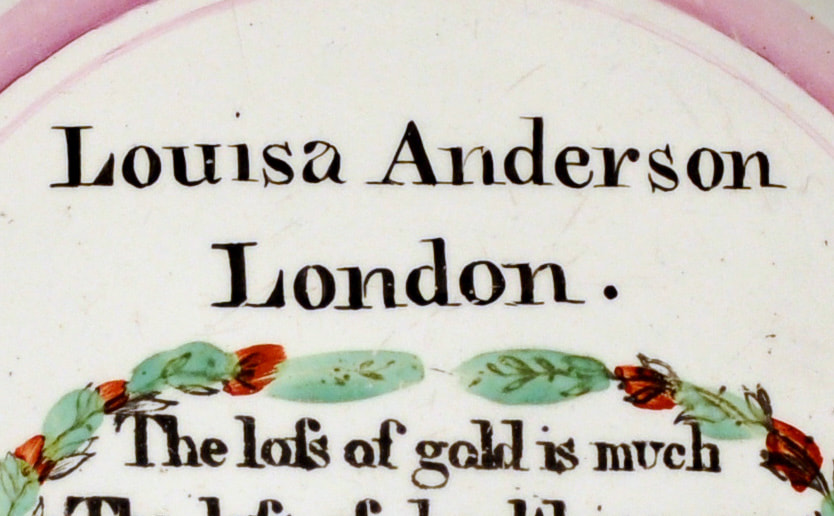

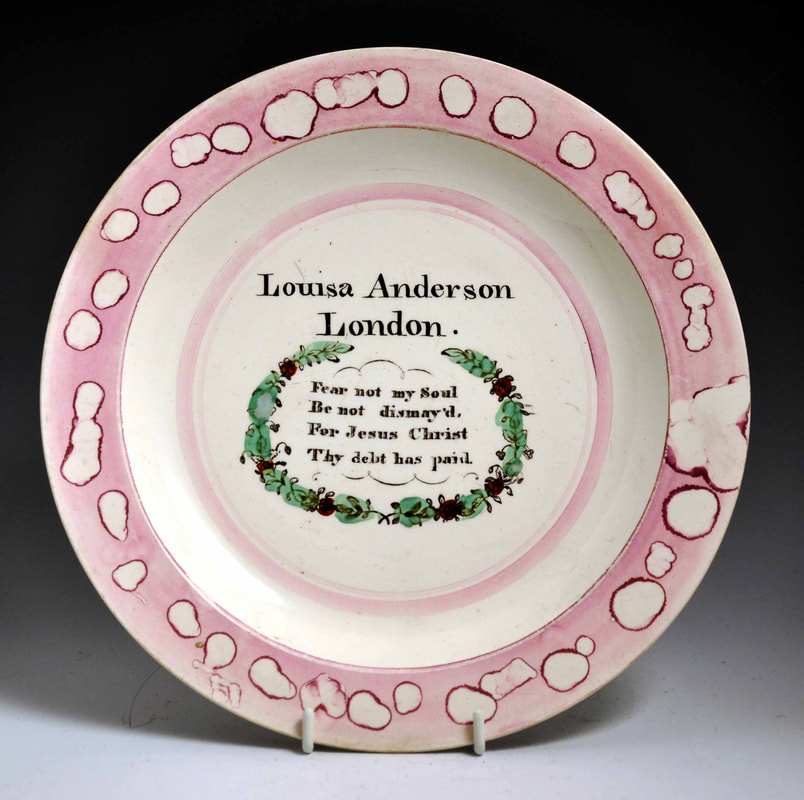
This pair of plates, again with the C, C & Co impress, have neat inscriptions apparently by the same hand as many of the items below. The lower case 'a' is particularly distinctive.

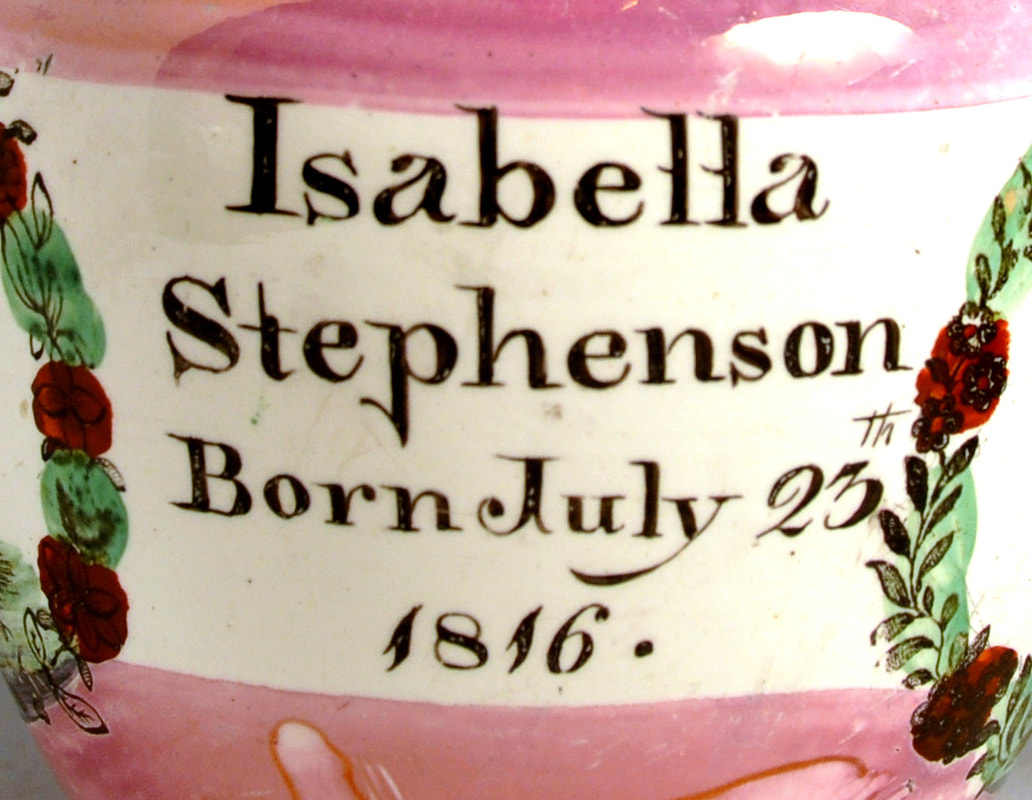
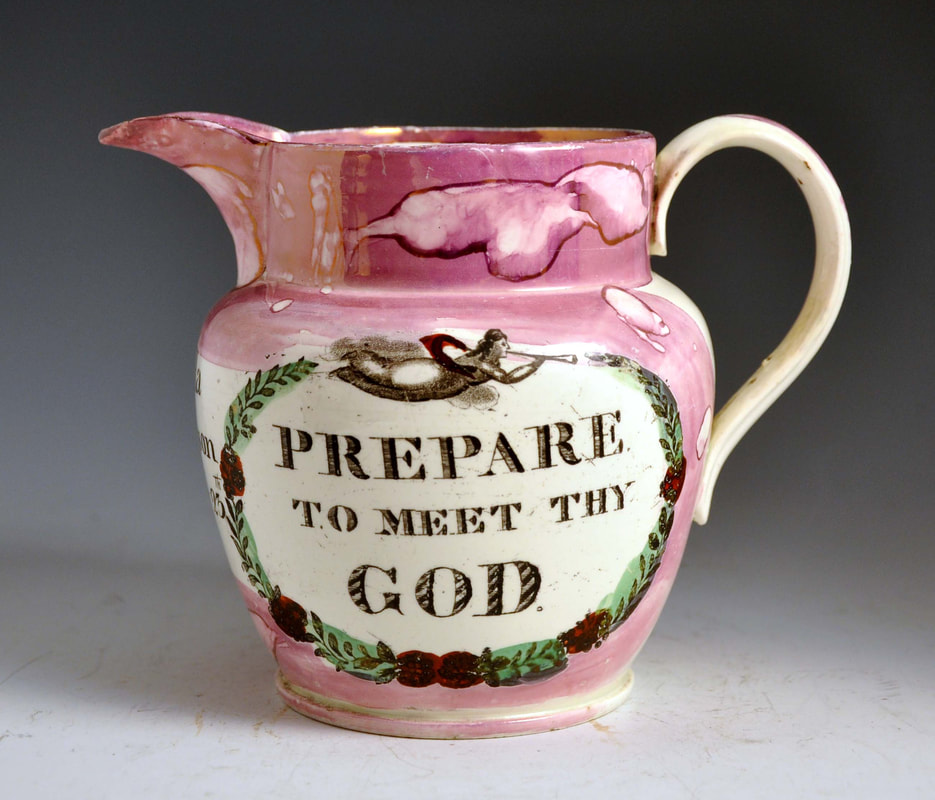
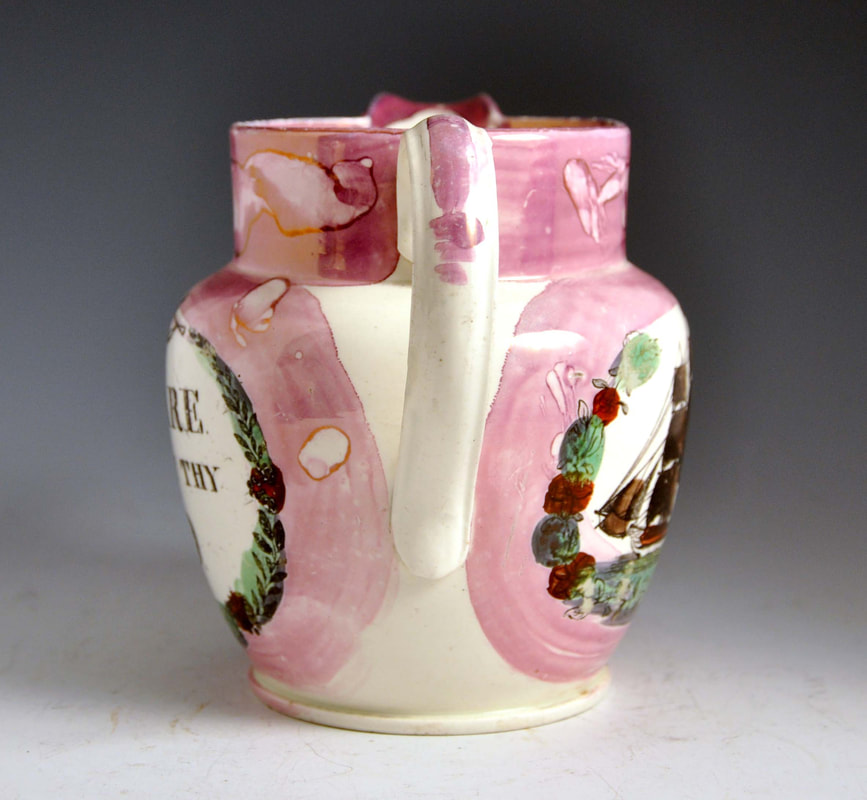
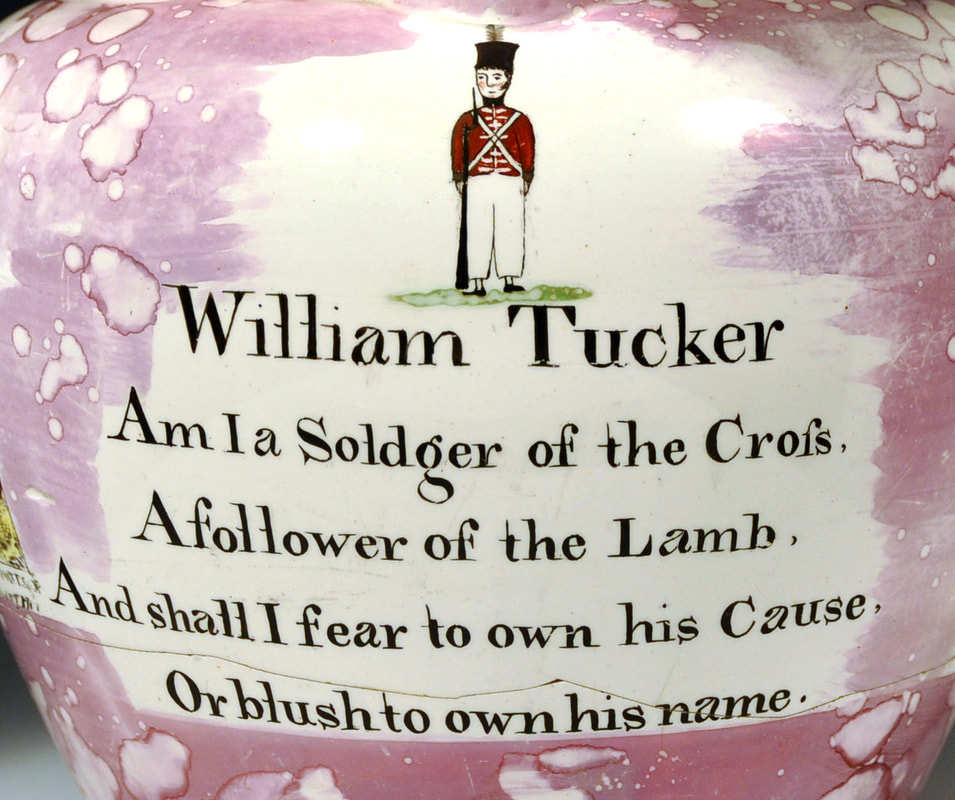
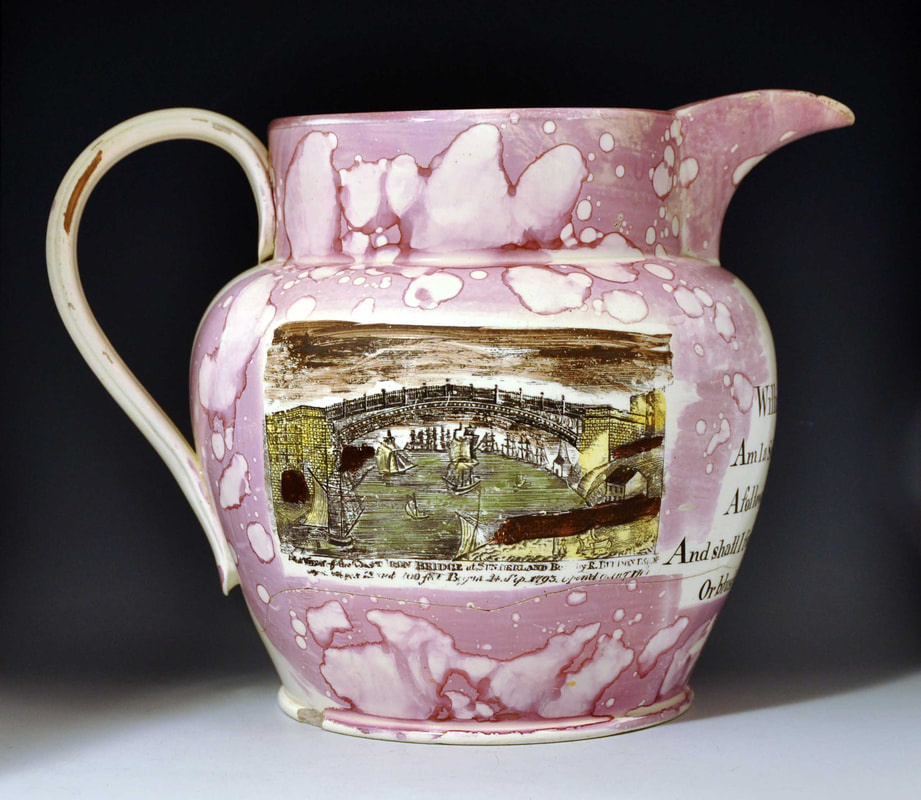
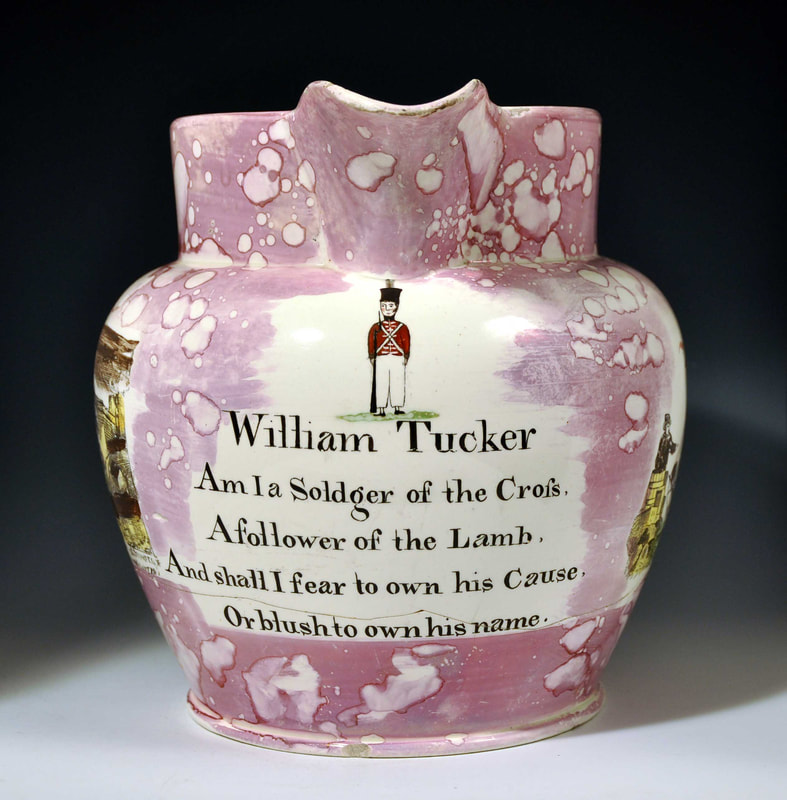
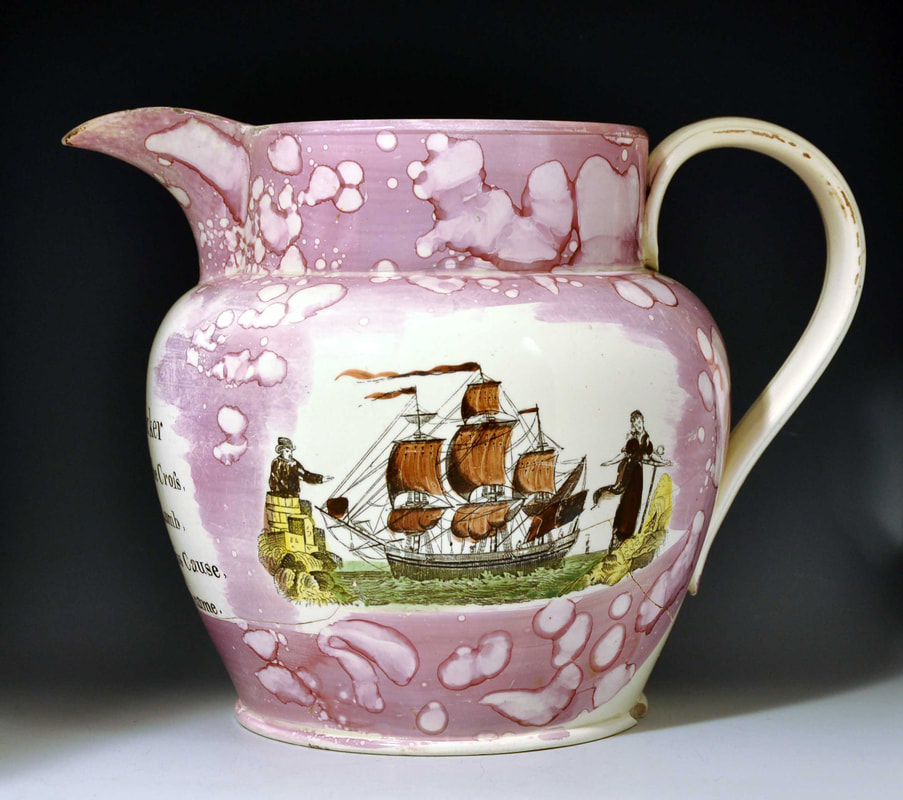
Although this jug has an inscribed birth date of 1816, it was most likely given as a first communion present (c1830) or coming of age present (1837). My guess is c1830. It has the same lower case 'a' as the impressed plates above, and a very distinctive lower case 't' replicated on many of the items below.


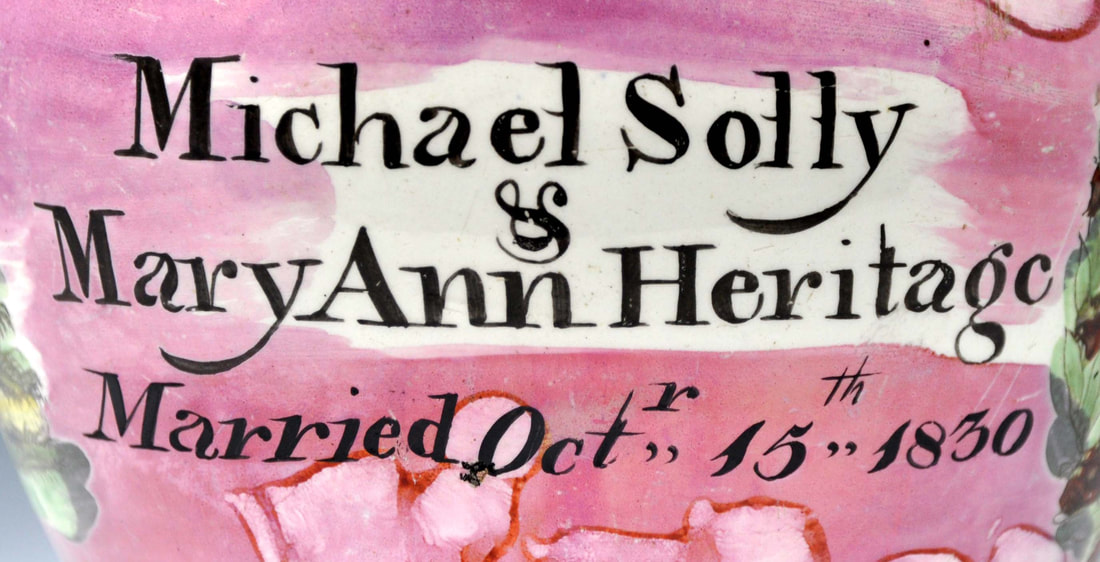
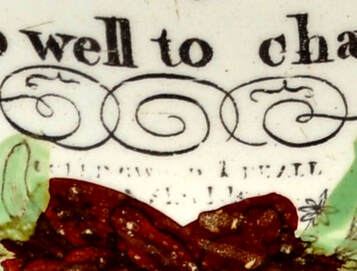
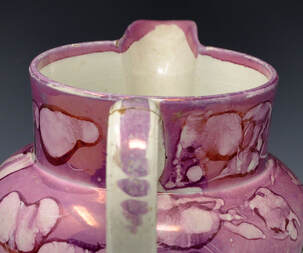
A heavily lustred marriage jug with an inscription for 1830, again with a verse transfer with a faint printed mark beneath for Collingwood & Beall, North Shields, and typical North Shields decoration of the handle..
|
|
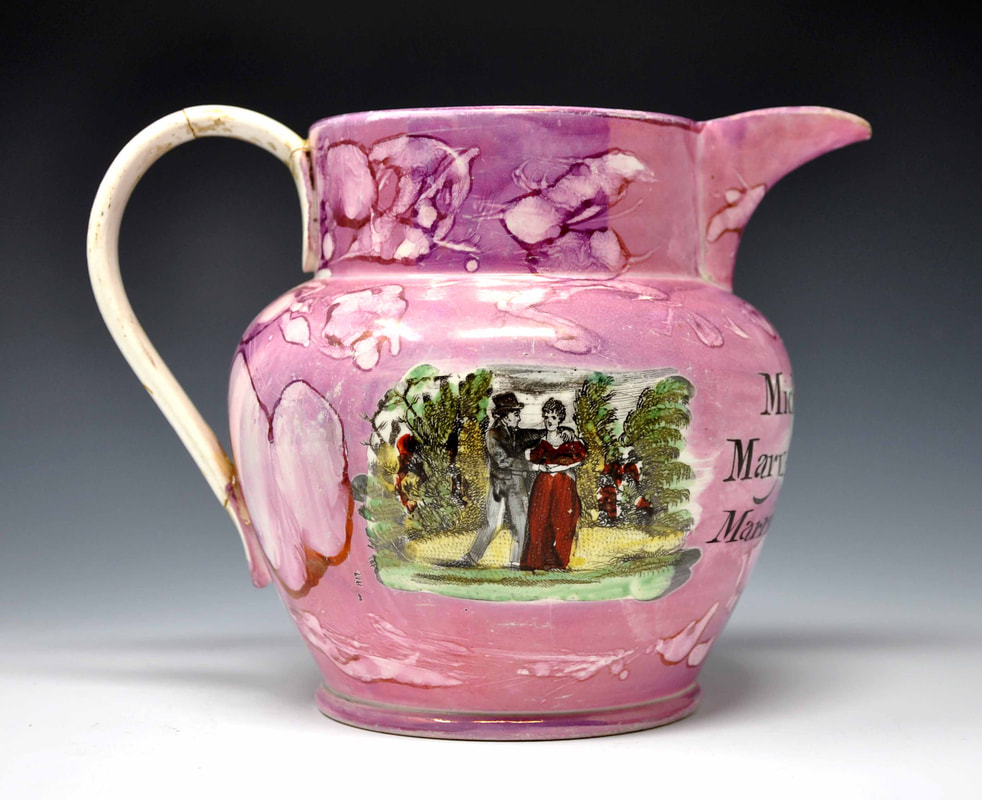
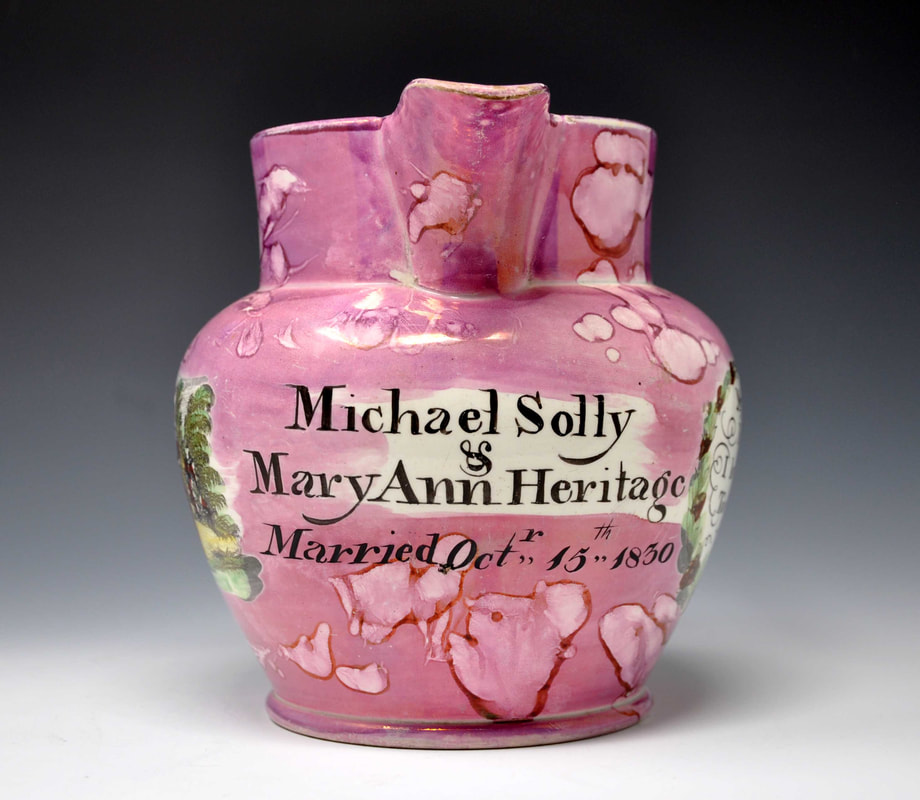
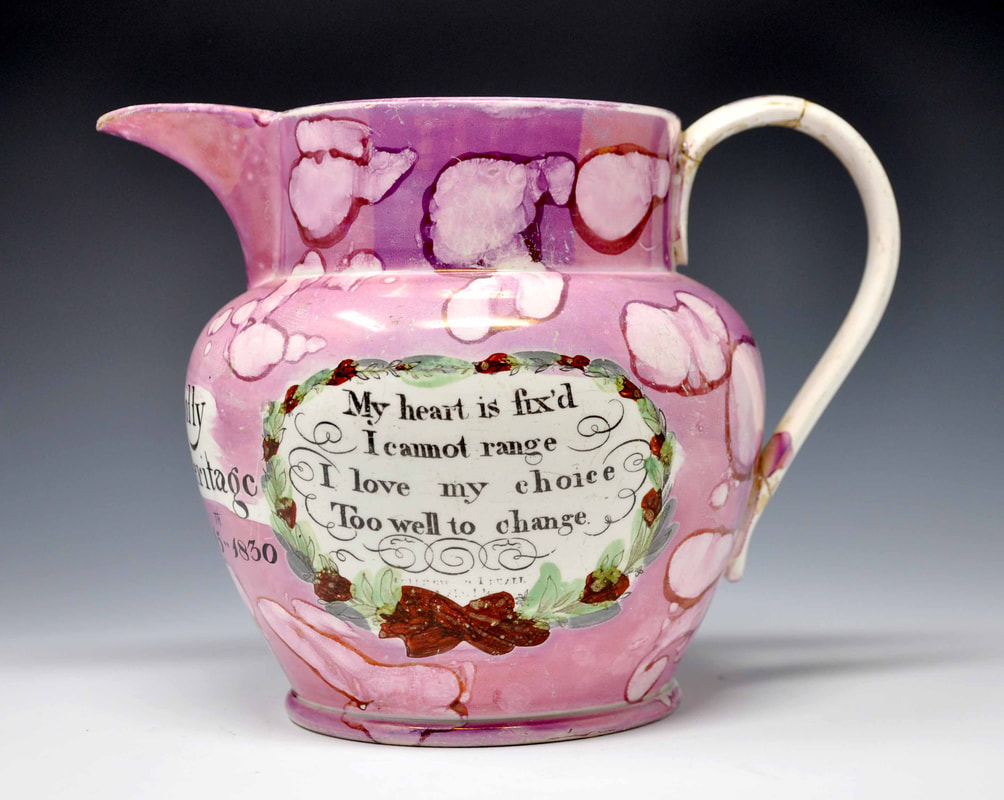
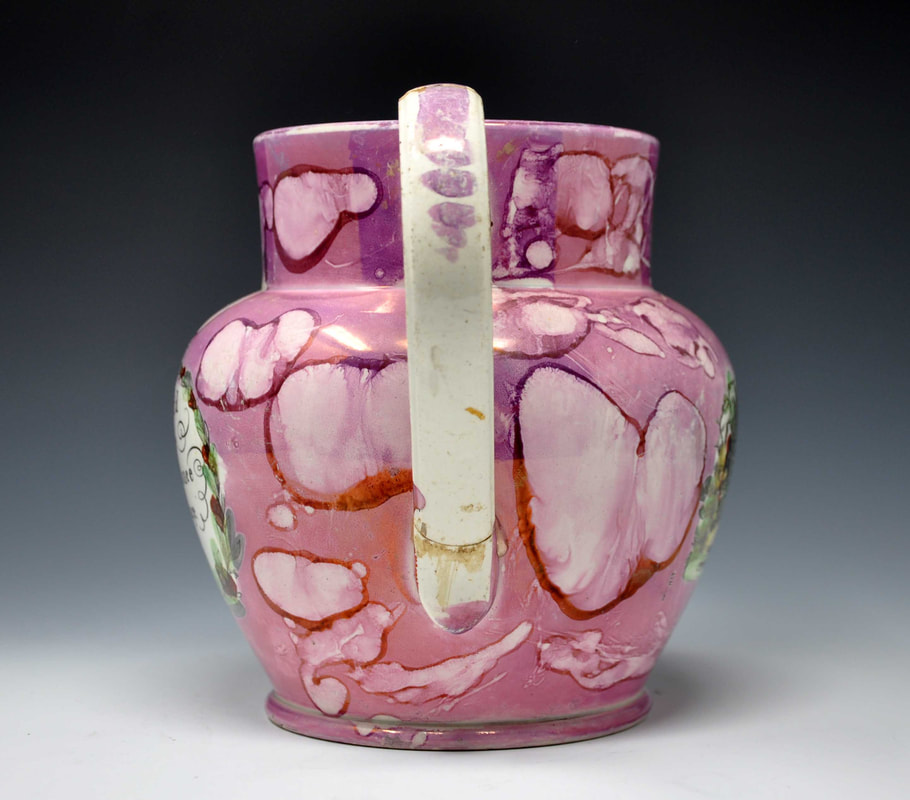
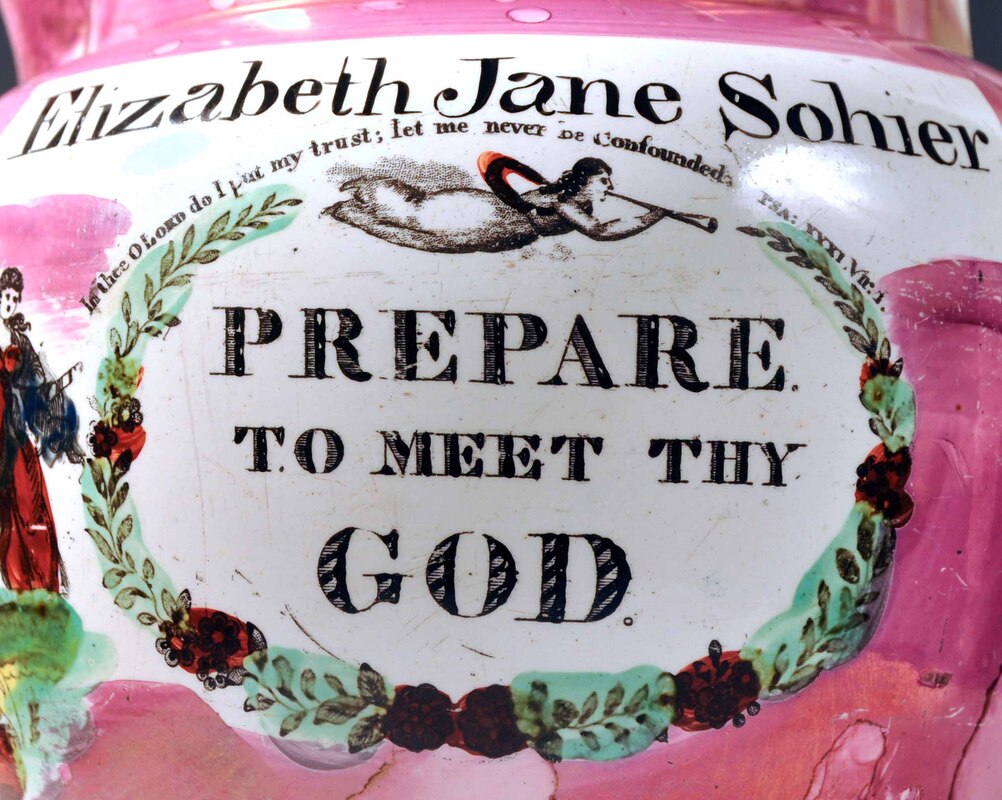
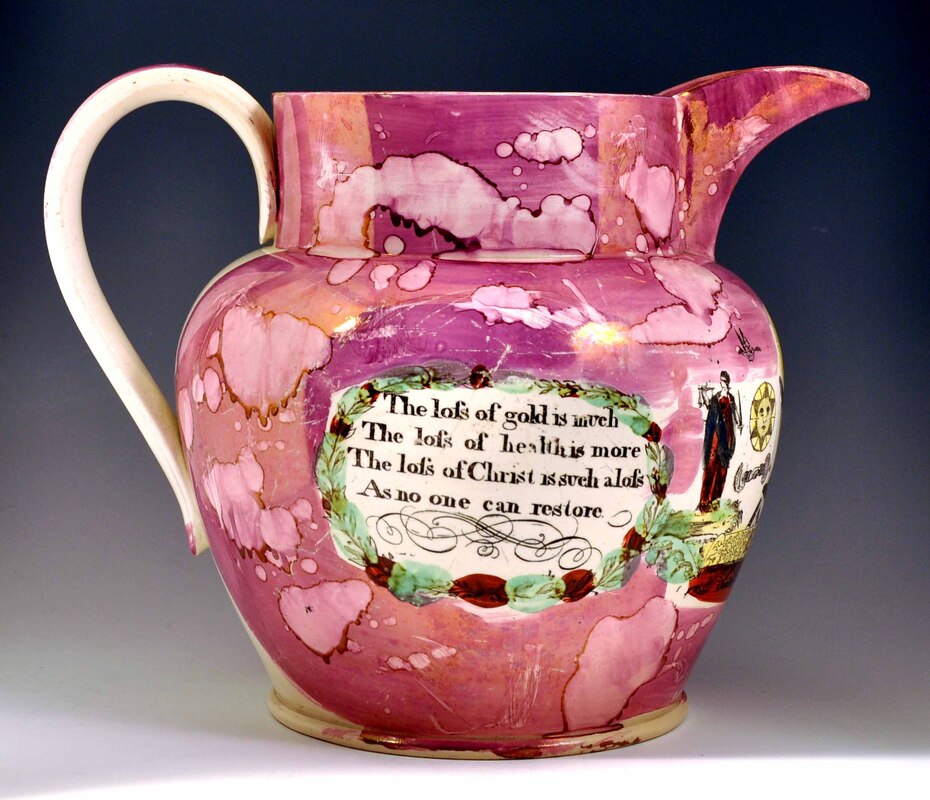
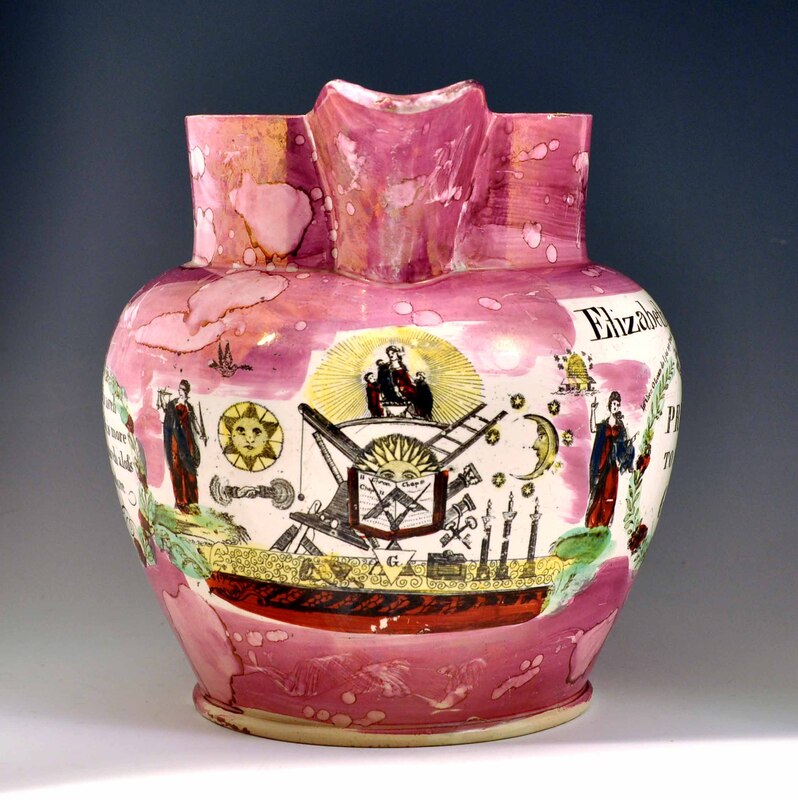

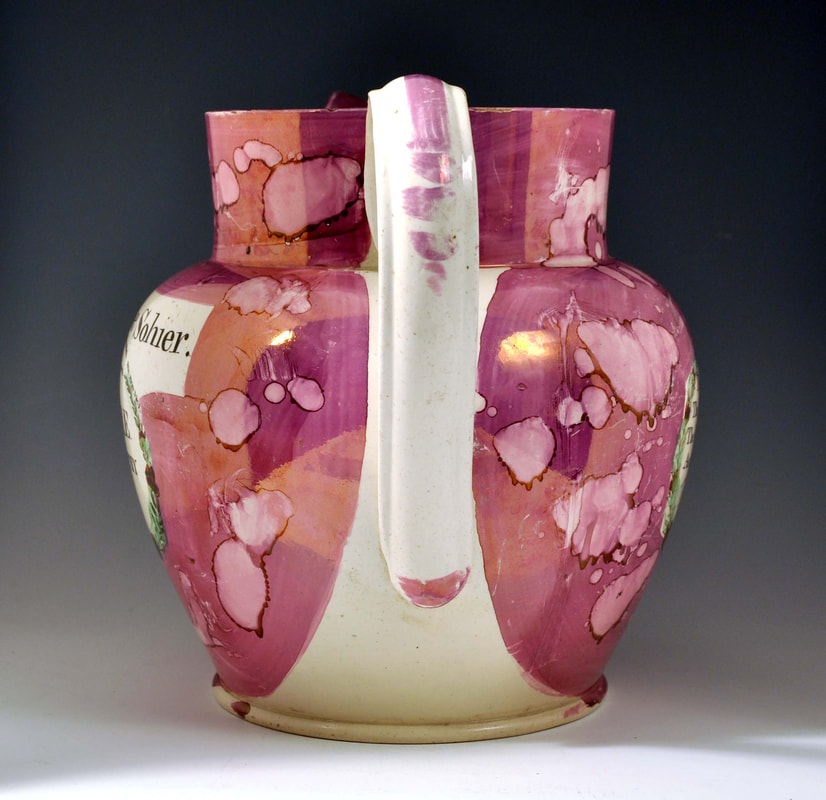
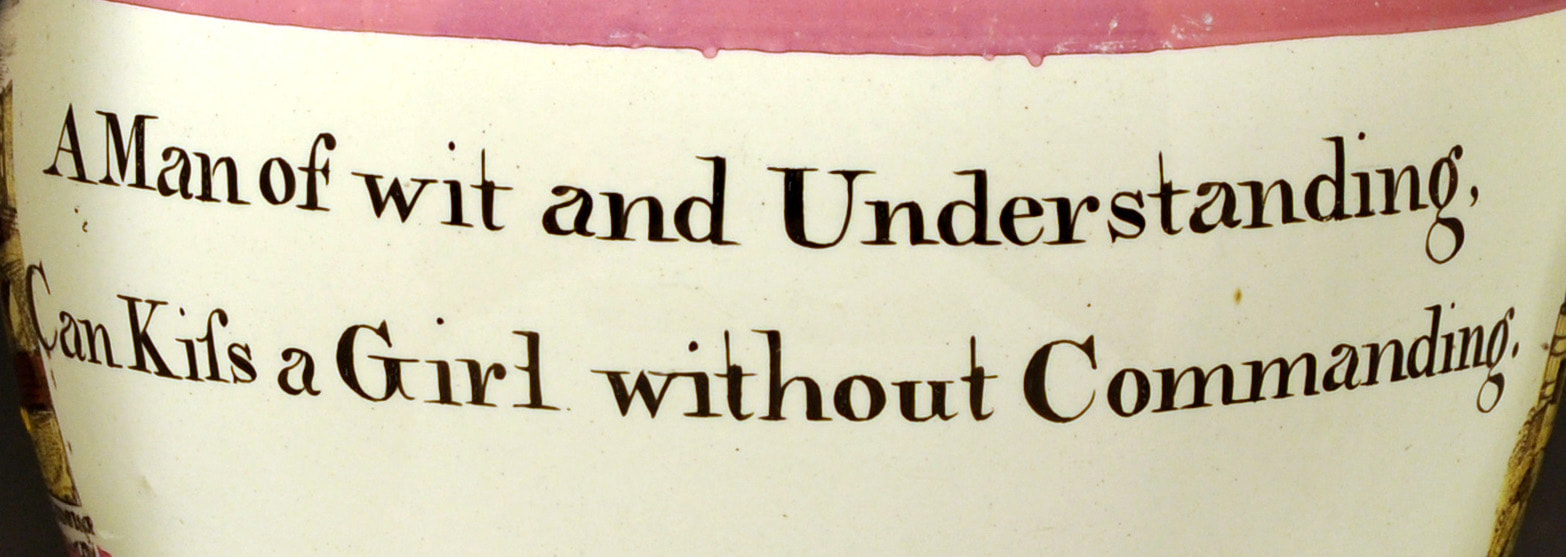
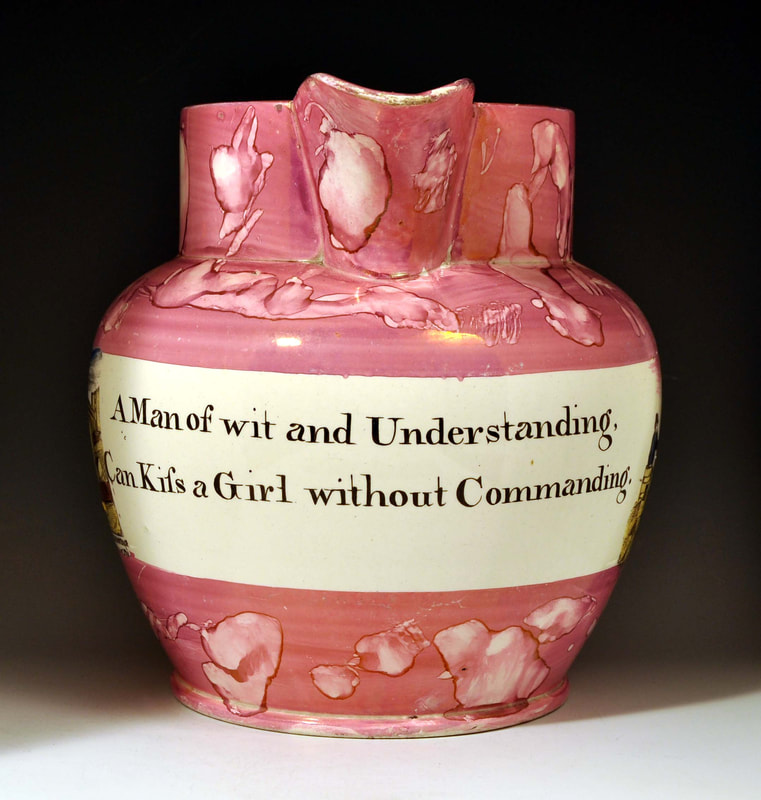
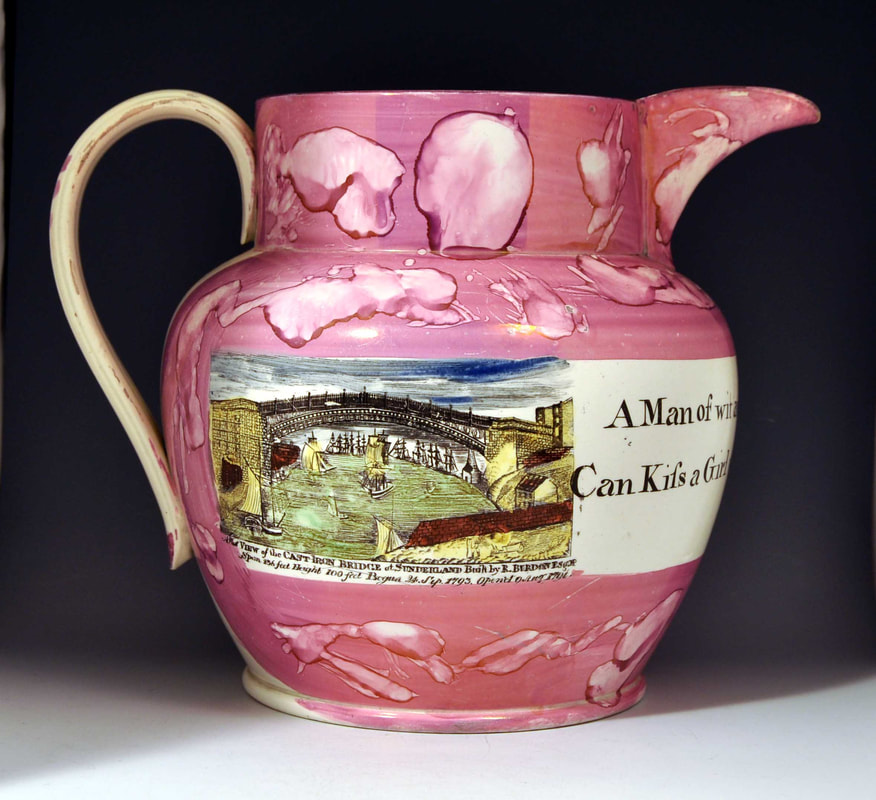


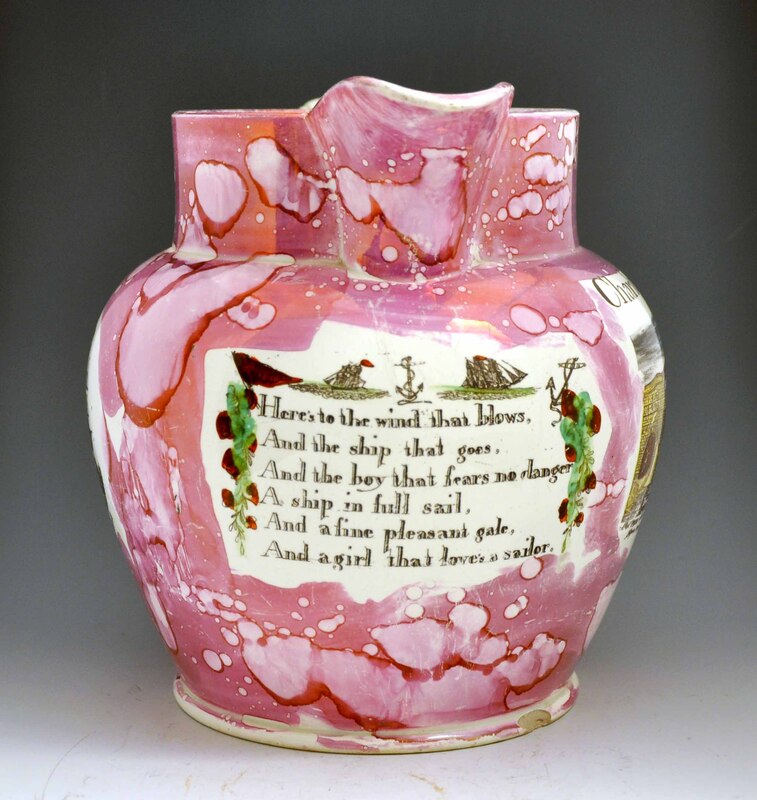
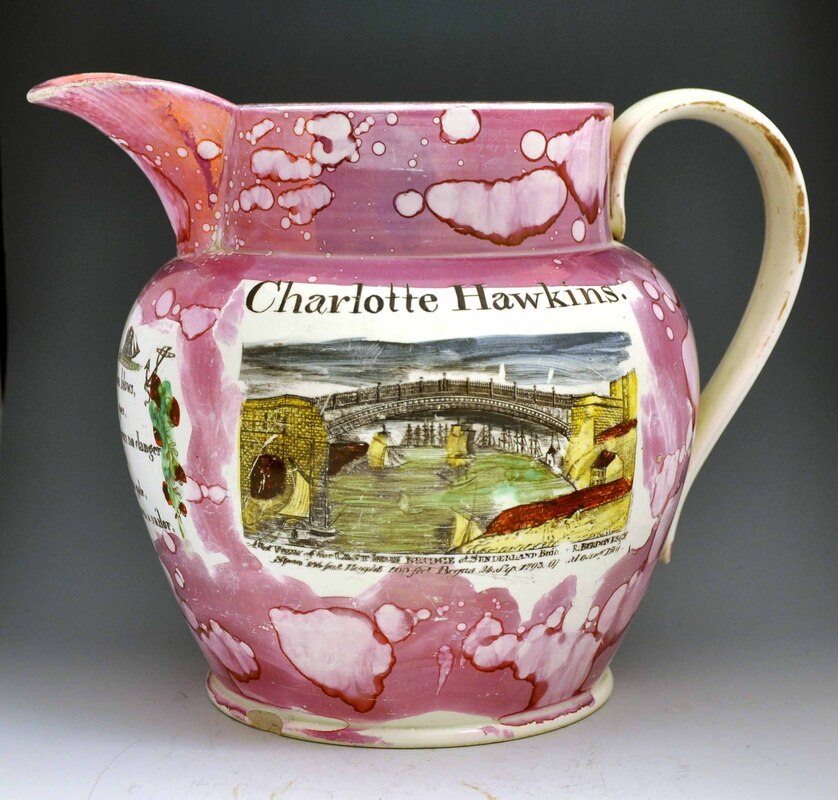

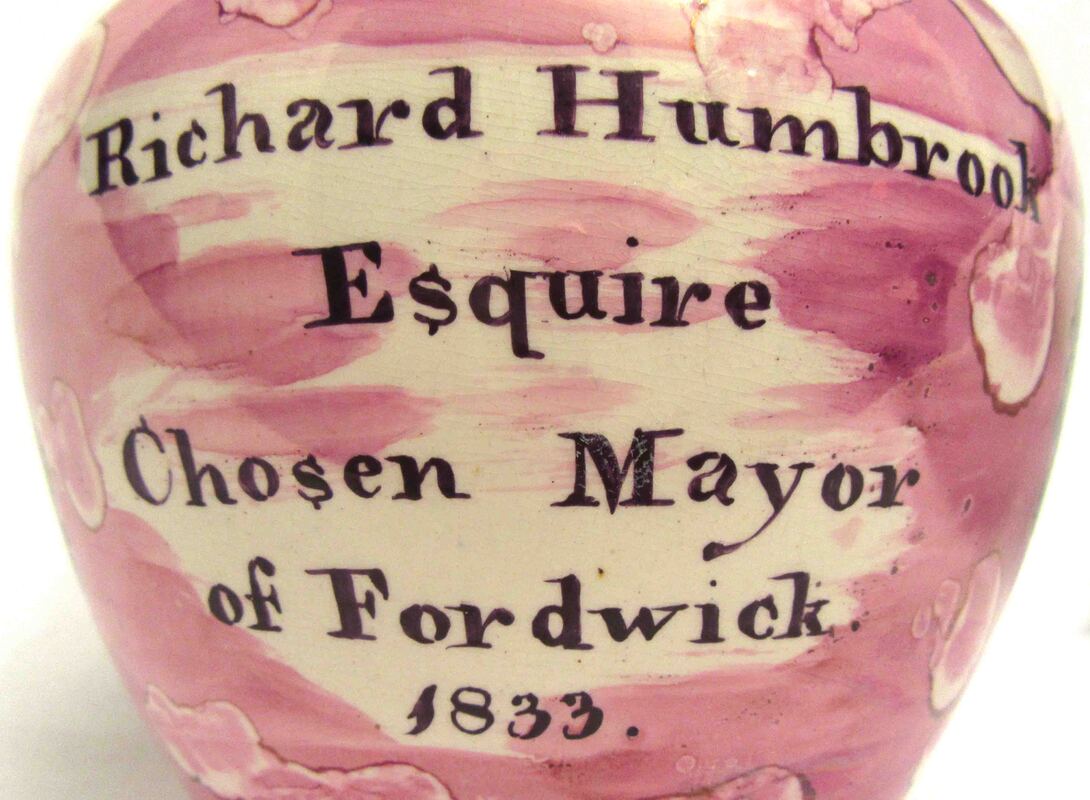
Photo Ian Holmes
This inscription is atypical, and done by a perhaps more amateurish hand. However, the jug below is attributed to North Shields on the basis of the trademark brush strokes on the handle.

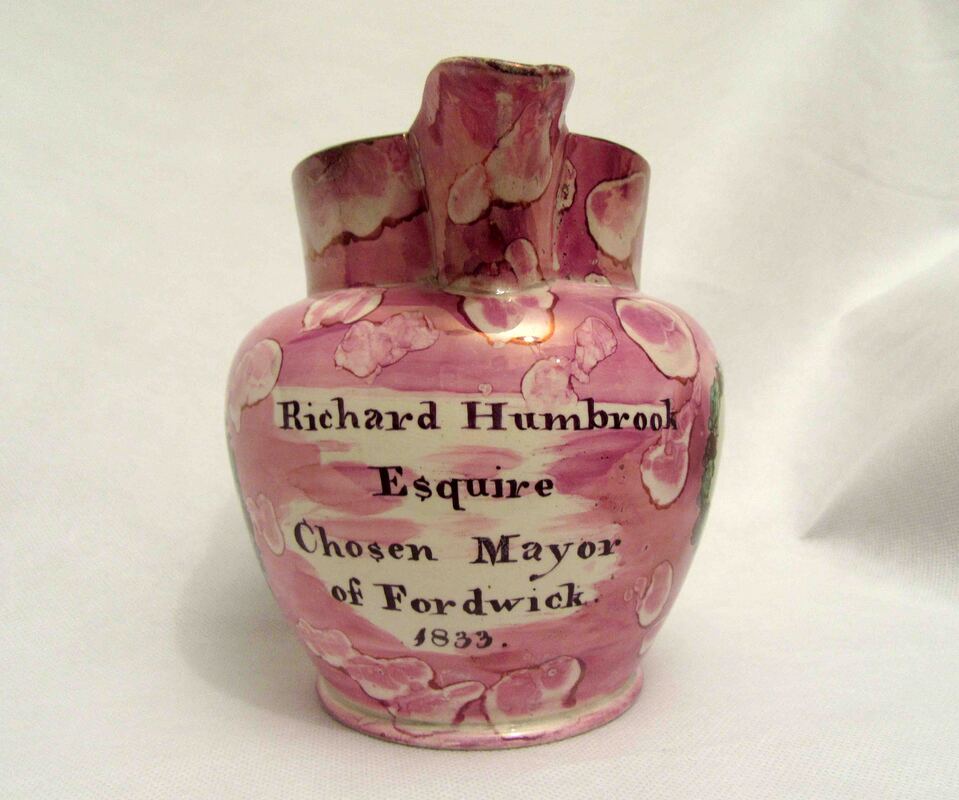

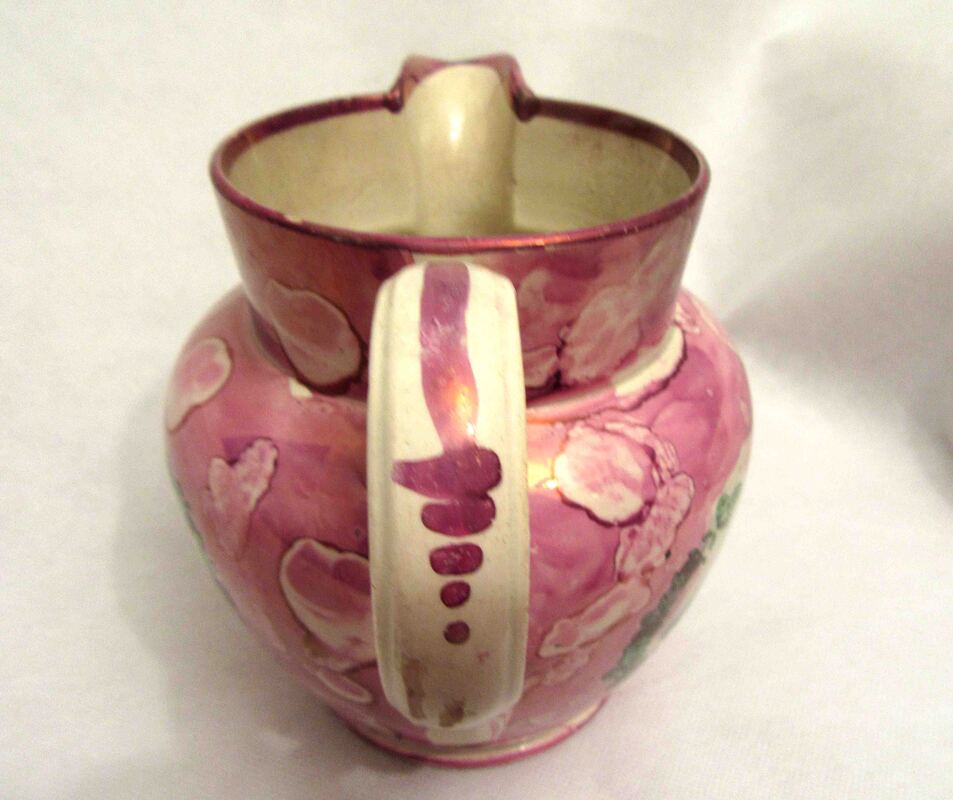
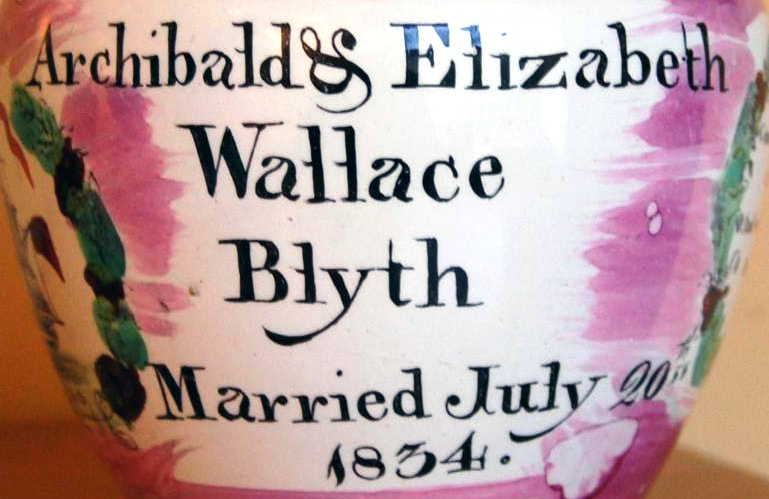
Photo Erle Randall
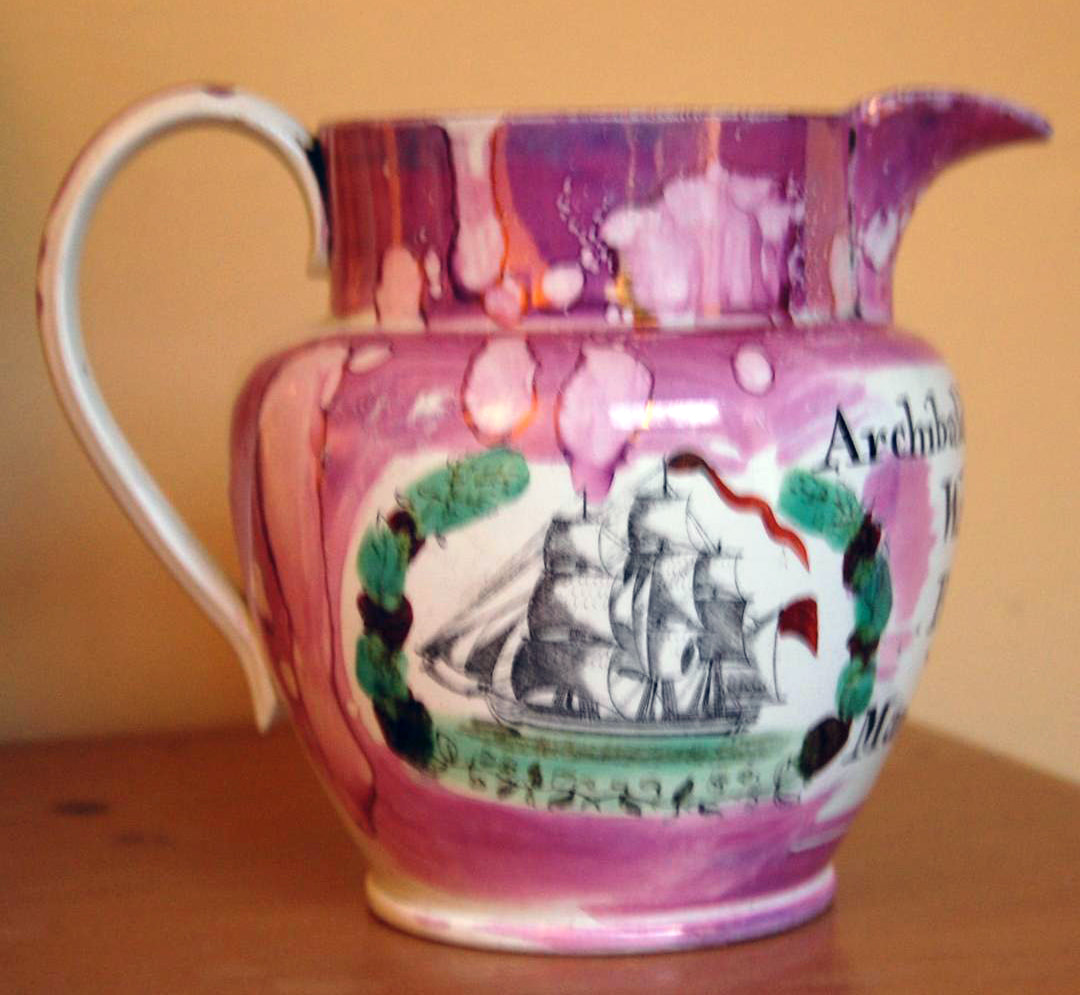

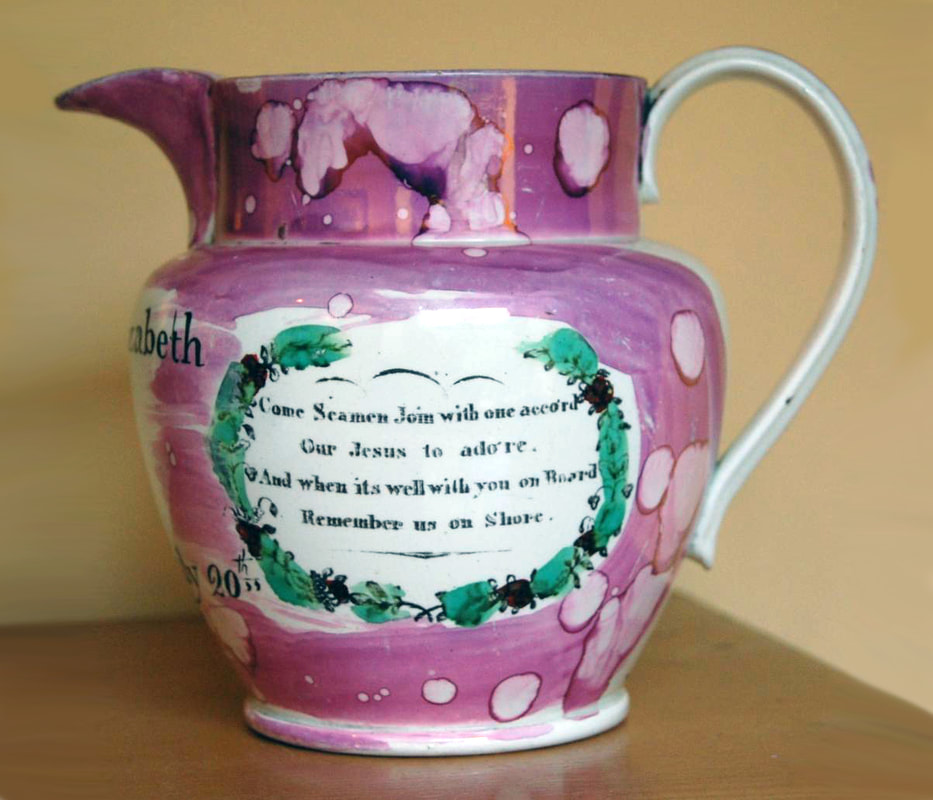
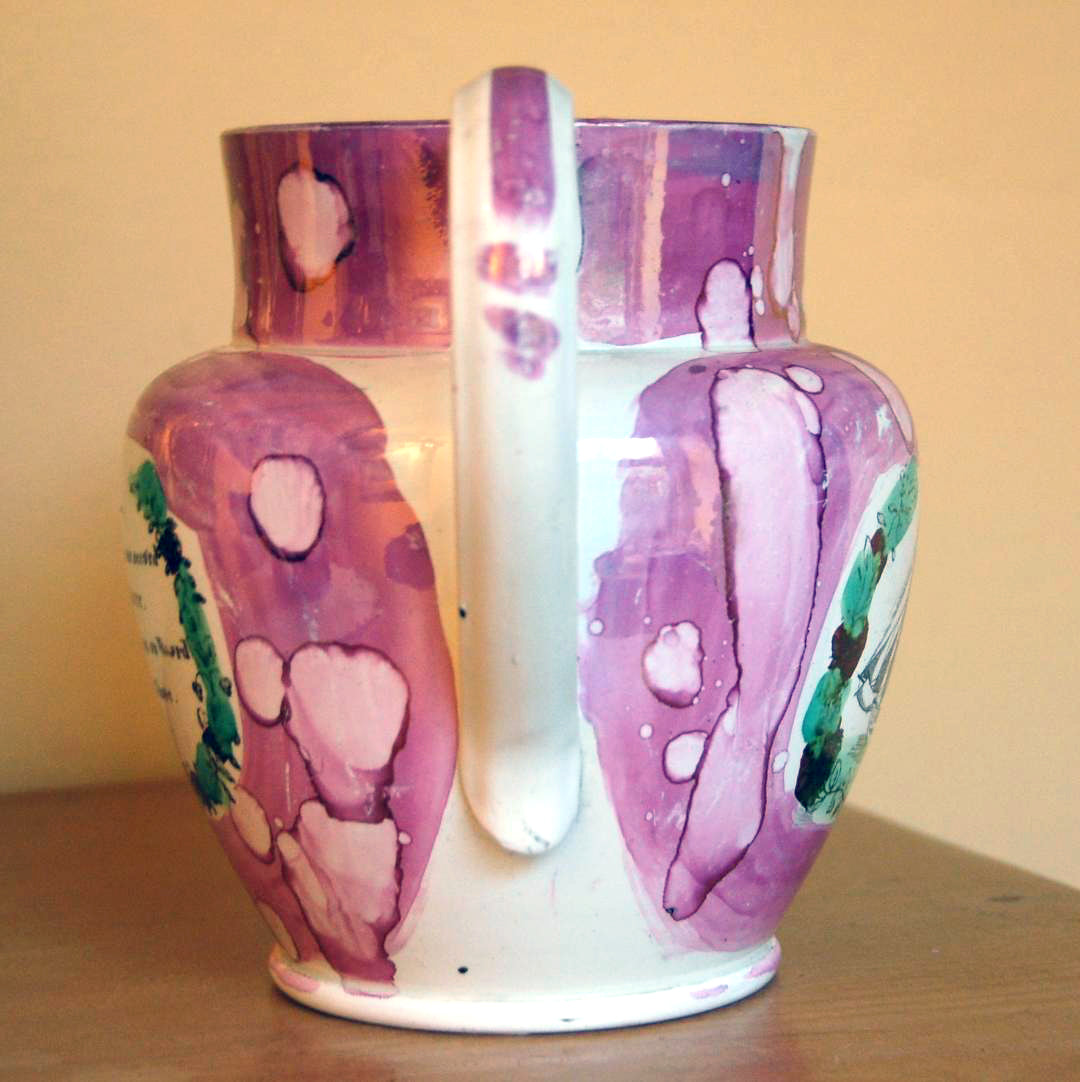
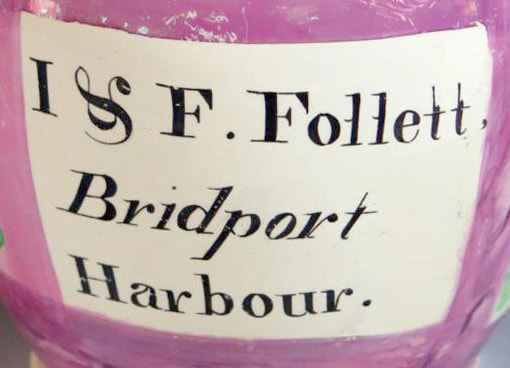
Photo Piers Motley
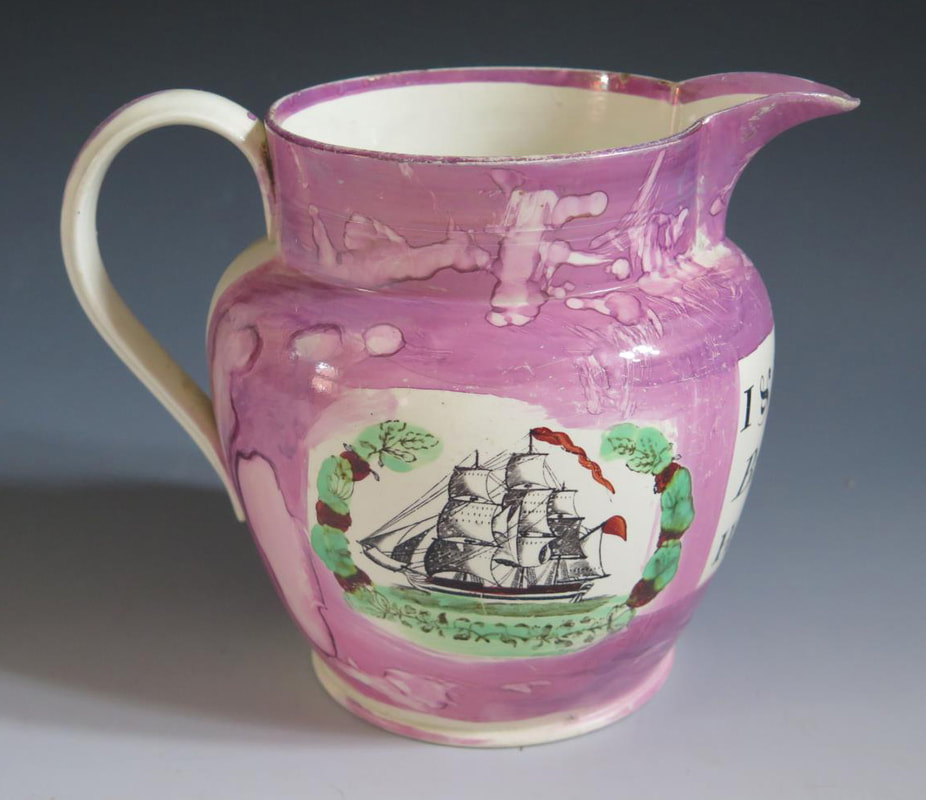
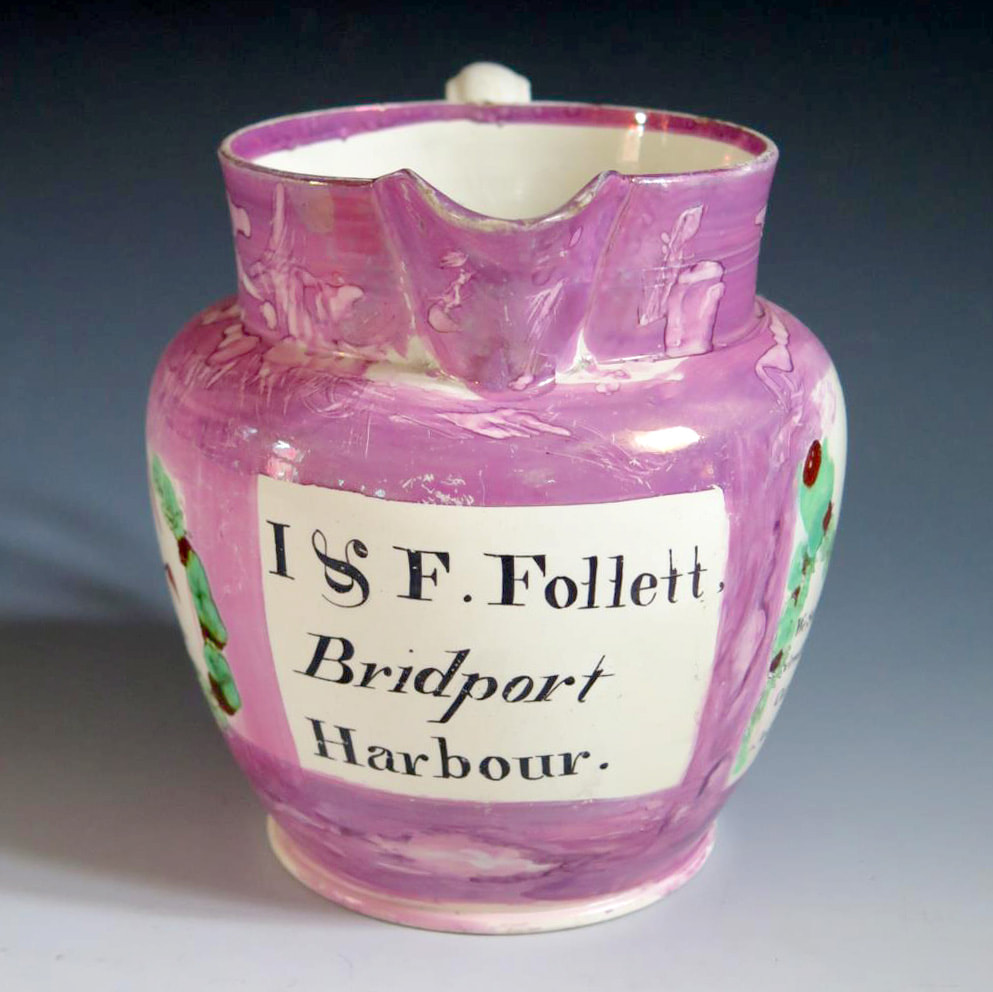
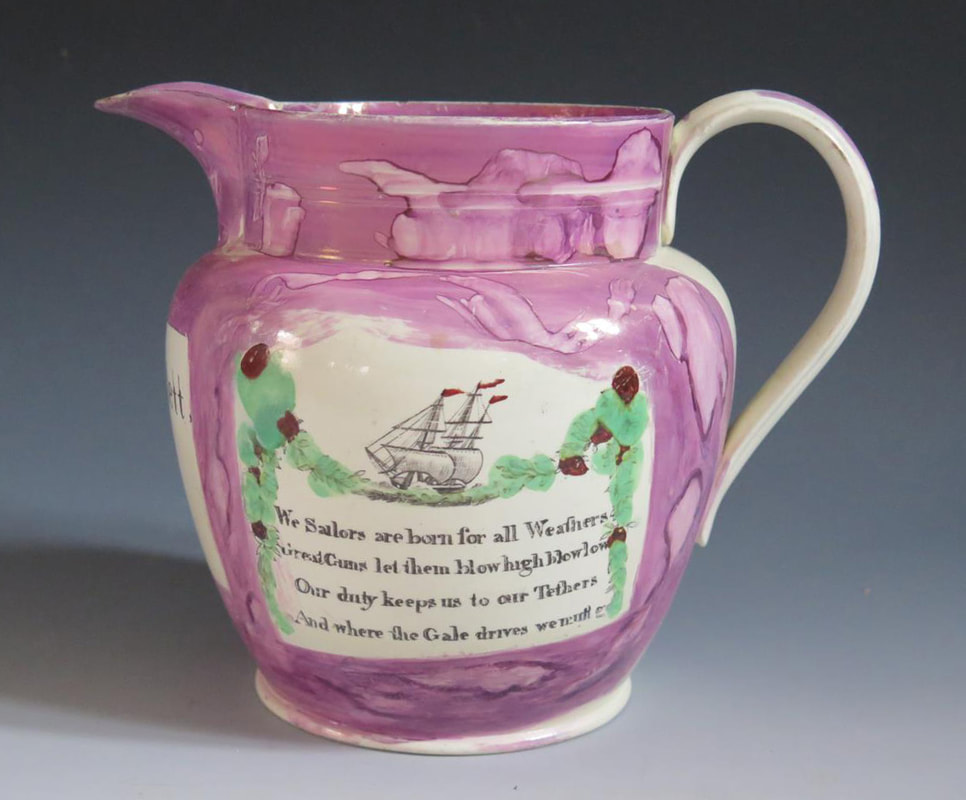
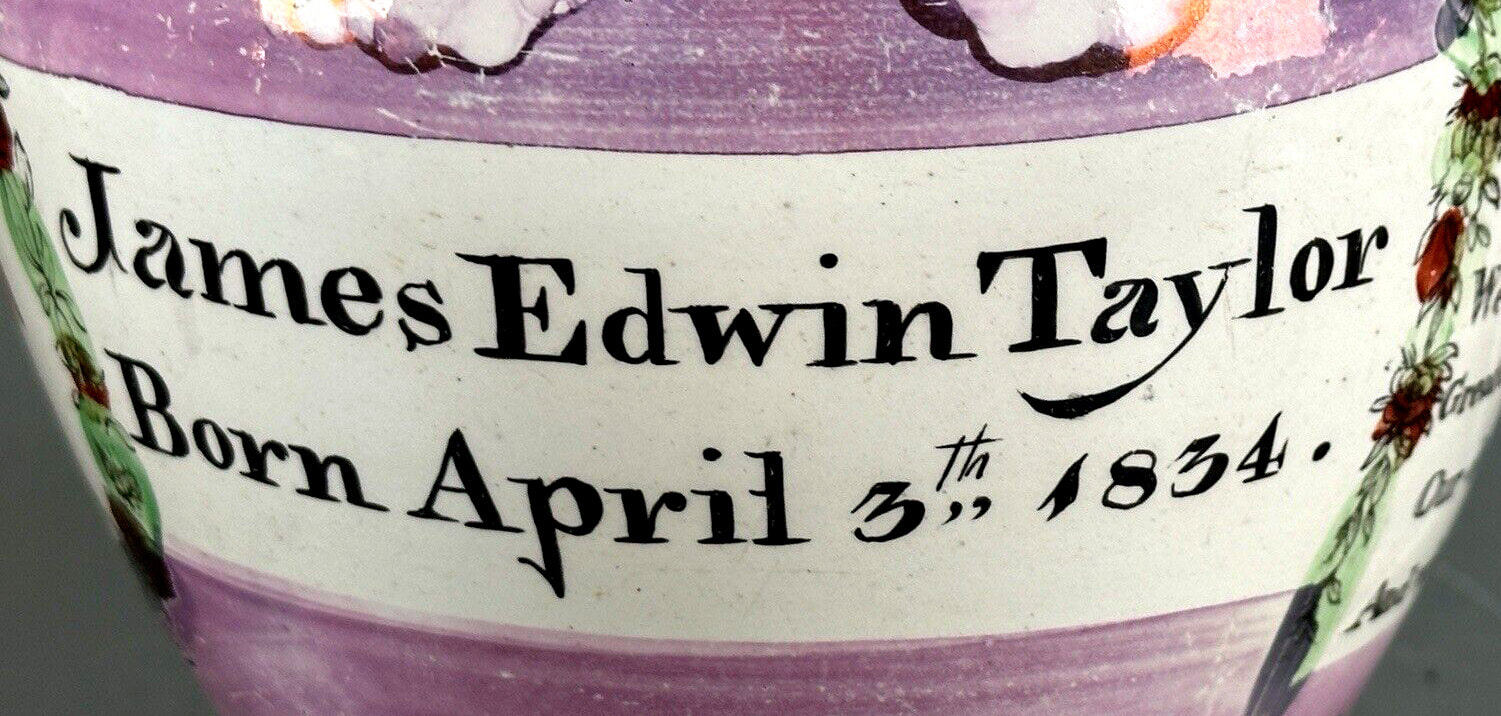
Photo eBay
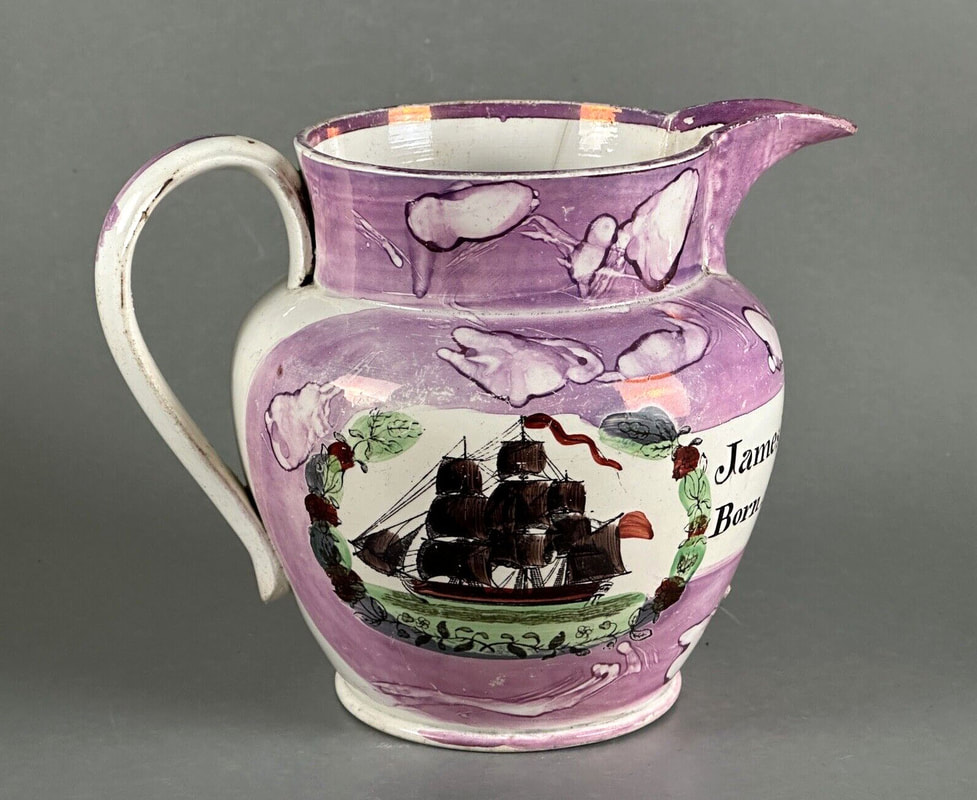
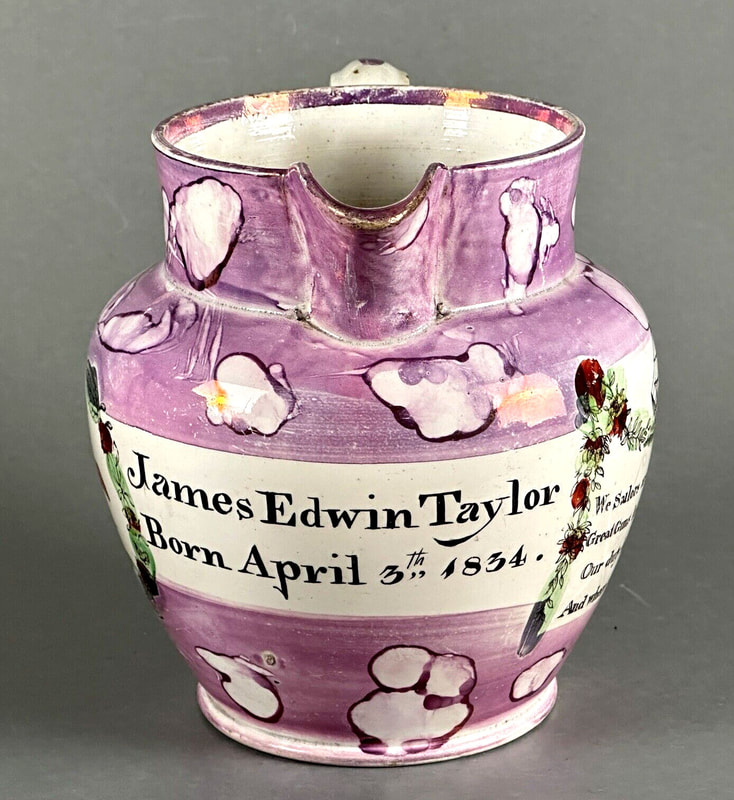
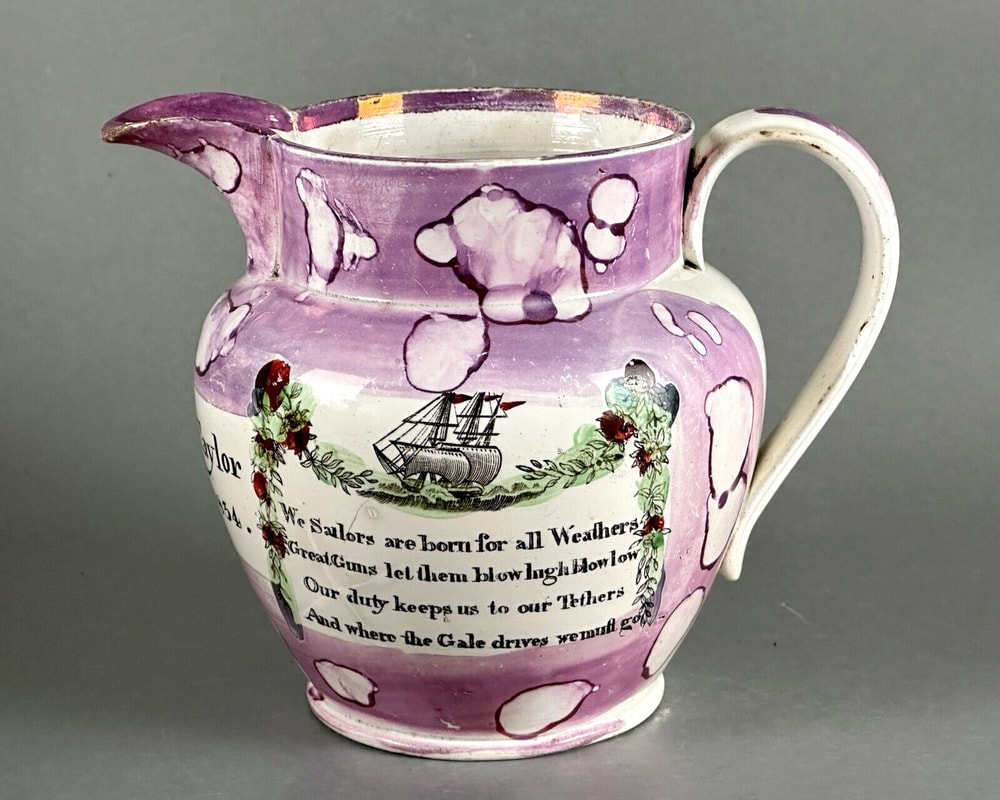
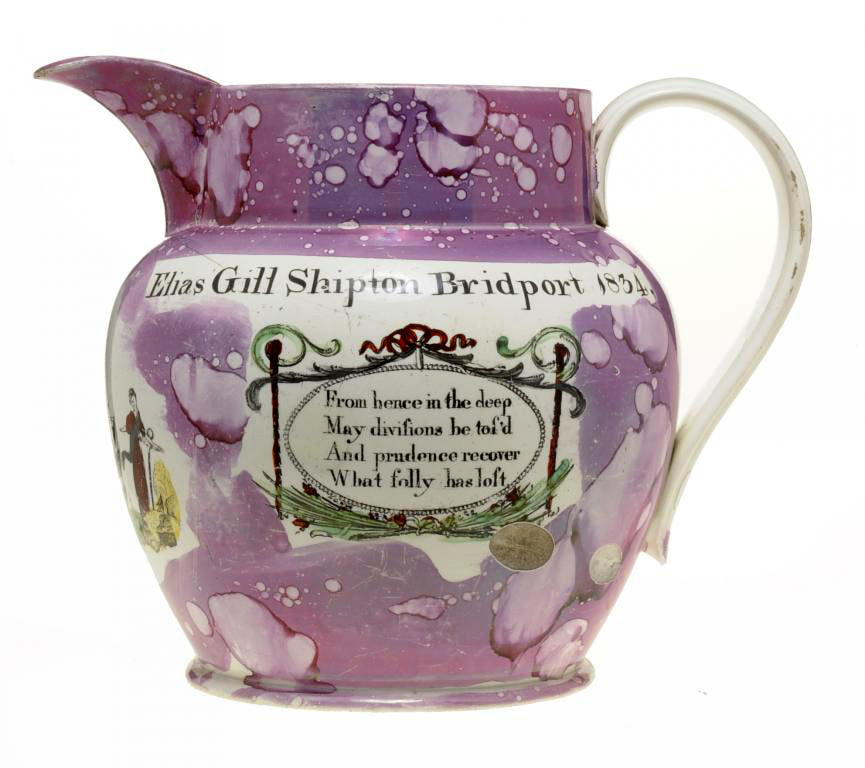
Photo Mellors and Kirk
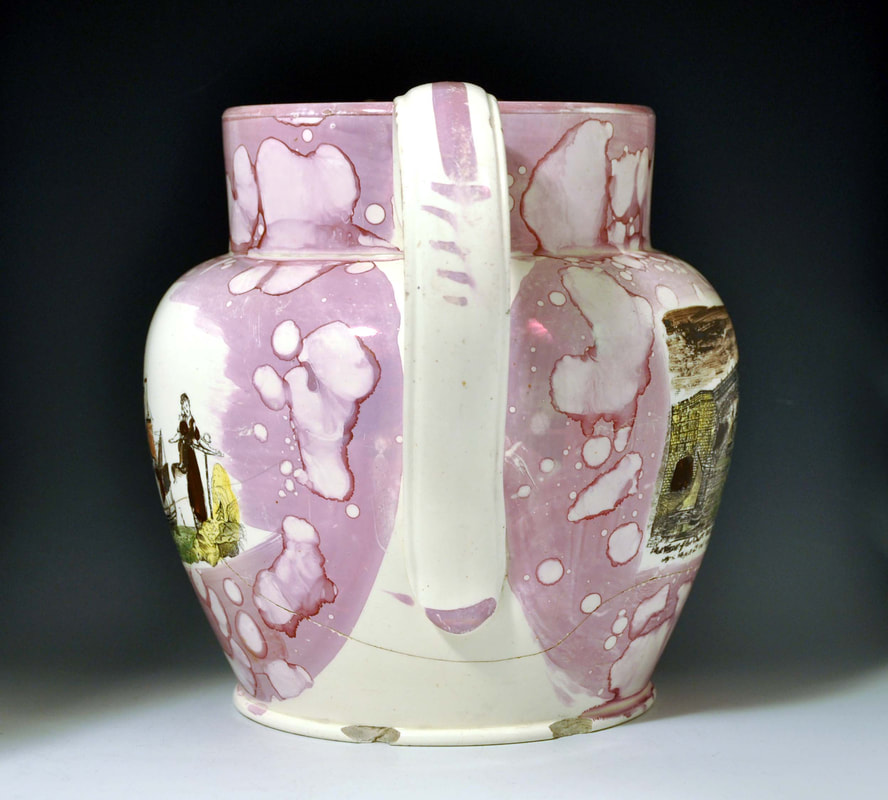
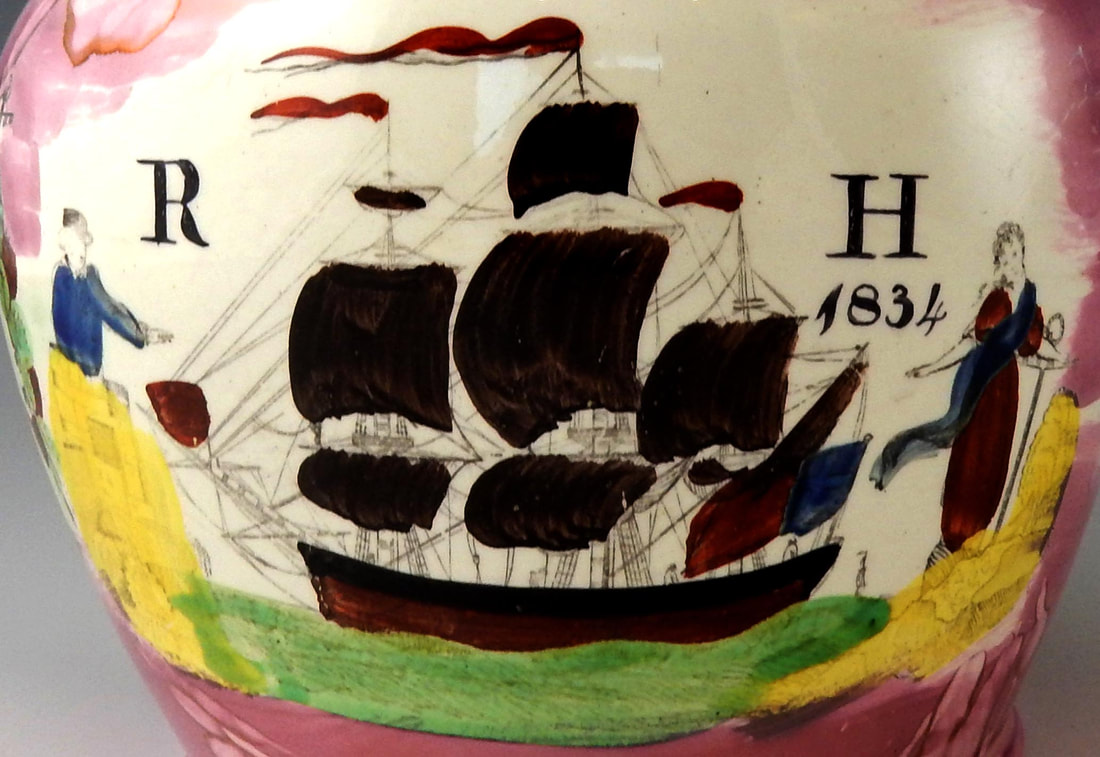
Pickleherring-Antique British Pottery
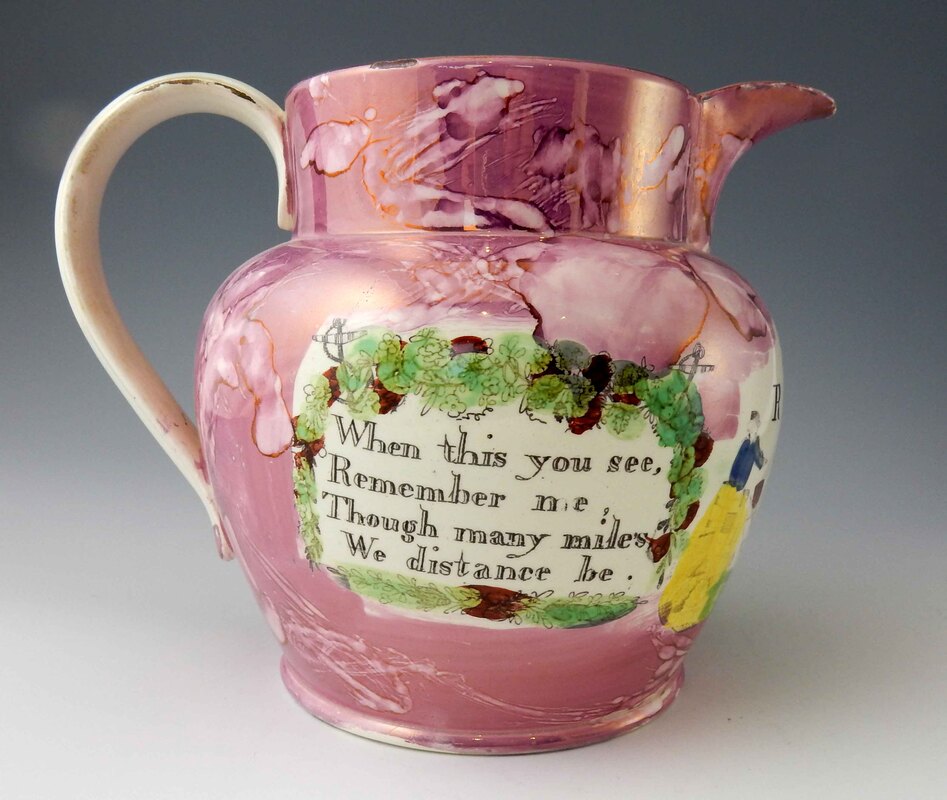
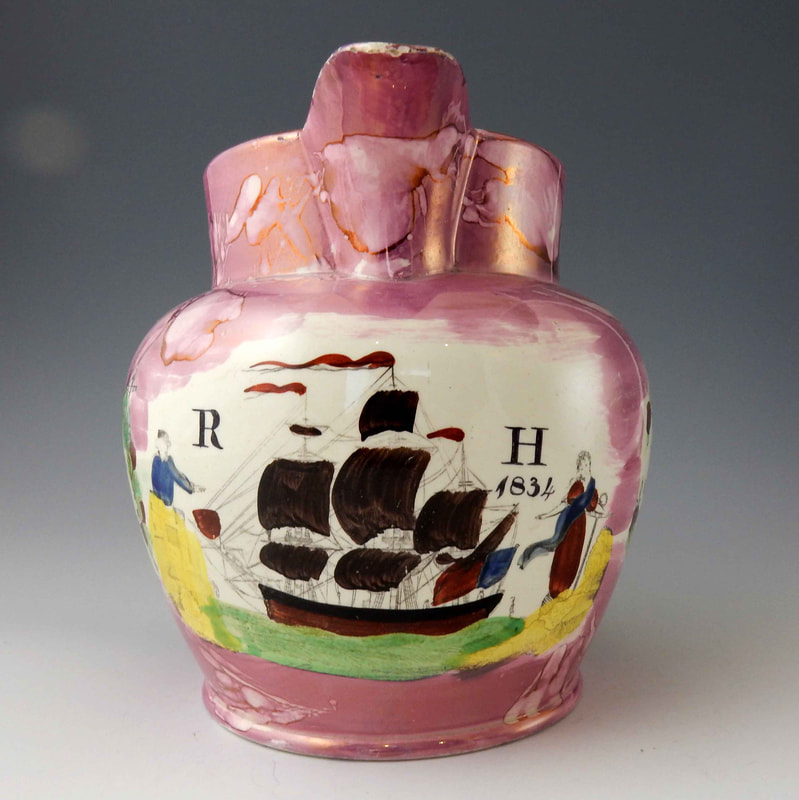

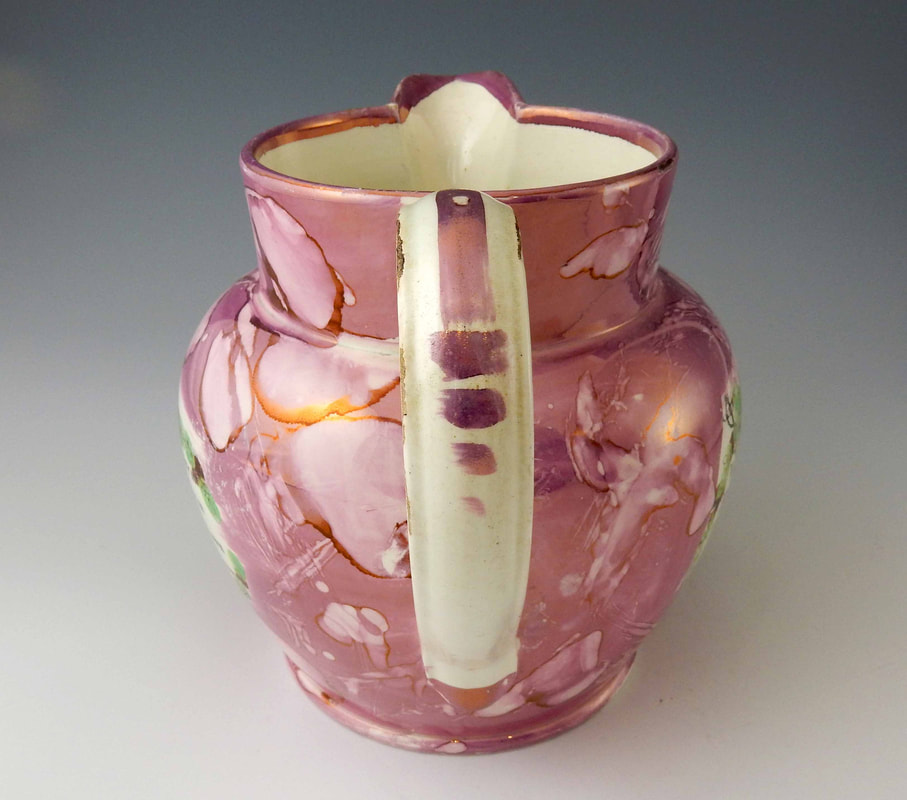
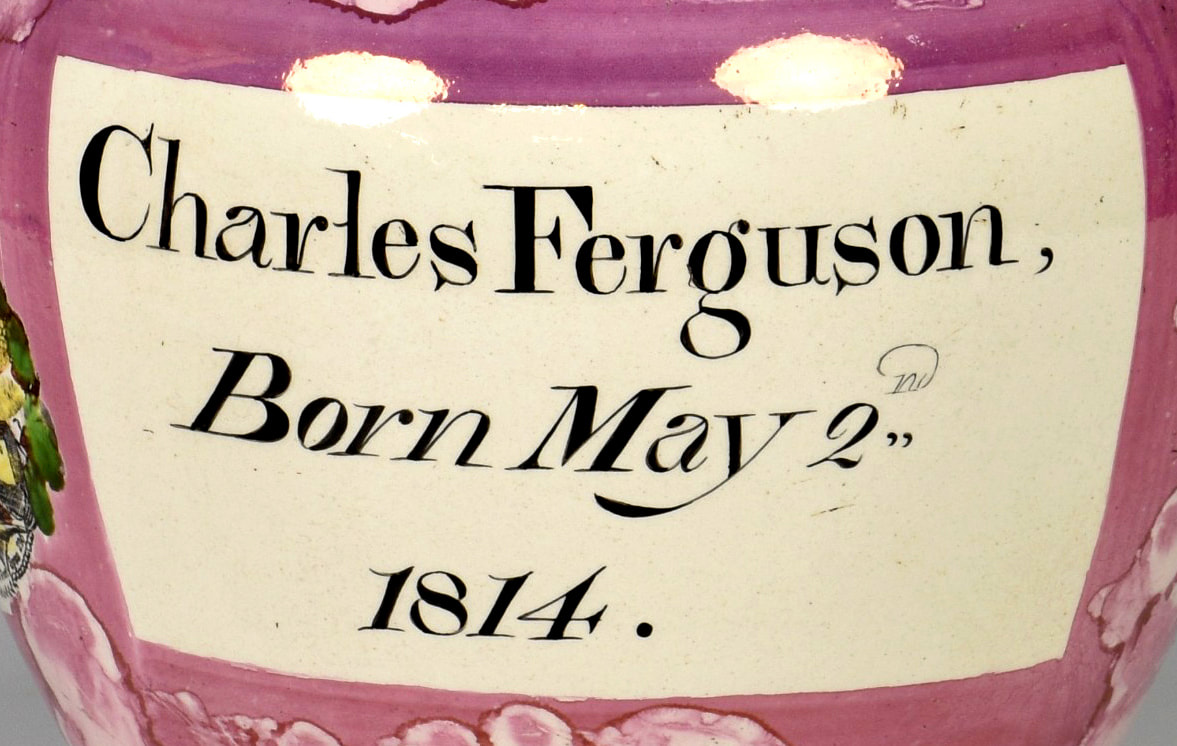
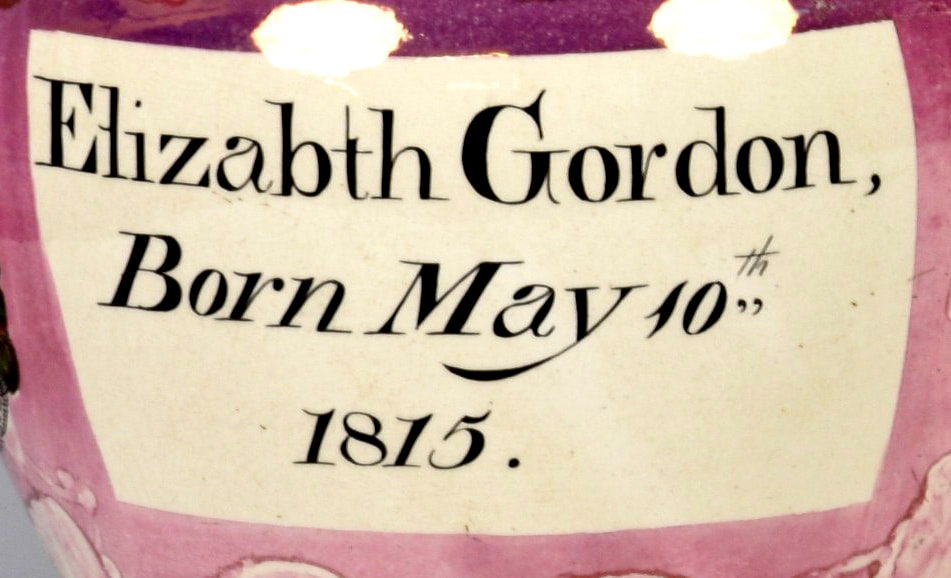
A pair of large marriage jugs. Charles Ferguson married Elizabeth Gordon on 6 September 1836 at St Helier, Jersey.
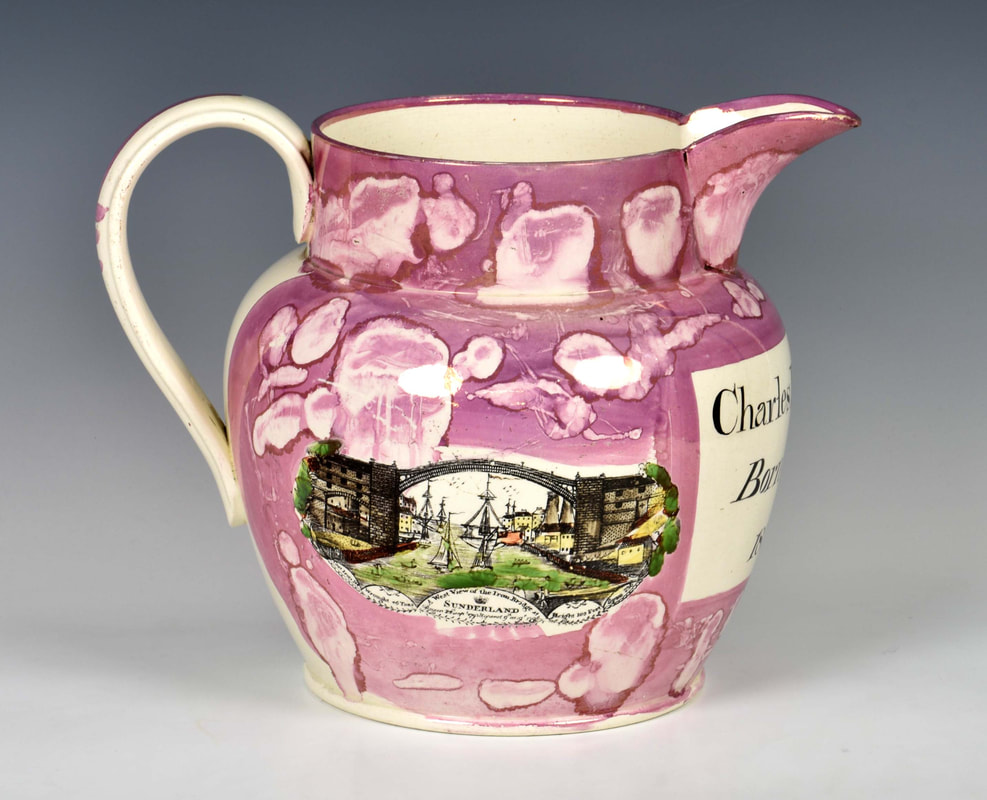
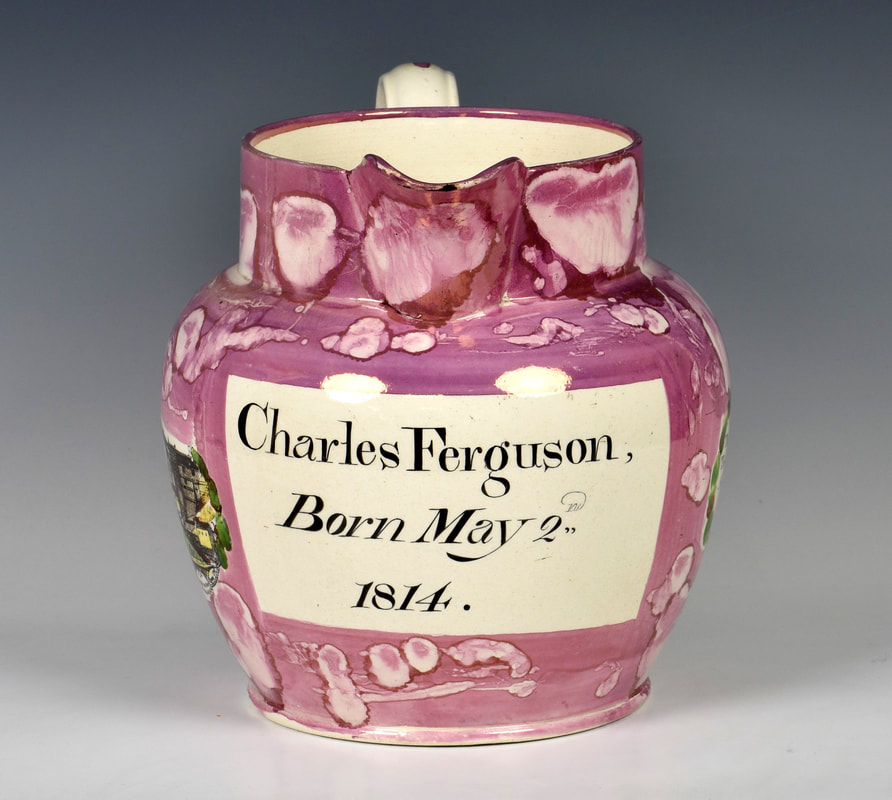
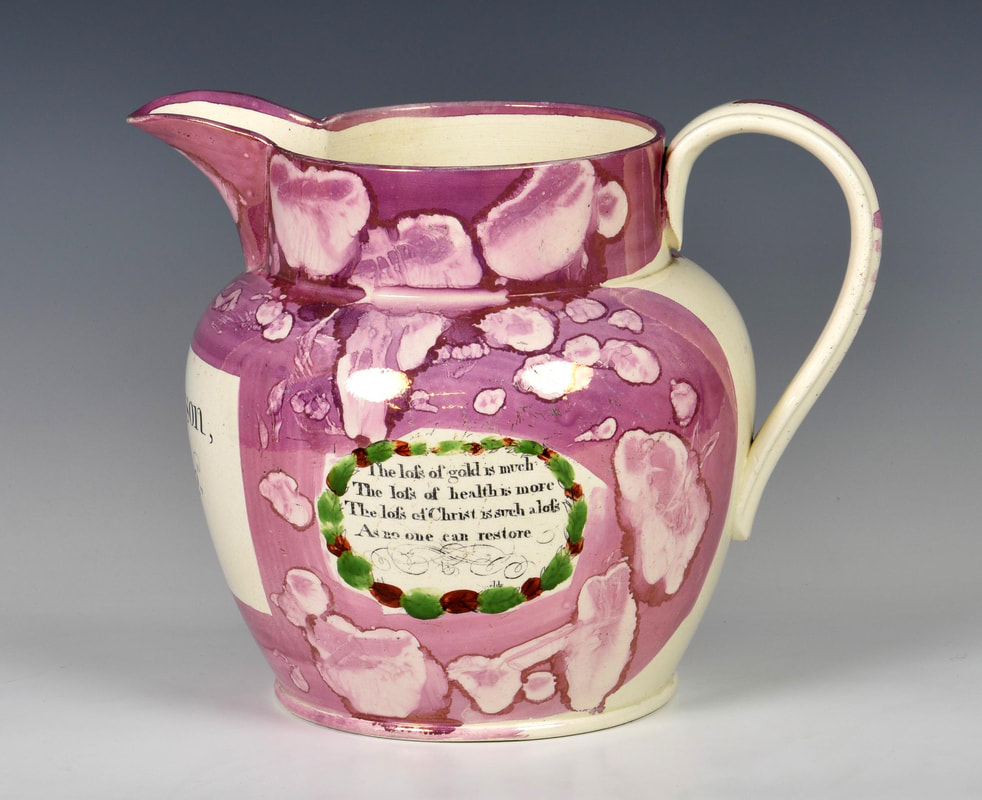
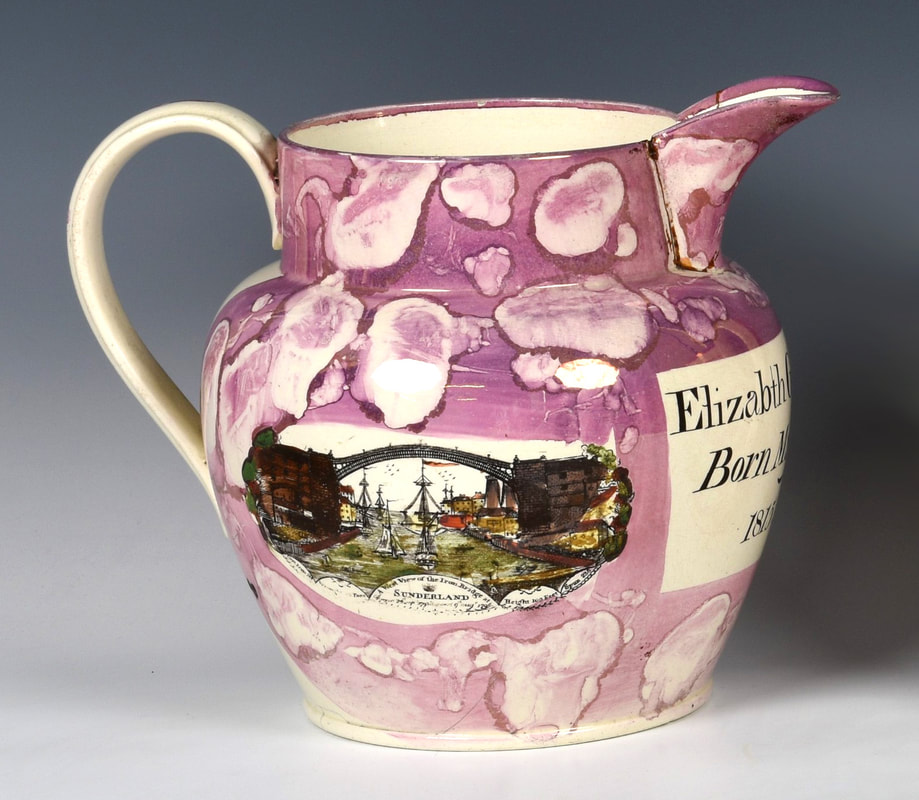

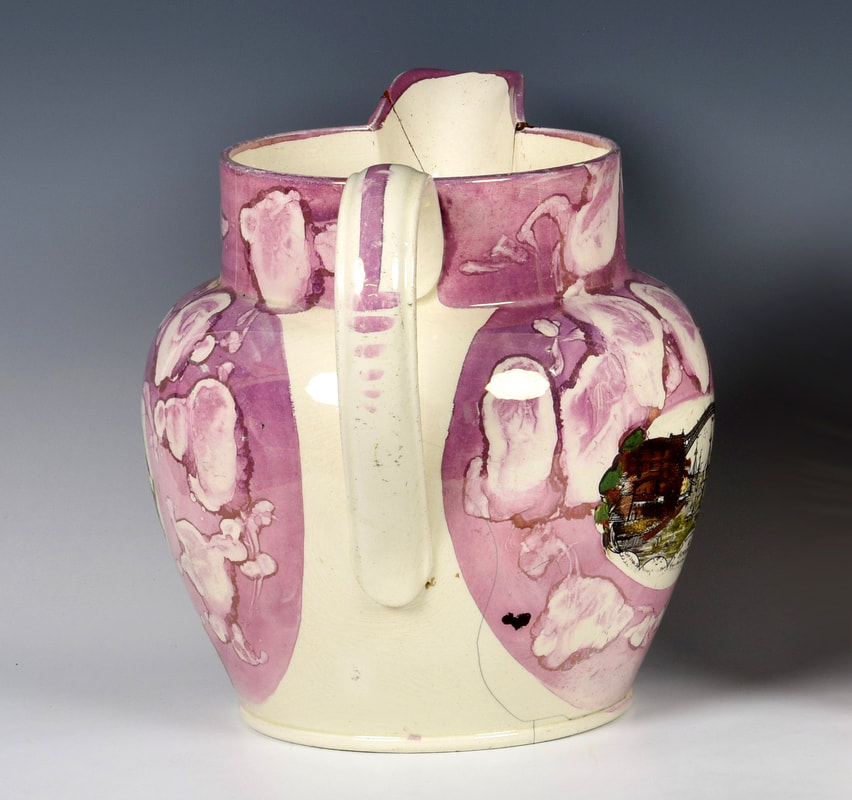
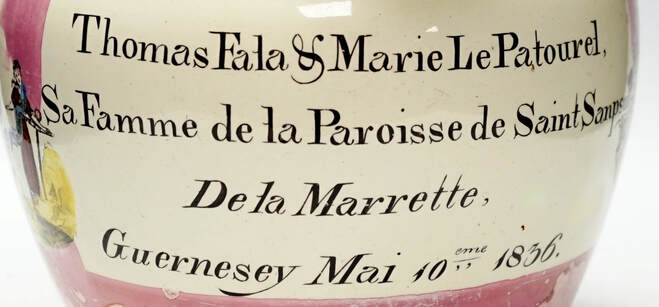
Photo Gorringes Auctioneers
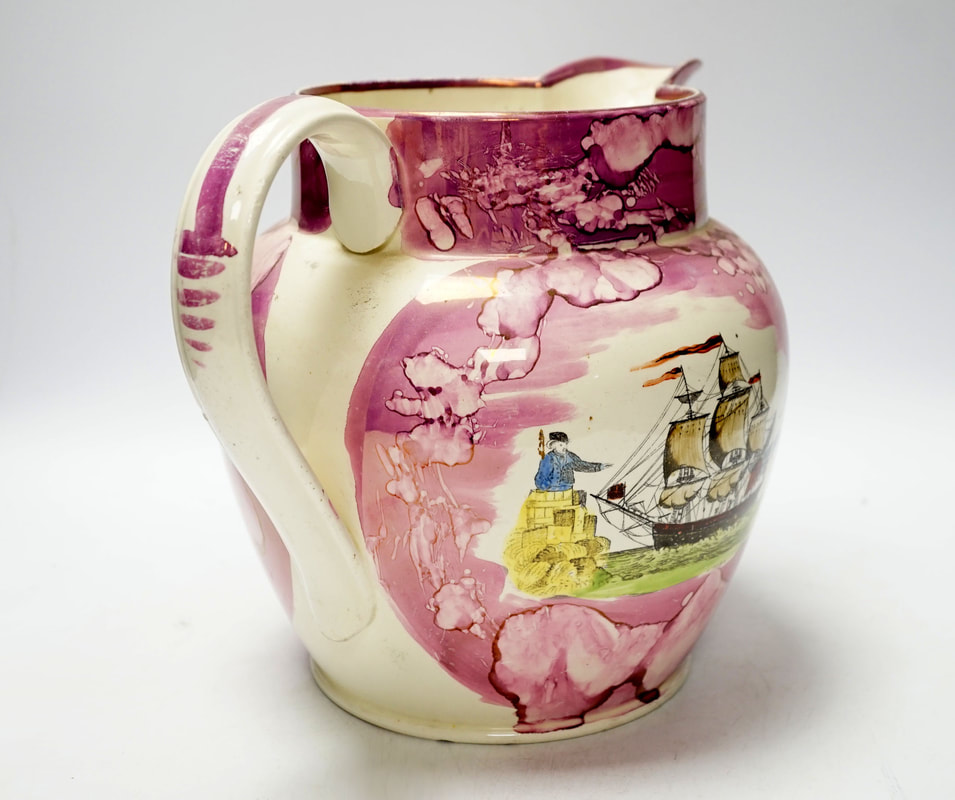
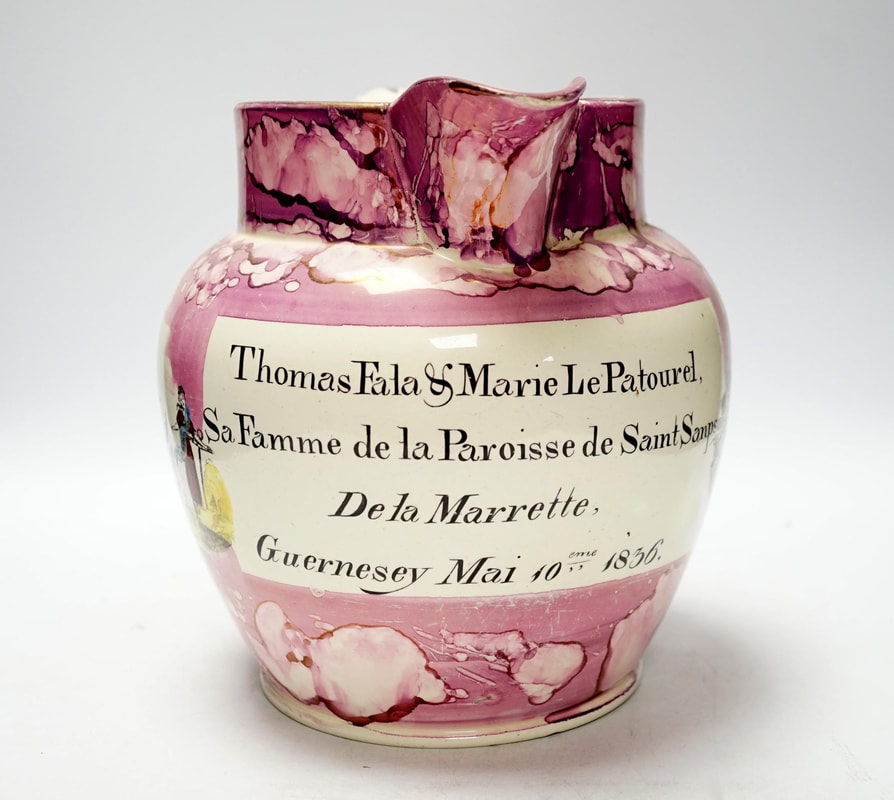
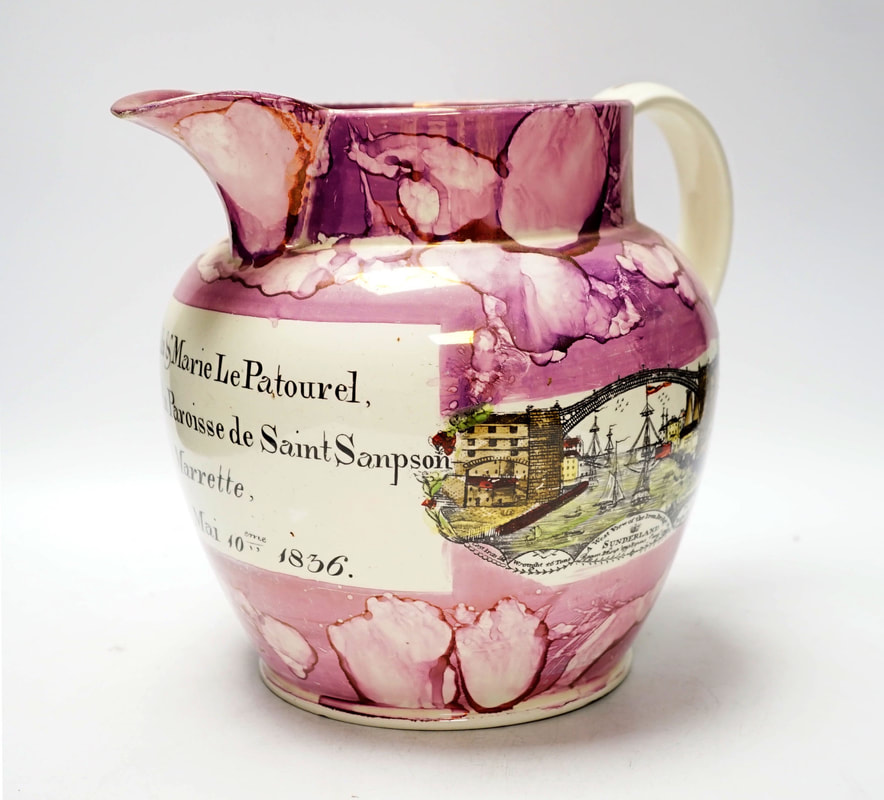
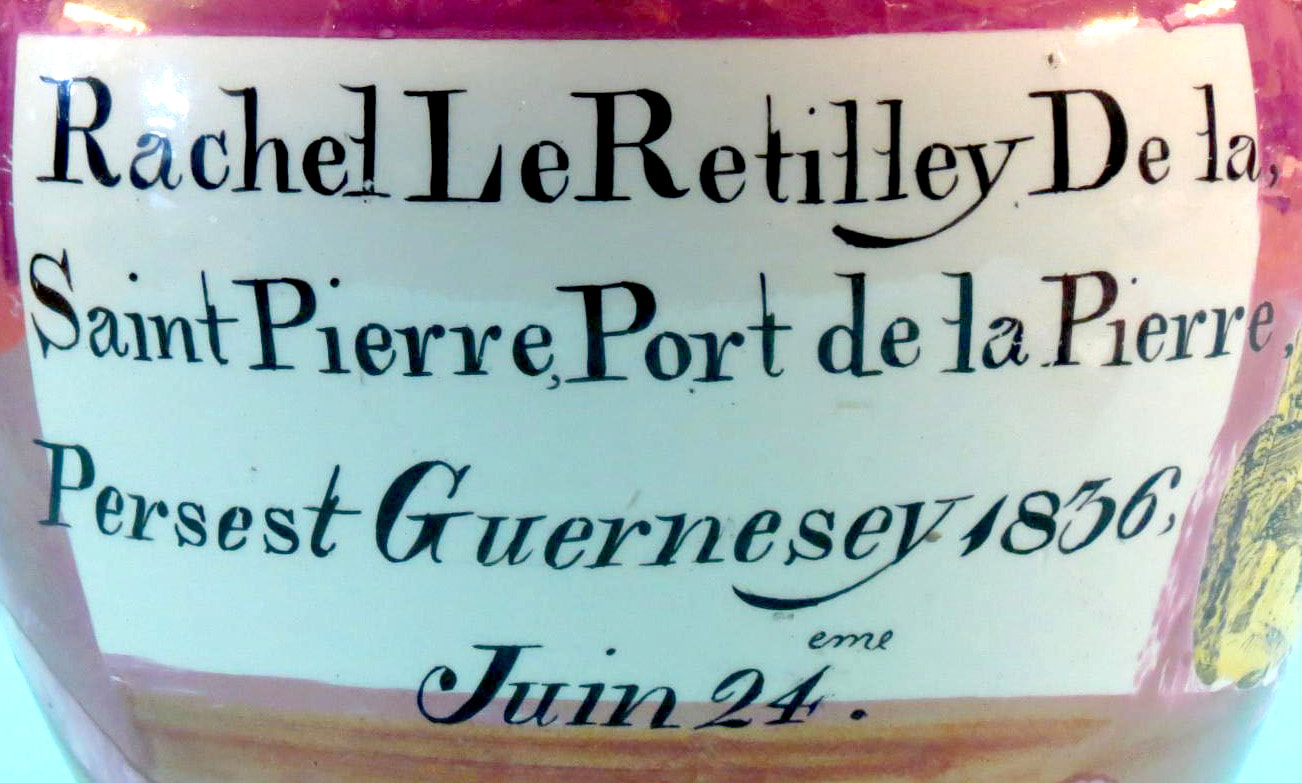
Photo Campbells Auctions

Undated C,C & Co items
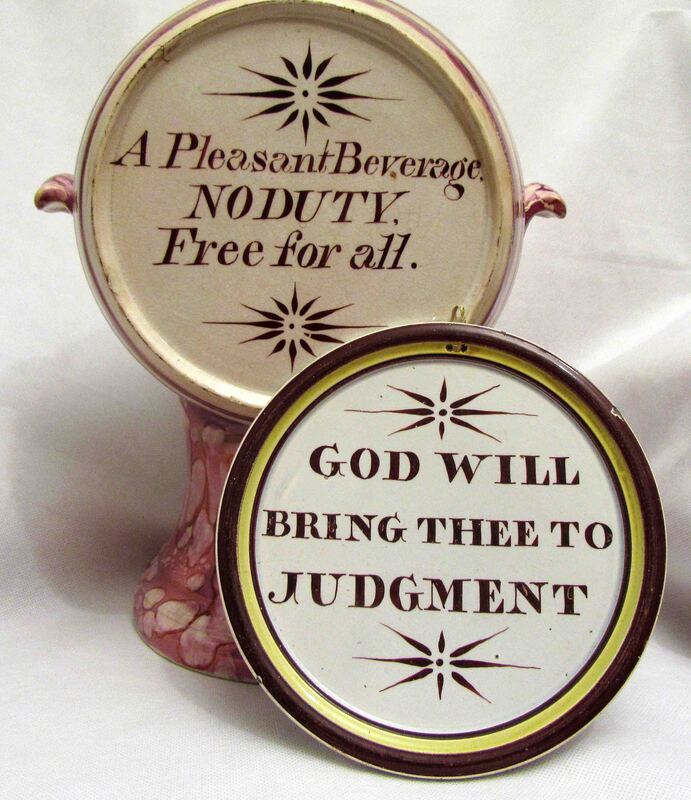
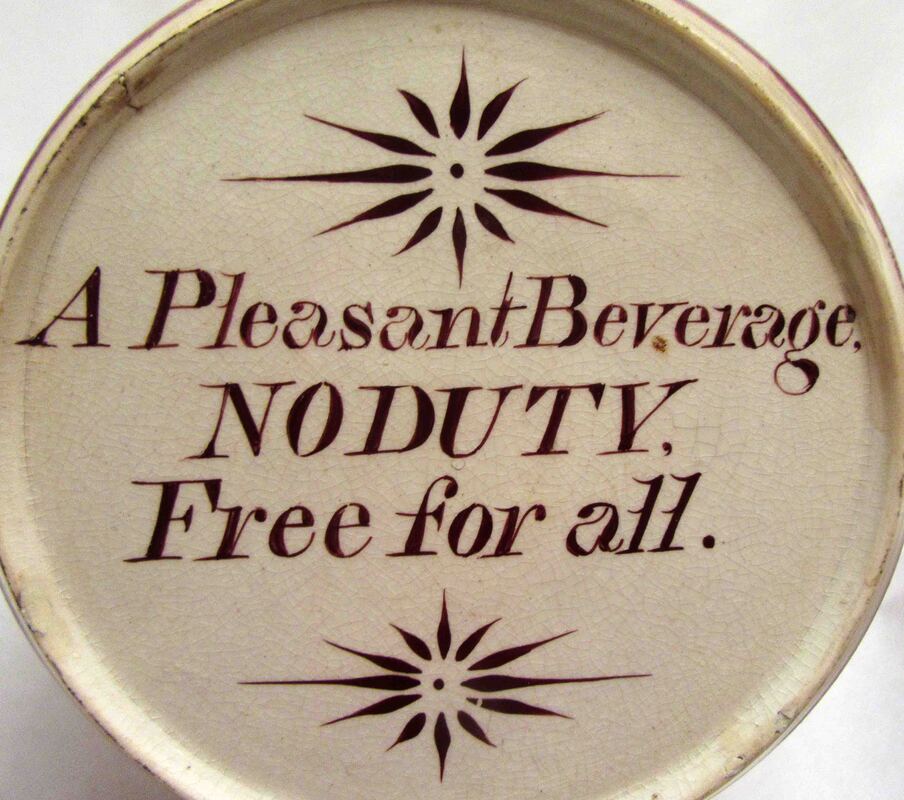
Although the water keg below is undated, the Temperance Movement started to gain momentum in the mid 1830s. It is painted with an assured hand. The lower case 'y' is similar to the Guernsey jug above. See Ian Holmes' page for an astonishing array of temperance items.

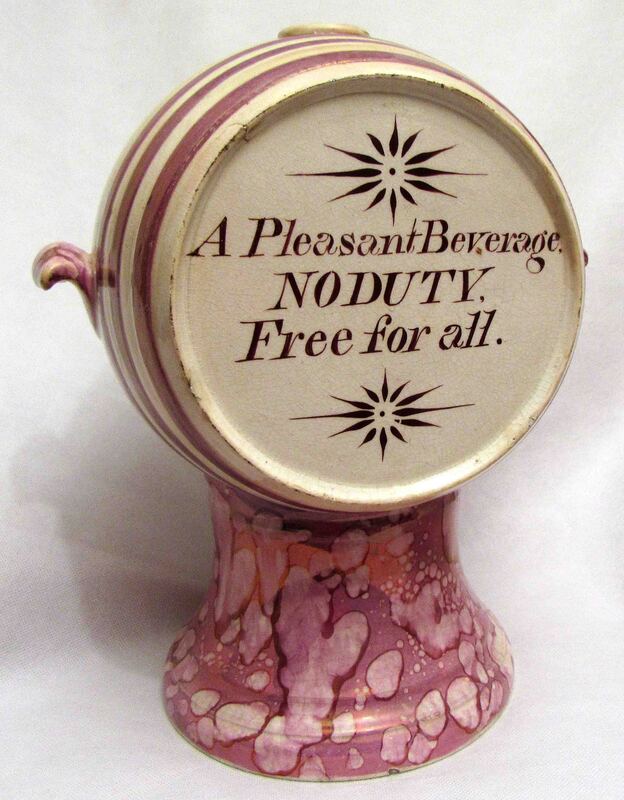
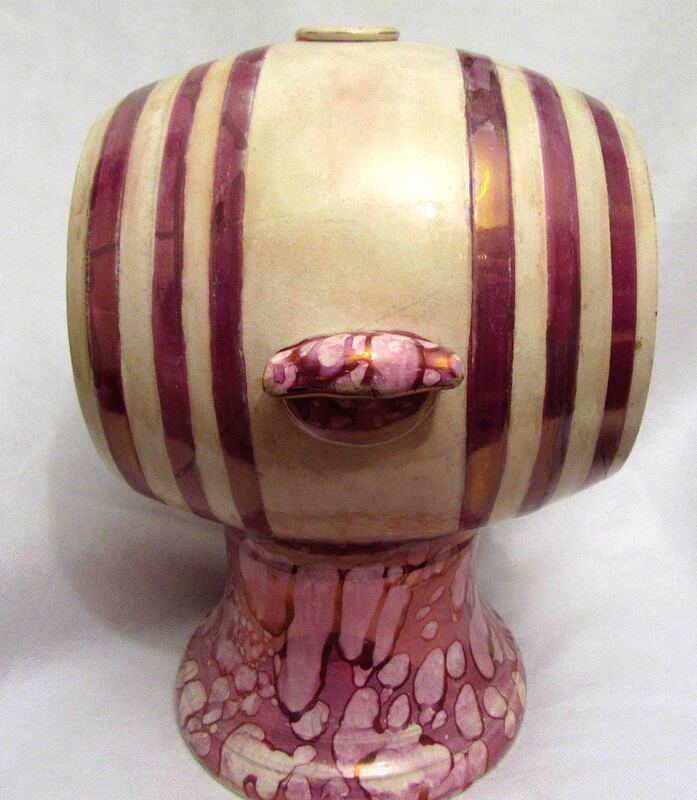
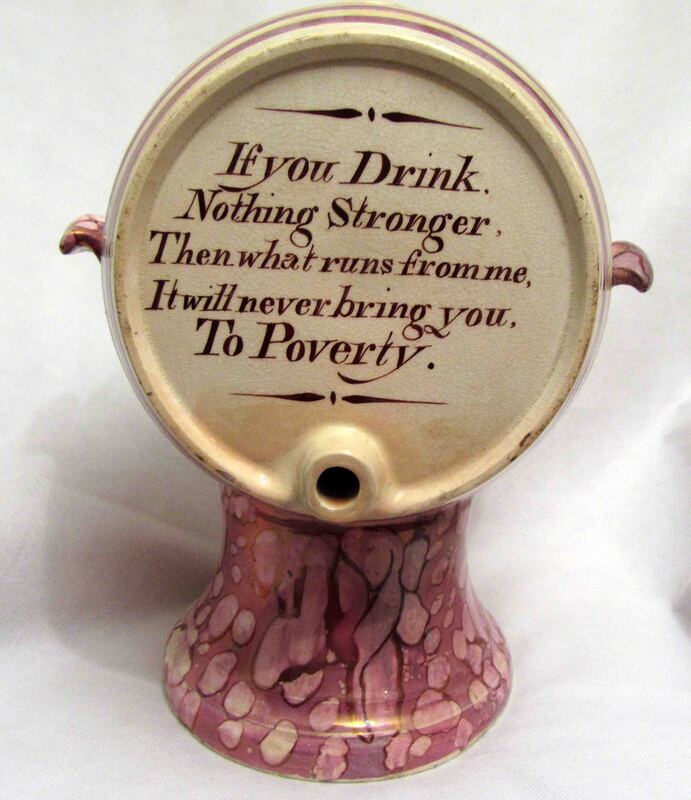
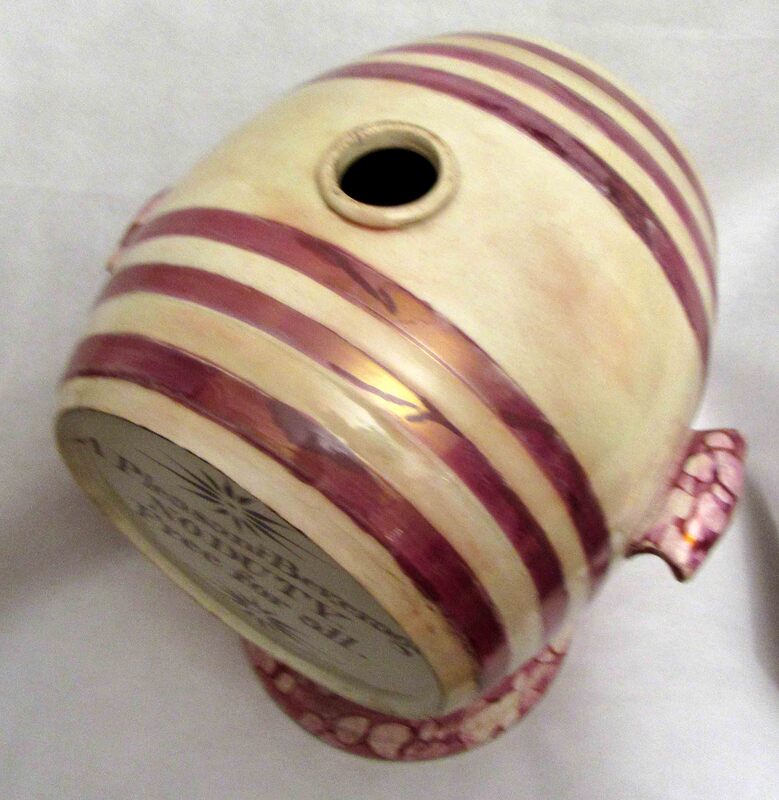
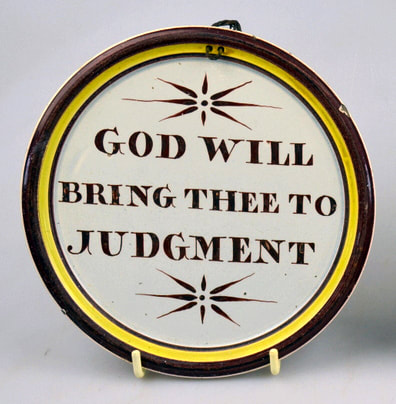
The top left plaque has an impressed mark for C,C & Co.