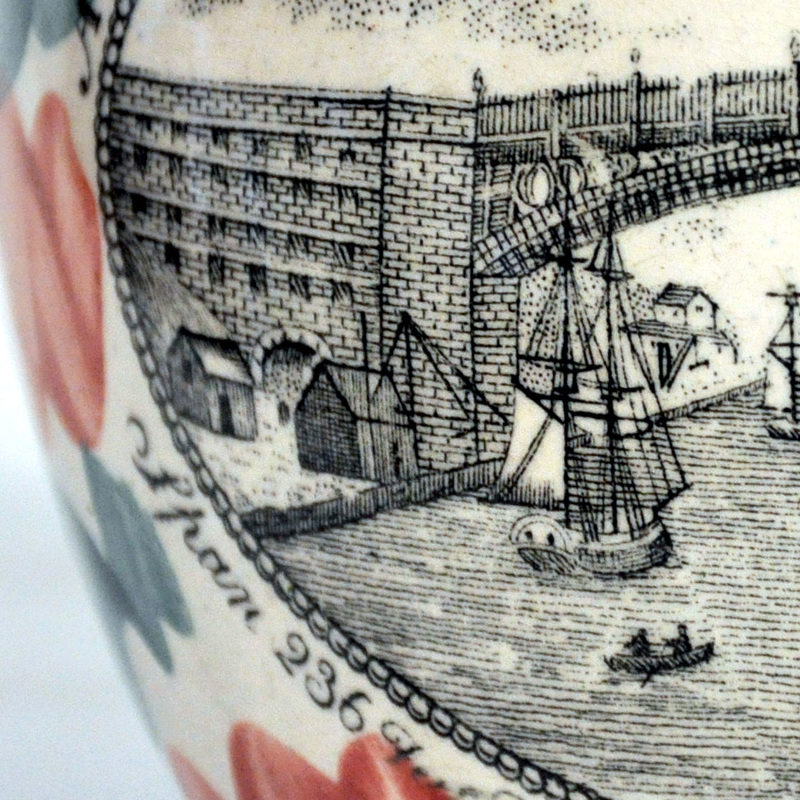
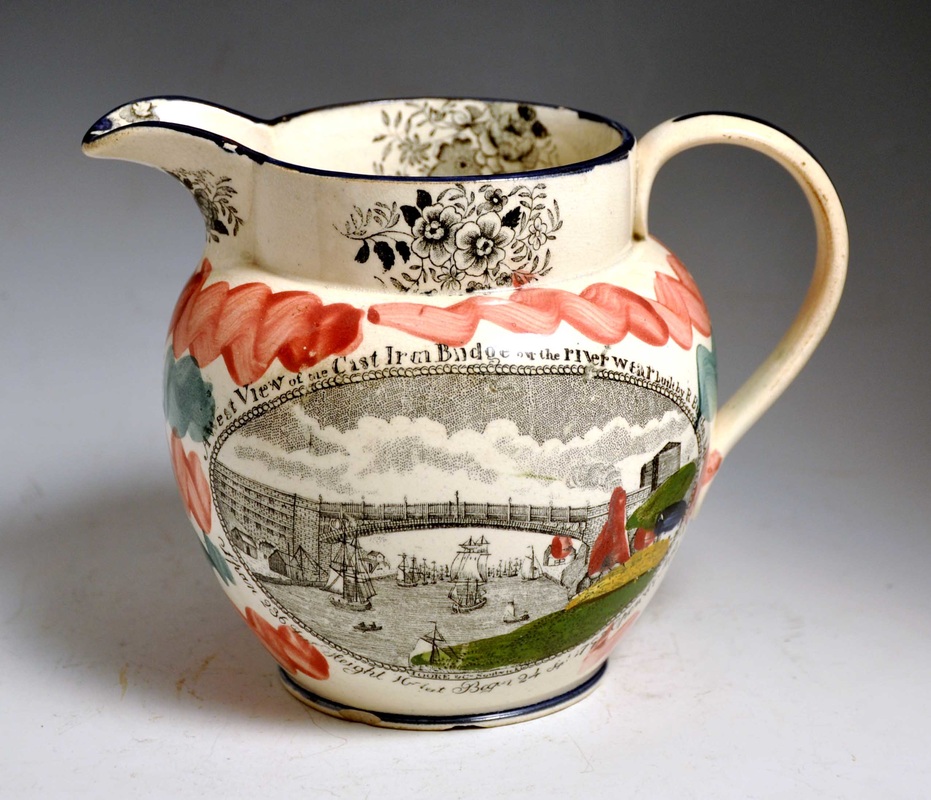
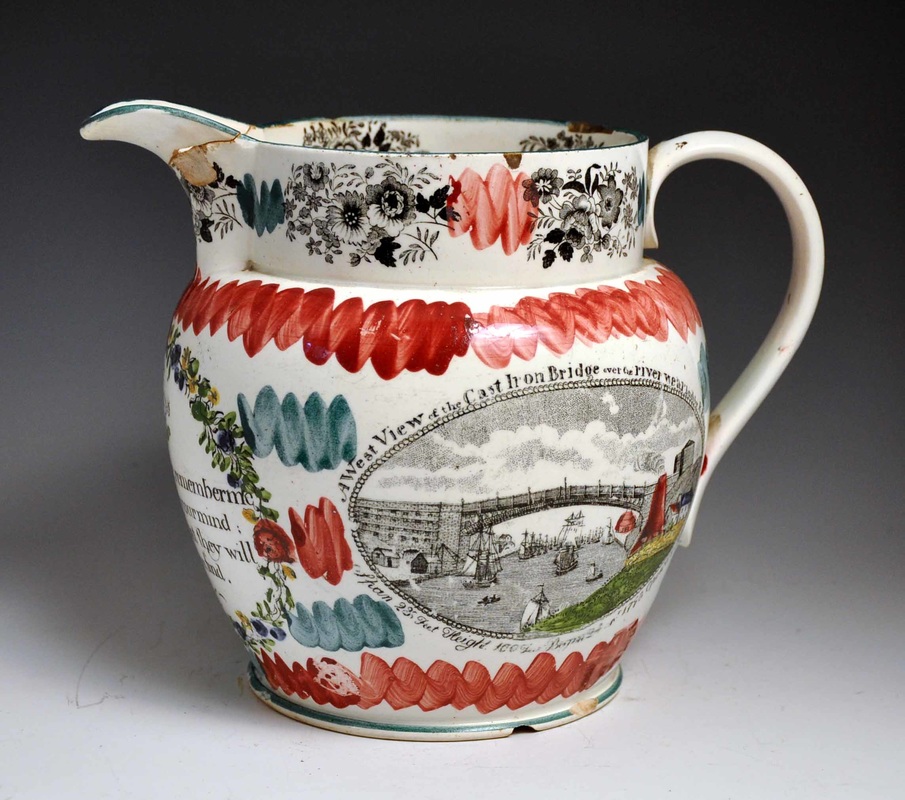
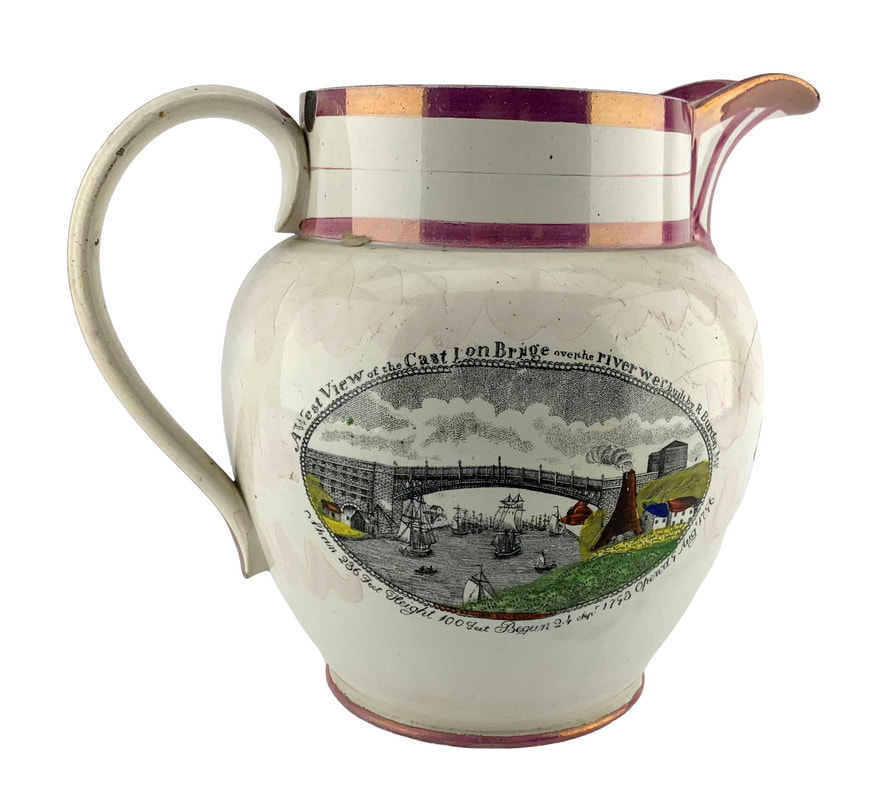
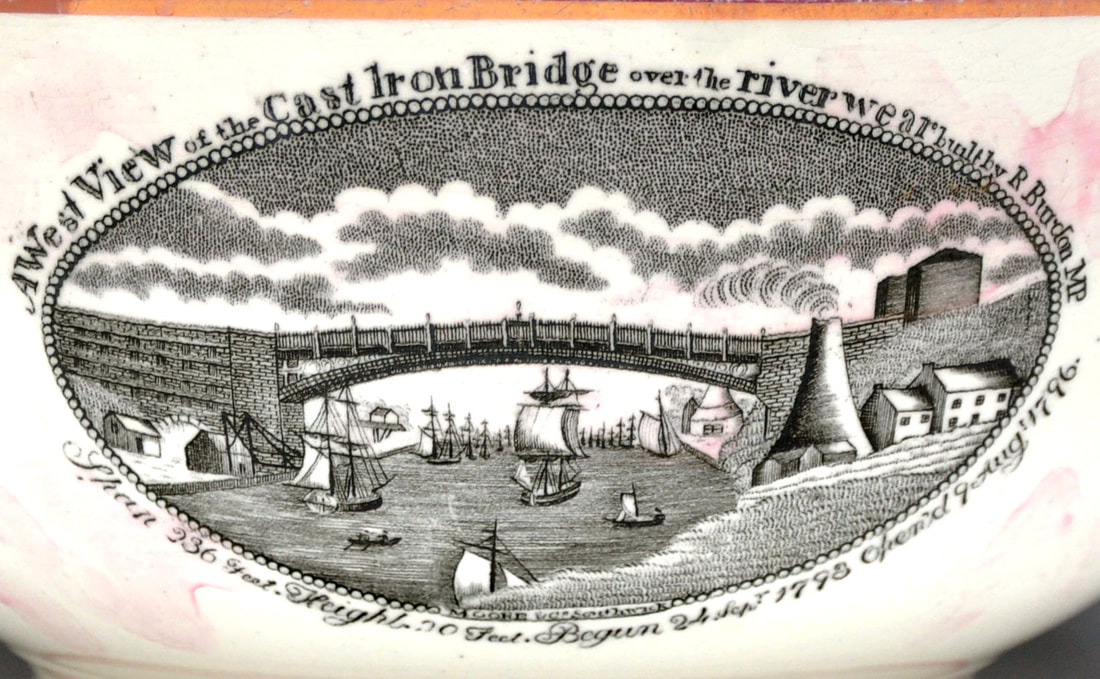
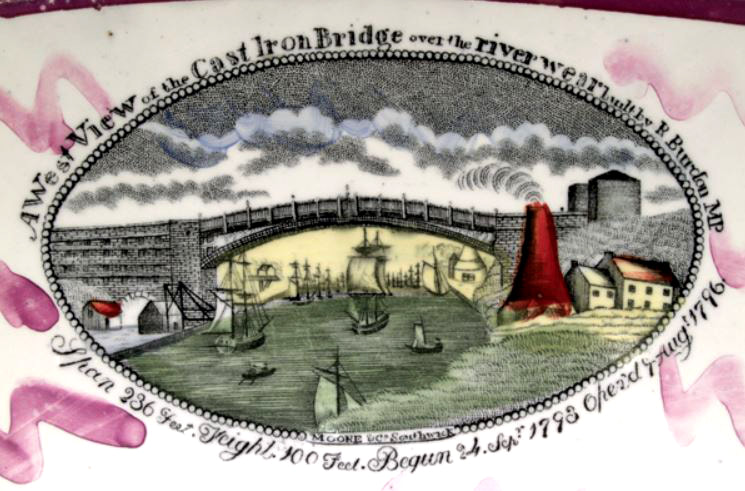
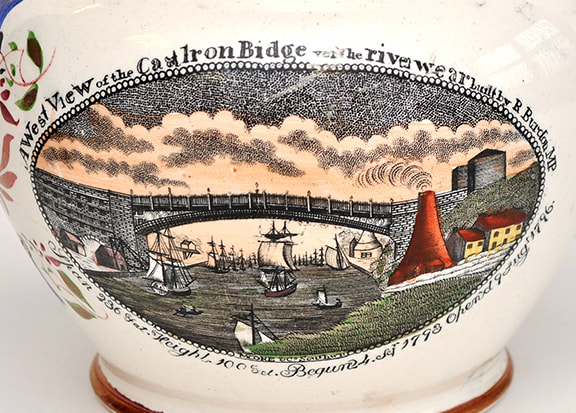
West view of the Cast Iron Bridge... (oval) – bridge 38
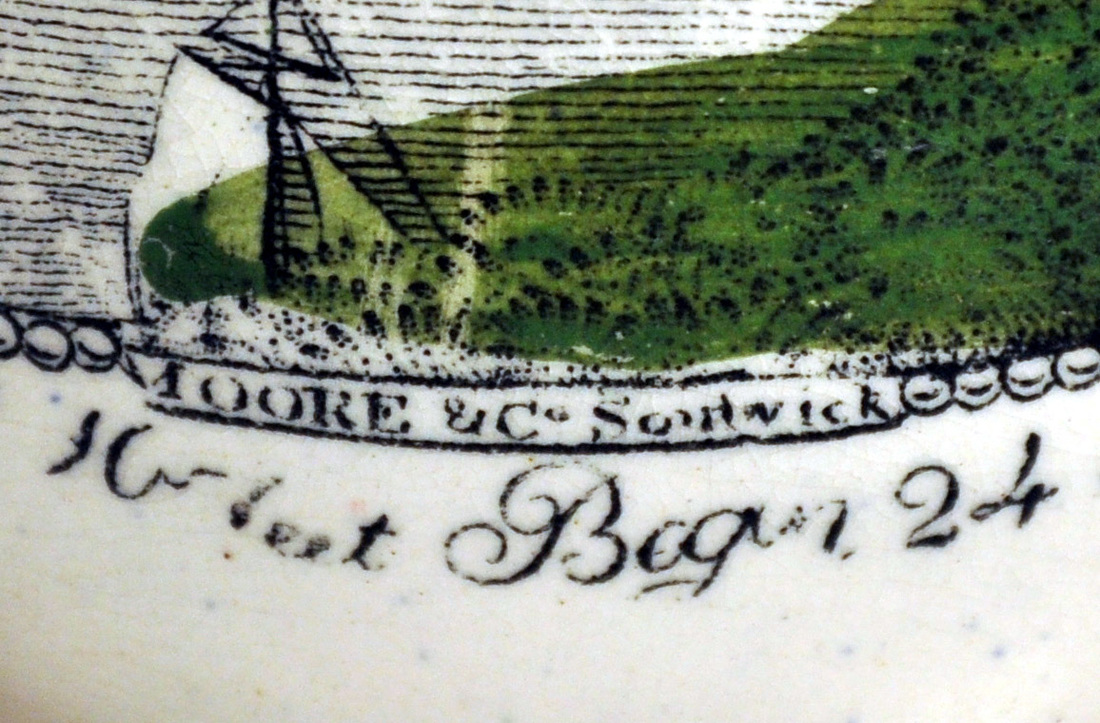
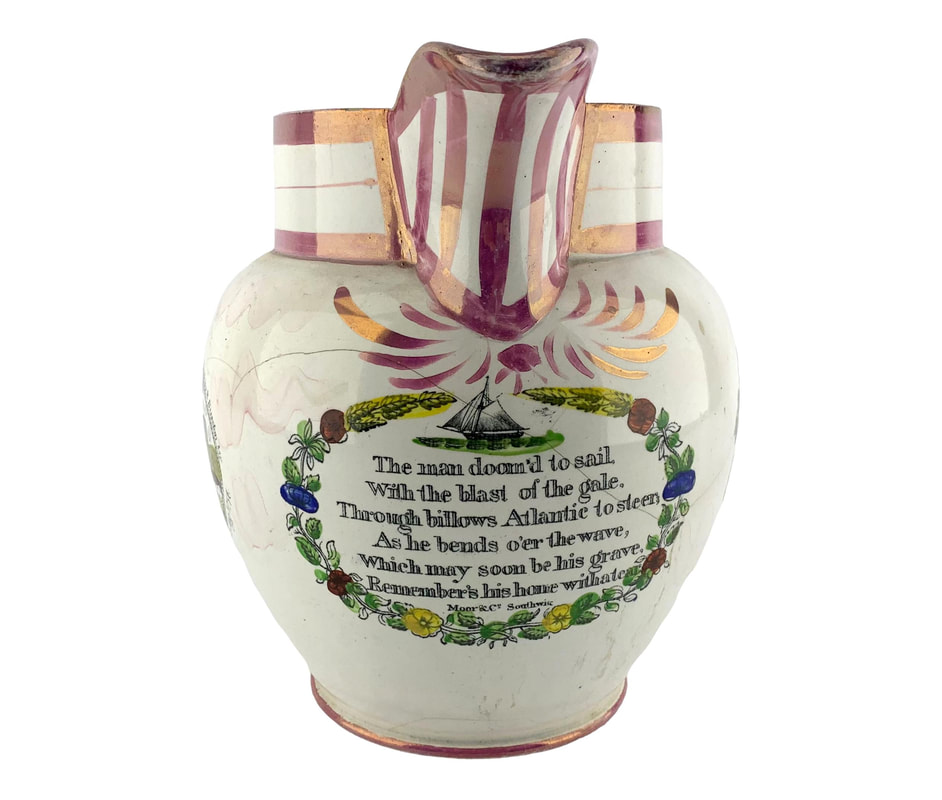
Moore & Co 1
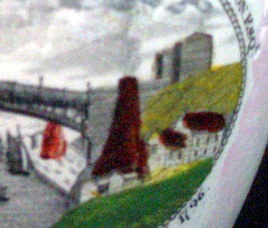
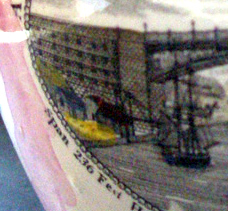
No sail boat in foreground (see bottom centre and right details). Two buildings to top right of bridge.
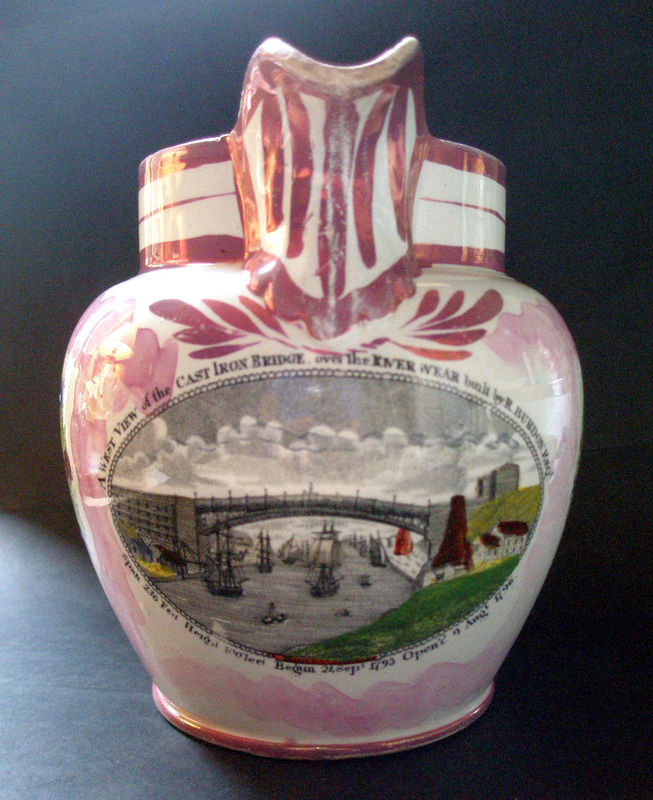
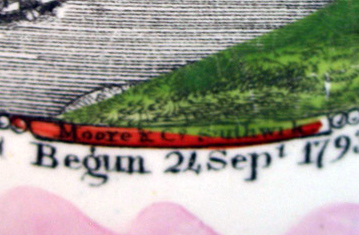
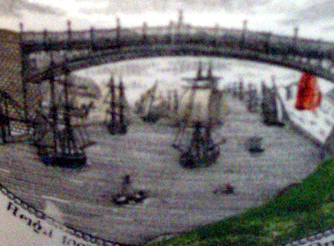
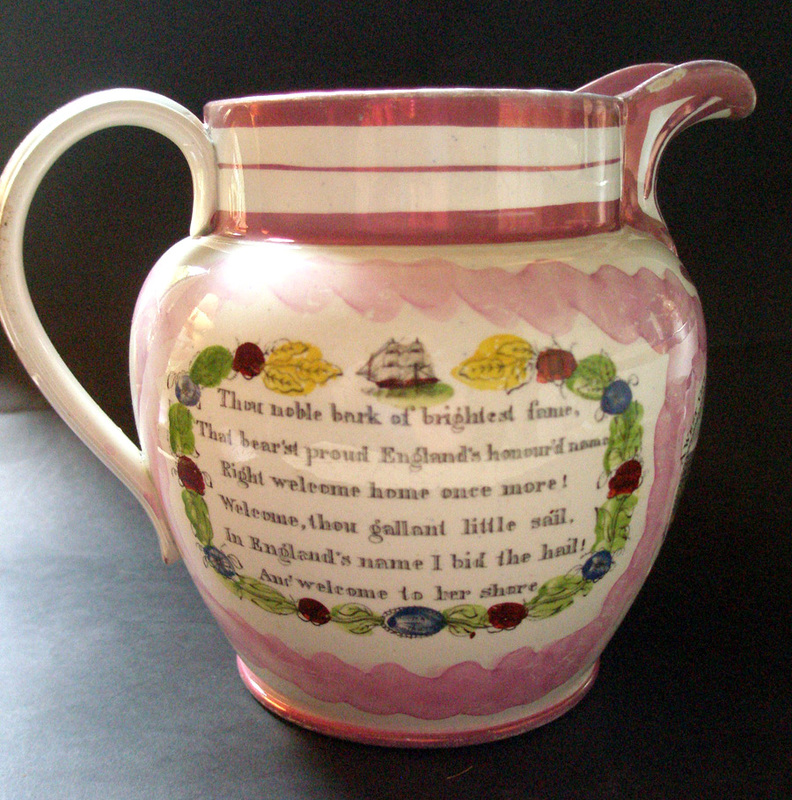
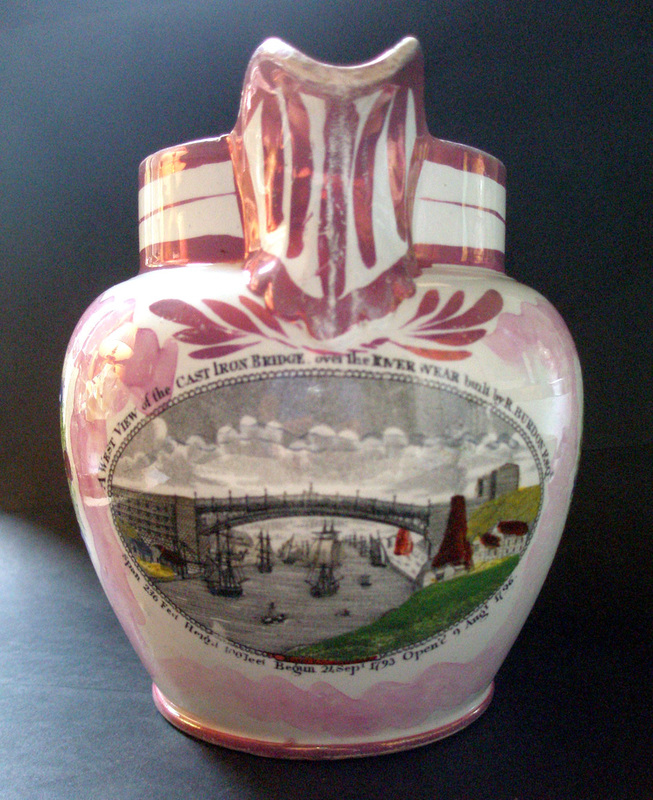
Moore & Co 2
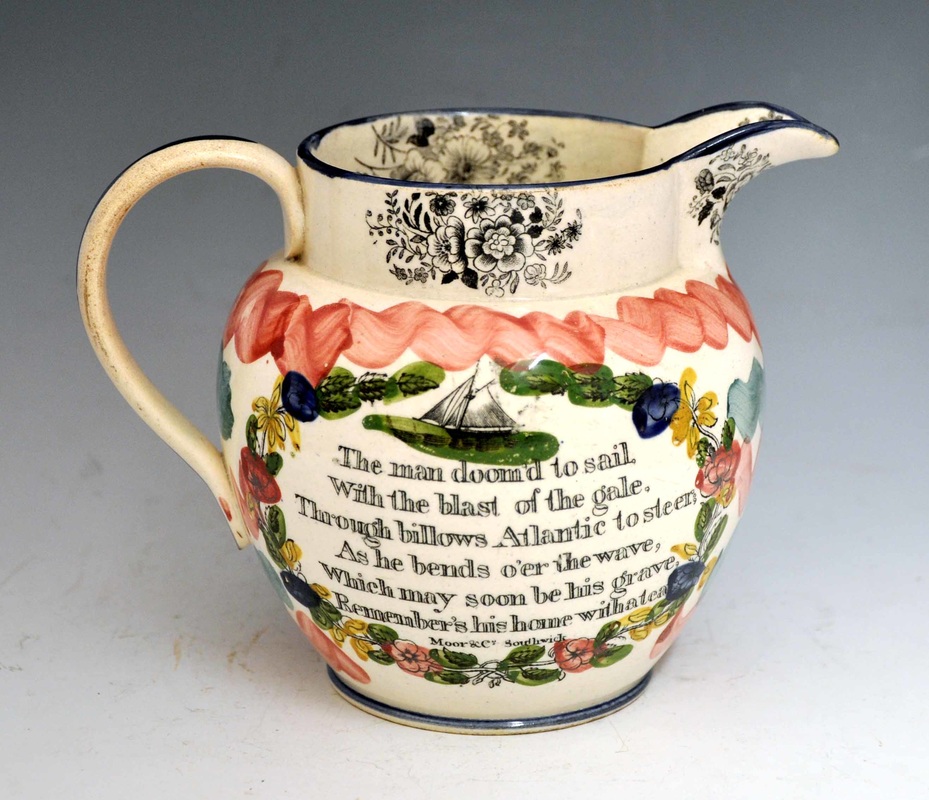
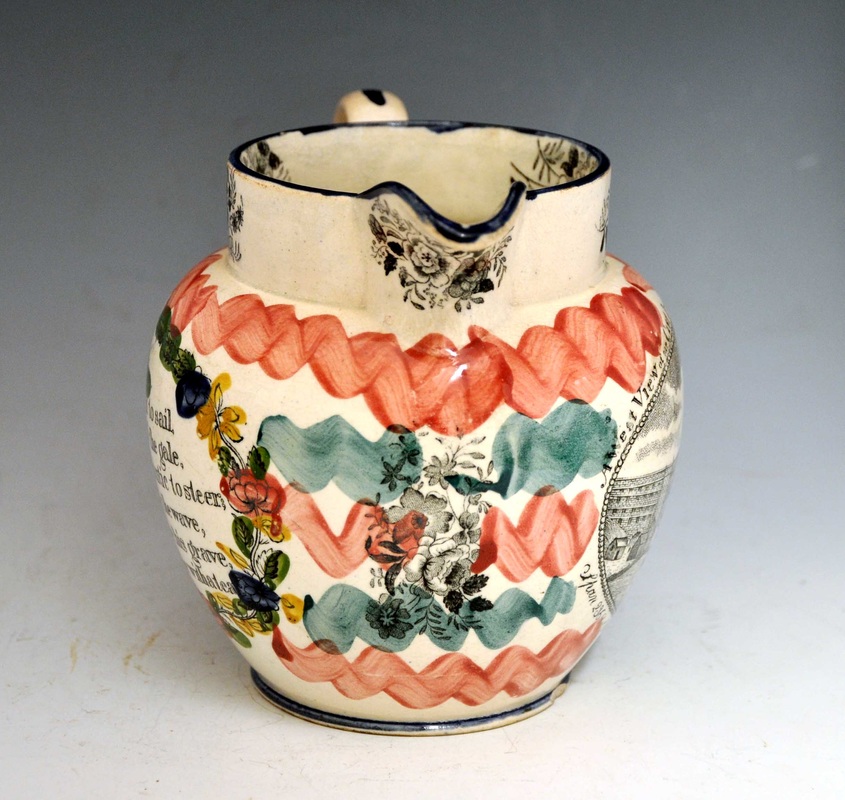
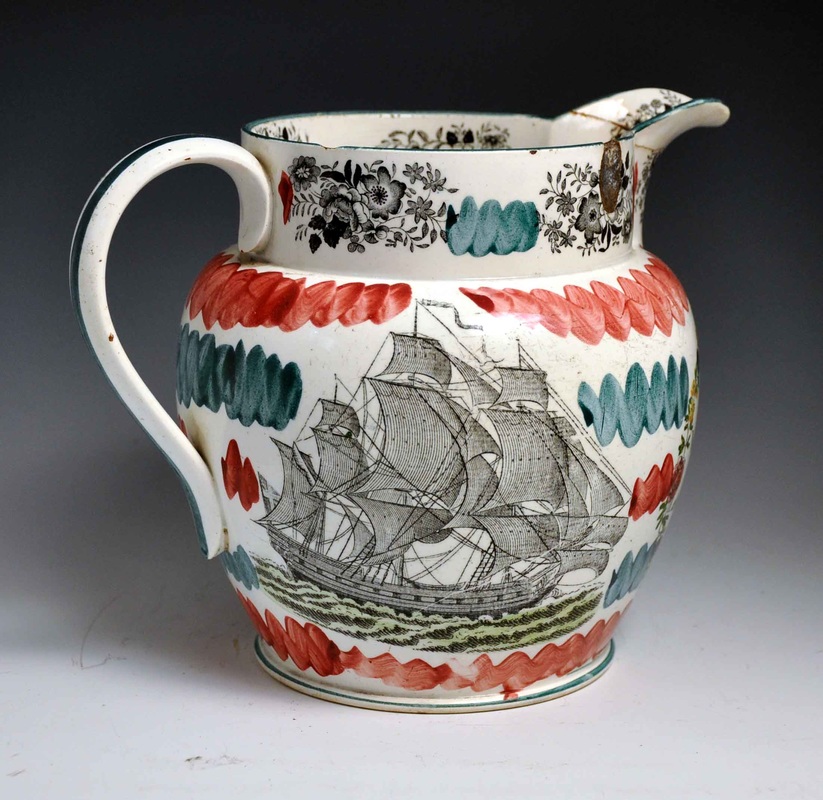
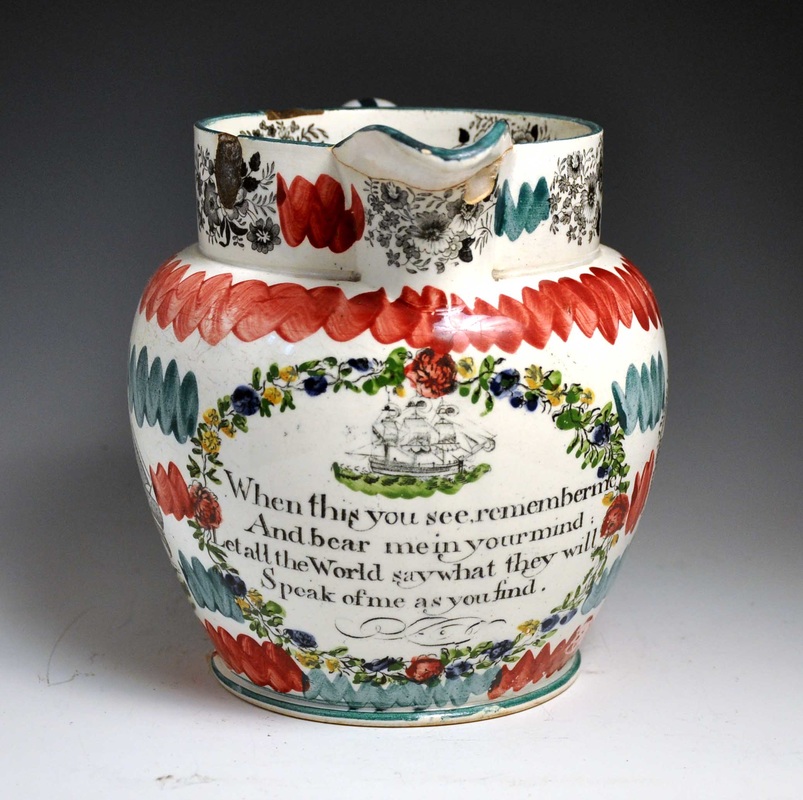
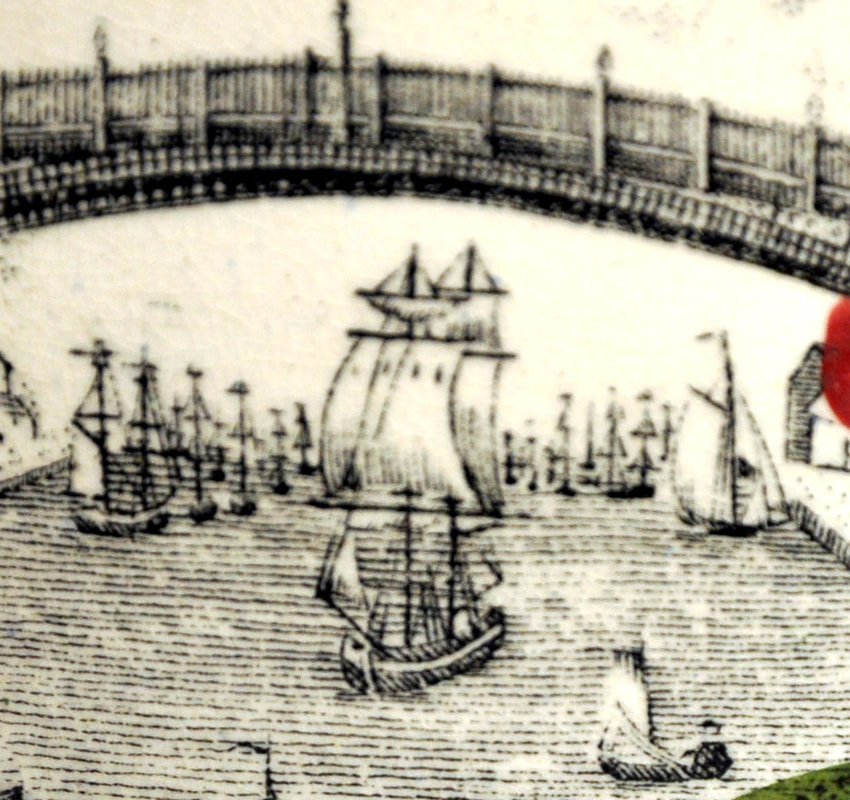
Two buildings to top right of bridge. Row of vertical marks on the sail in the centre of the transfer. Typical red and green enamel decoration from the late 1830s and 40s.
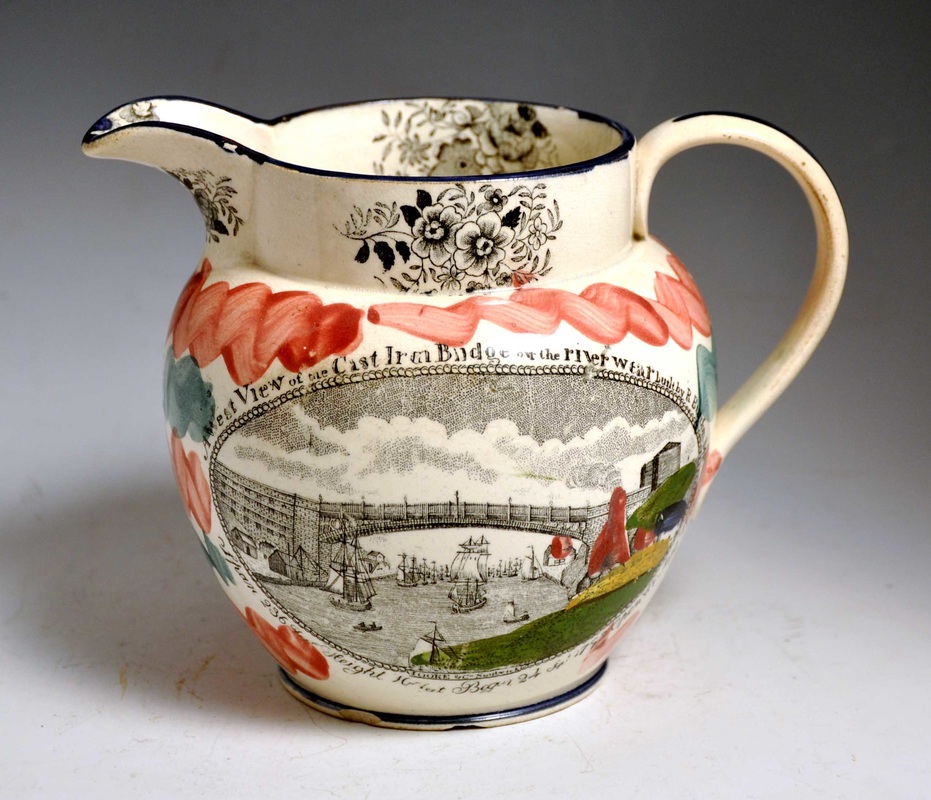
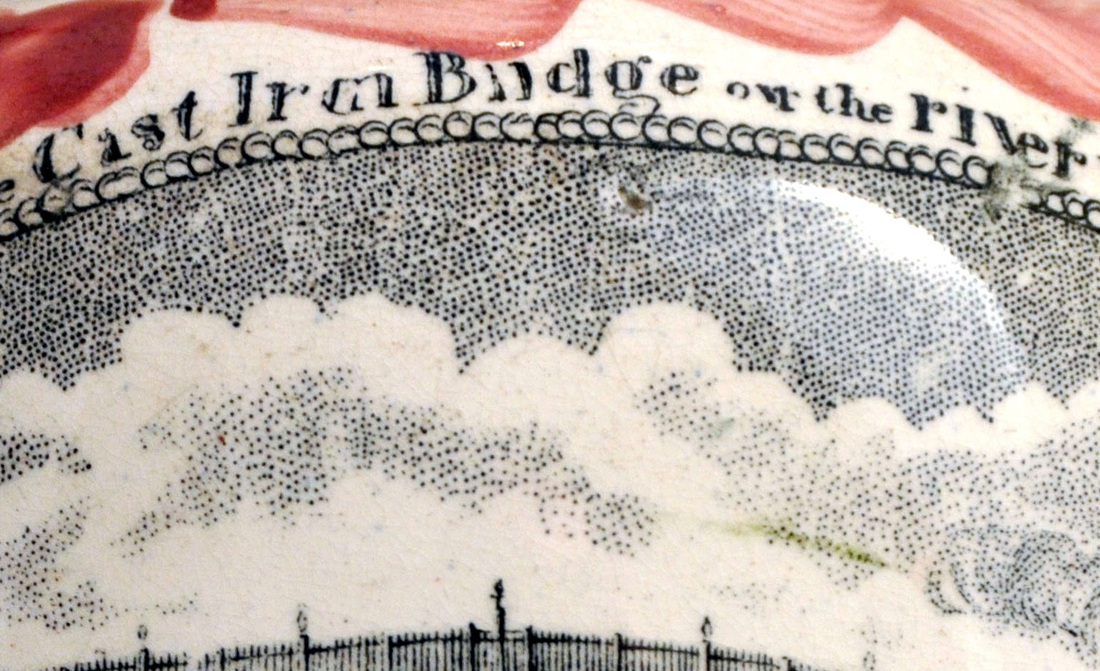
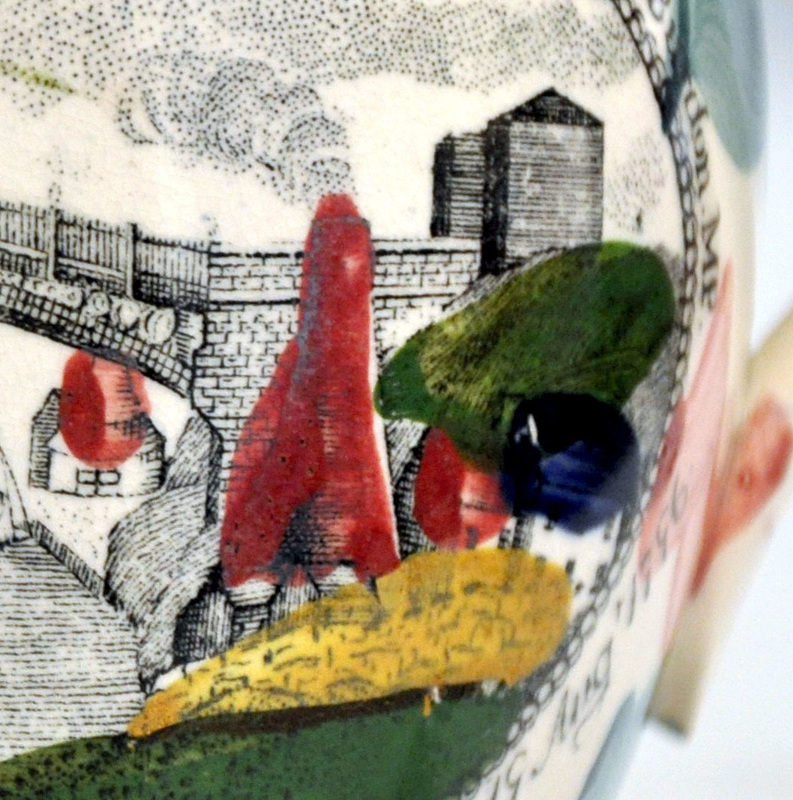

|
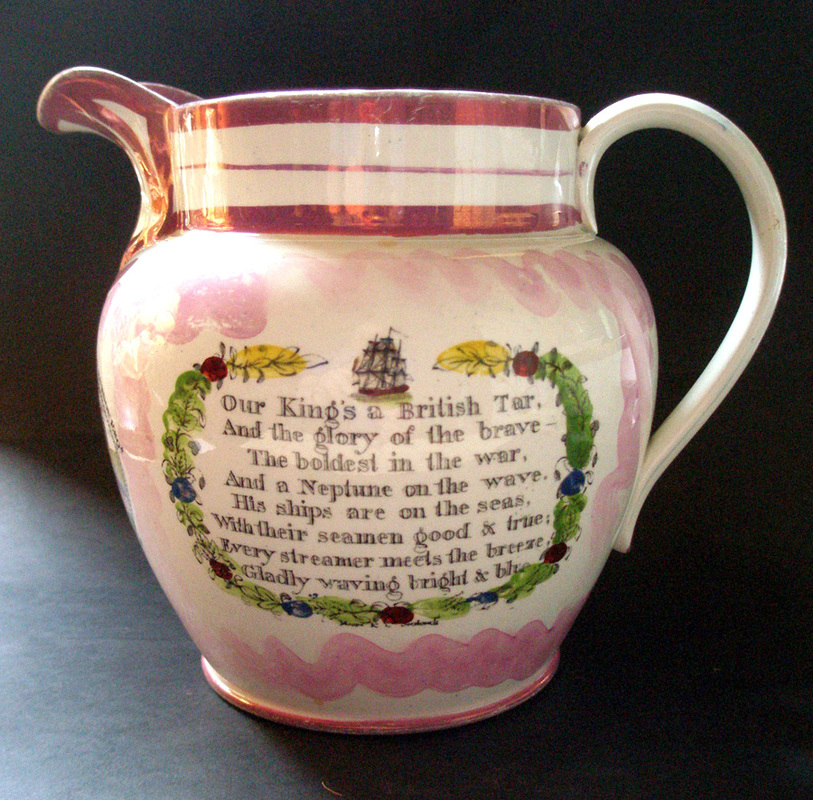
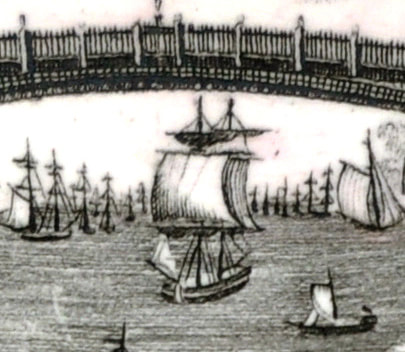
Near right is the Moore & Co 2 version with four vertical marks (reefing lines) on the central sail. Far right is the Moore & Co 3 version, without the vertical marks. Below, the Moore & Co 2 transfer on a pink lustre jug. |
|
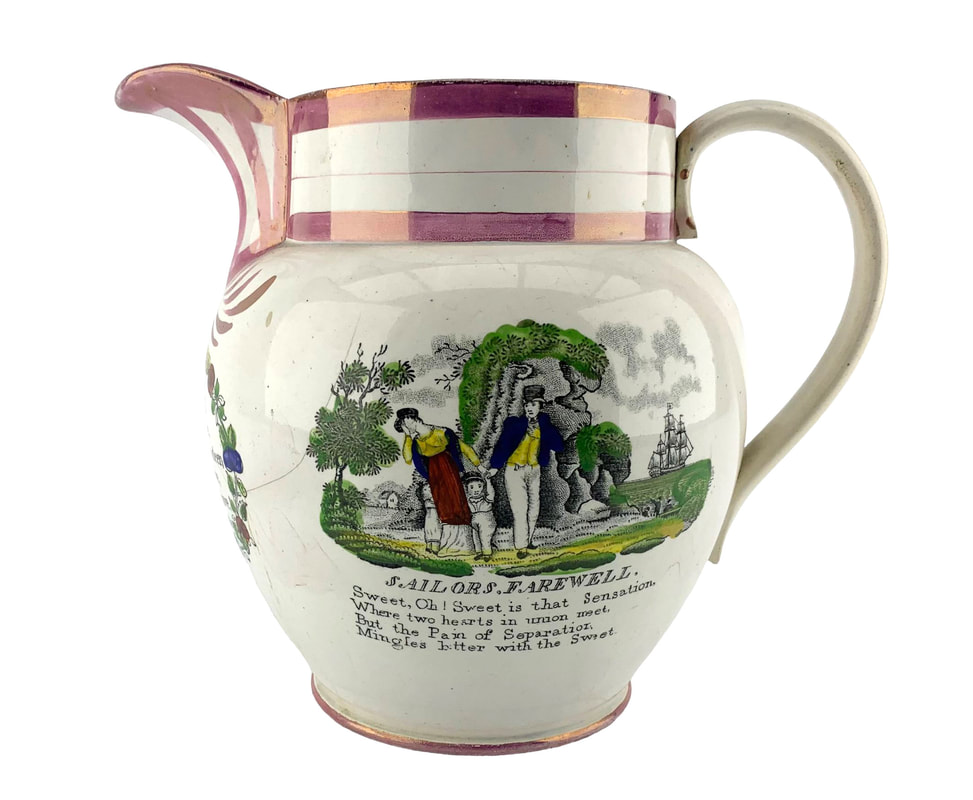
Moore & Co 3
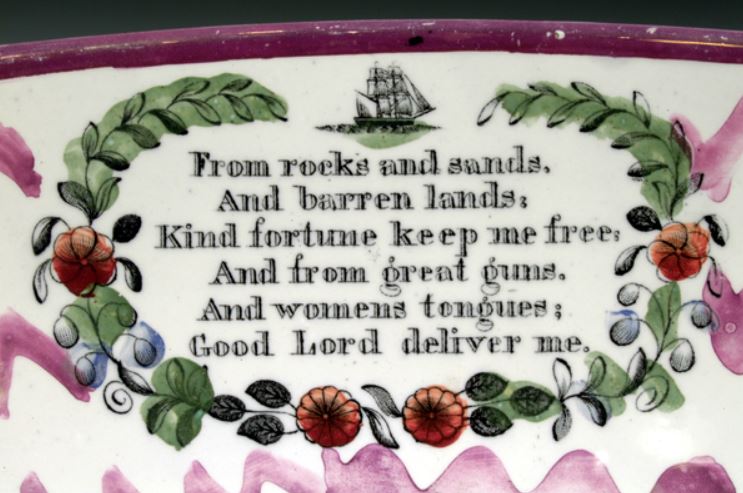
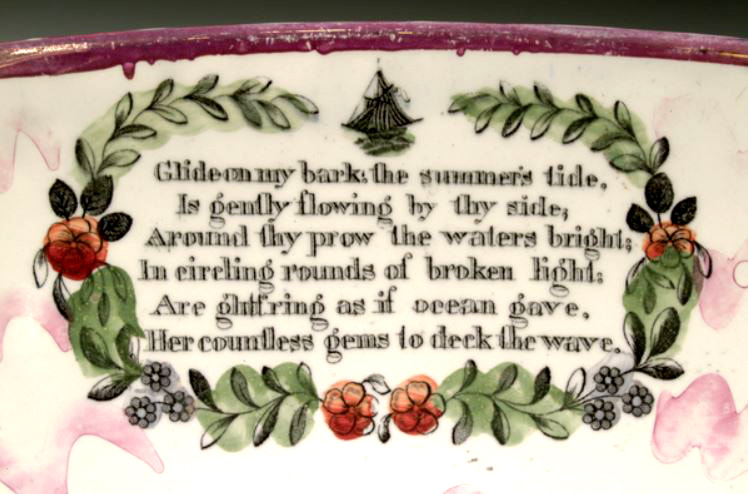
Very similar to the transfer above, but no row of vertical marks on the sail in the centre of the transfer. The bowl, which a Moore & Co impressed mark, has a rare transfer tiled 'The Author's Earnest Cry'.

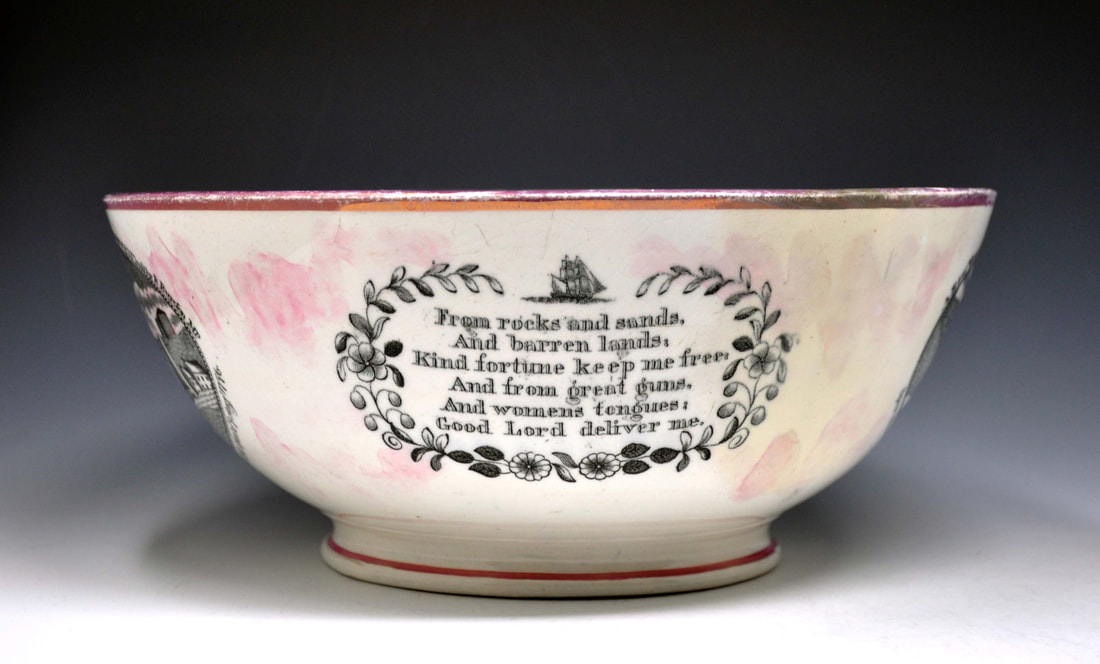
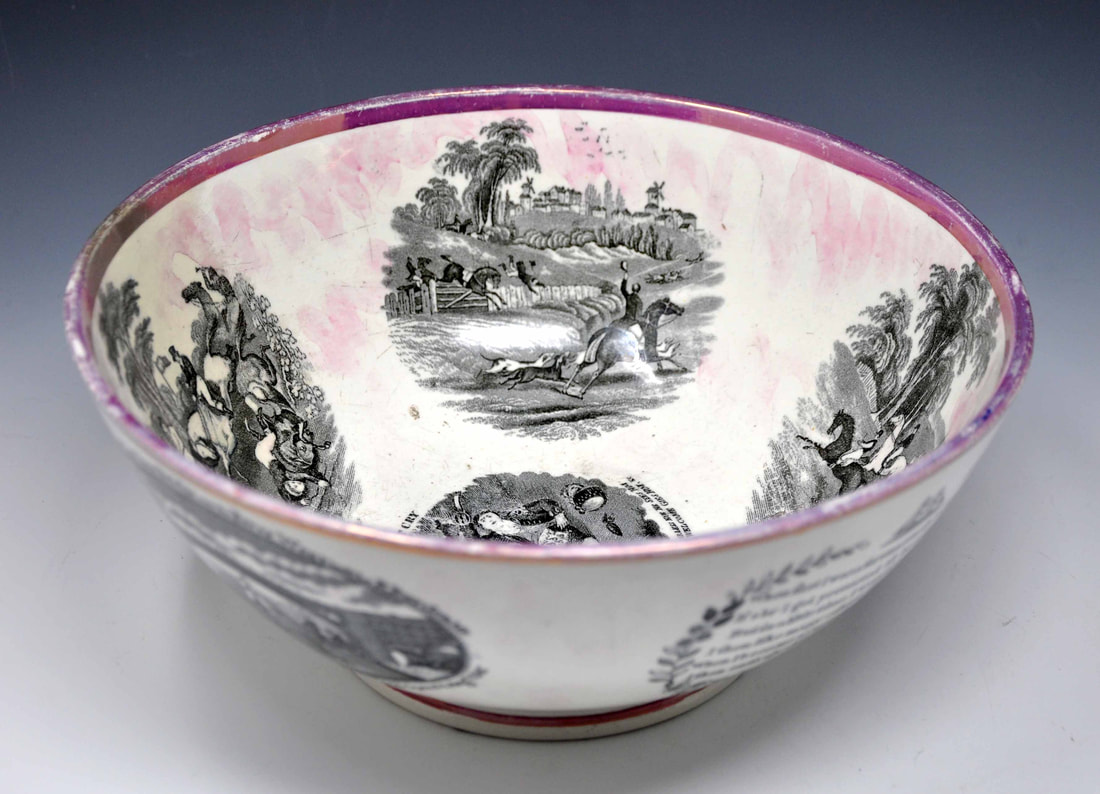
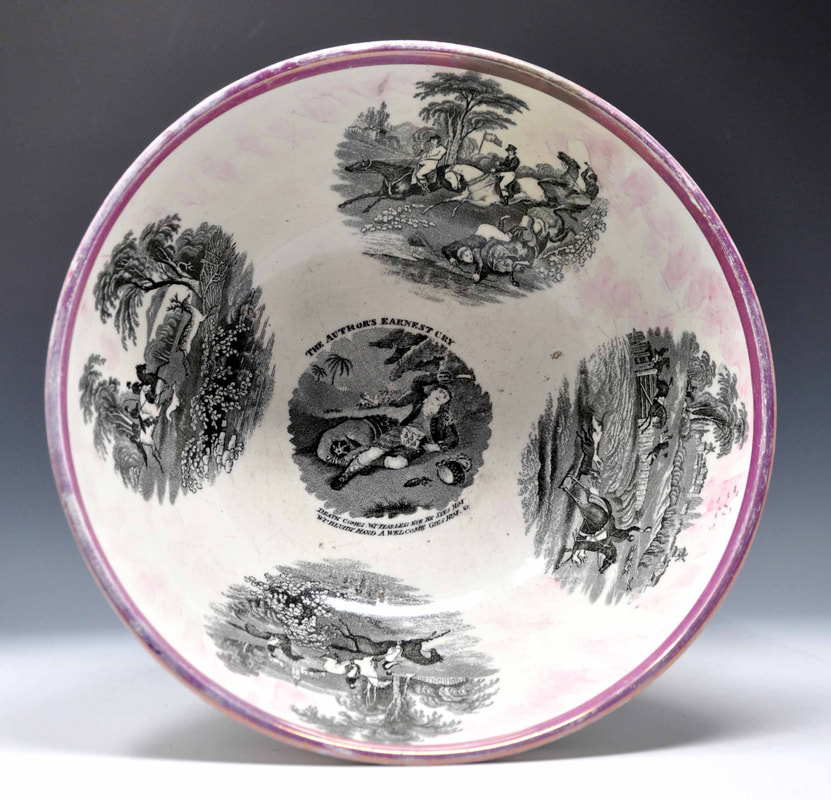

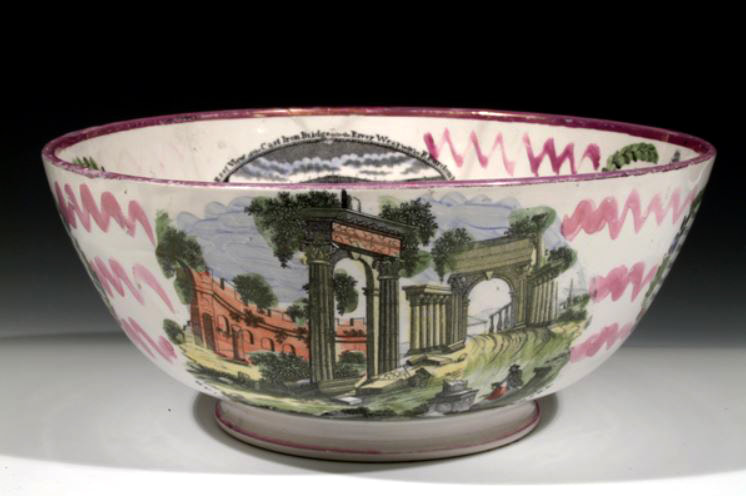
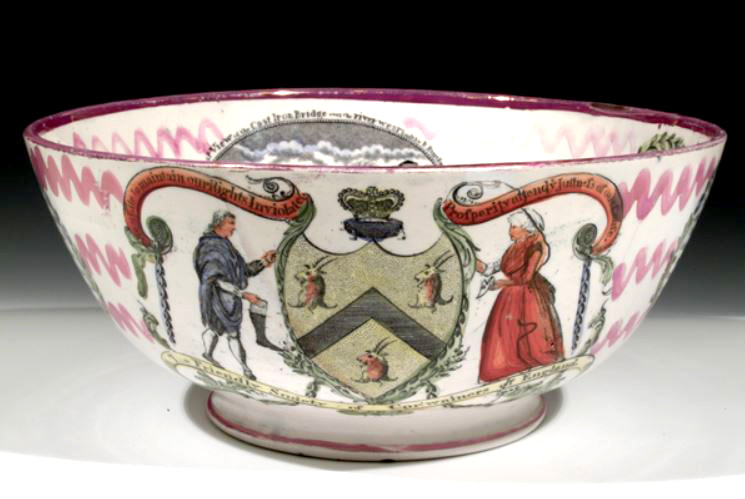
The bowl below, from the Sunderland Museum & Winter Gardens, Tyne & Wear Archives & Museums collection, again has rare transfers: top left below, Ruins of Palmyra; top right, Friendly Society of Cordwainers. There is also an 'East View' of the bridge (bridge 8),

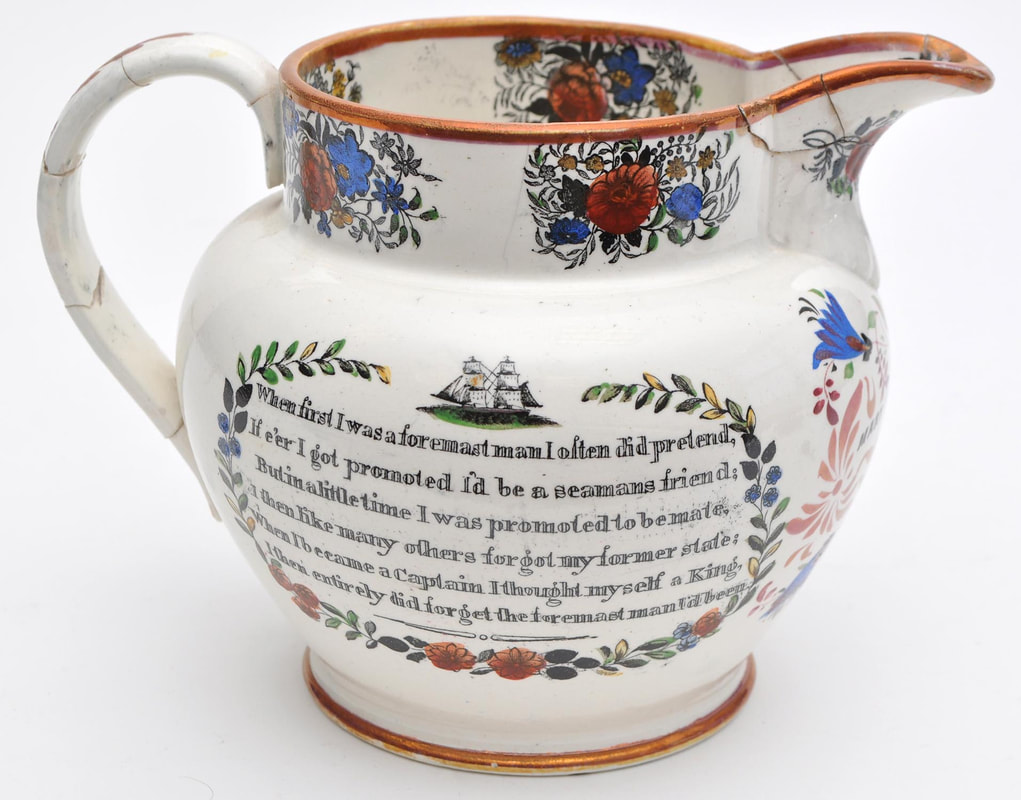
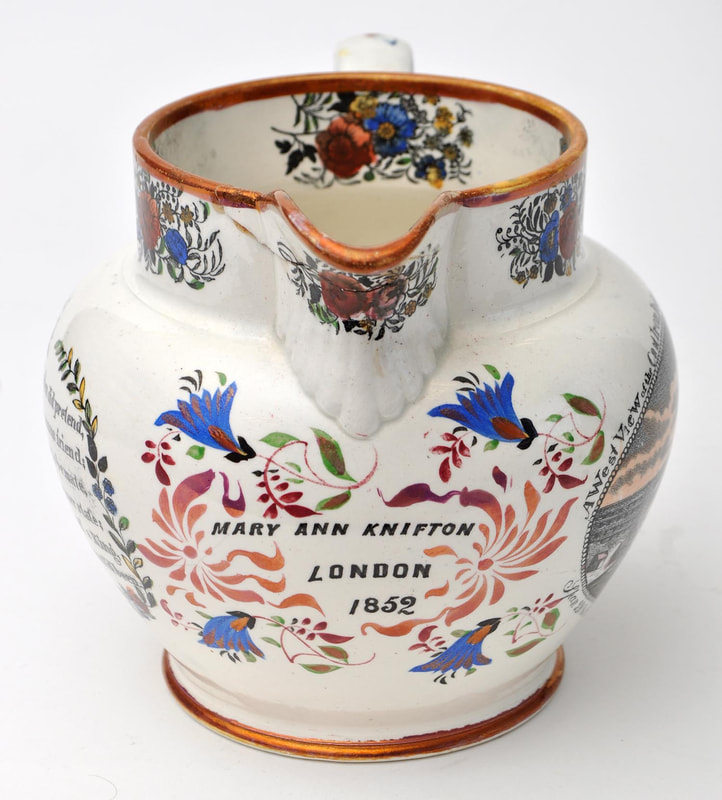
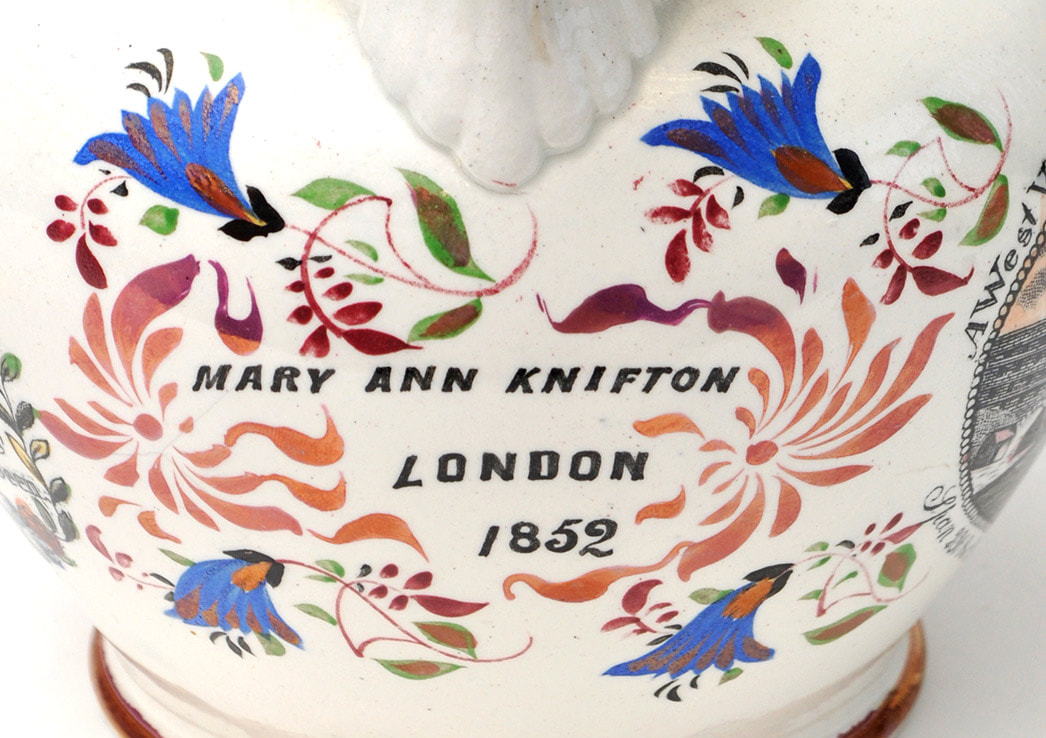
This jug is unusually well decorated and dated 1852.

Finally, a jug from the Crimean War period, c1855.

